 how-to
Hands-On Flight Planning Training: A Practical Guide
Table of Contents
- Why Hands-On Flight Planning Training Matters for Dispatcher Candidates
- Essential Flight Planning Tools and Aeronautical Charts
- Weather Analysis and METAR/TAF Interpretation
- Navigation Log Completion and Waypoint Selection
- Aircraft Performance Calculations and Weight and Balance
- How to Defend Flight Plans in Front of an Examiner
- Aircraft Dispatcher Flight Planning Software and Digital Workflows
- FAA Part 65 Dispatcher Requirements and Regulatory Compliance
Last Updated: August 25, 2026
Why Hands-On Flight Planning Training Matters for Dispatcher Candidates
Hands-on flight planning training separates candidates who pass the FAA Aircraft Dispatcher Exam from those who don't. The difference isn't theoretical knowledge, it's the ability to defend every decision under pressure in front of an examiner testing your judgment, not just your memory.
Most aspiring dispatchers study meteorology, regulations, and aircraft performance in isolation, then freeze during the oral when asked to justify a route choice or explain altitude selection. At QNH LLC, we prepare hireable candidates for the aviation industry, and the pattern is unmistakable: those who practice flight planning in realistic scenarios, defending routes and explaining weather decisions under time pressure, pass their checkrides with confidence. Those relying on textbooks alone struggle with the oral defense, even after acing the written portion.
This guide walks you through what hands-on flight planning training involves, why it matters for your career, and how to build the skills examiners are looking for. The goal isn't to memorize procedures, it's to think like a dispatcher: methodically, defensibly, and with safety as your foundation.
Essential Flight Planning Tools and Aeronautical Charts
Effective flight planning starts with the right tools: aeronautical charts, weather data, and performance calculators. More importantly, you need to interpret them under time constraints, the real conditions you'll face as a dispatcher.
Aeronautical charts show airways, waypoints, terrain, airspace classifications, and magnetic variation. IFR enroute charts show high-altitude structure used in commercial operations under instrument flight rules. You need to read these charts quickly and accurately, identifying the best route that avoids terrain, respects airspace restrictions, and minimizes fuel burn.
Waypoints are navigation checkpoints appearing on charts as five-letter identifiers (like MARTY or EVOKE). During hands-on training, you'll practice selecting waypoints that optimize flight path efficiency while accounting for wind patterns and aircraft performance.
Weather briefing tools, METAR, TAF, and graphical forecasts, are non-negotiable. METAR gives current conditions at specific airports; TAF provides forecasts up to 30 hours out (faa.gov). You'll use these constantly to assess route viability, alternate airport availability, and whether weather will improve or deteriorate during flight.
Electronic Flight Bag (EFB) systems and flight planning software integrate all these tools, calculating fuel requirements, weight and balance, and performance limits automatically. Understanding how these tools work and knowing when to question their output separates competent dispatchers from those who blindly trust automation.
Weather Analysis and METAR/TAF Interpretation
Weather is the primary driver of dispatch decisions. A dispatcher who can't read METAR and TAF reports accurately will make poor route choices, miss critical weather threats, and fail the ADX oral exam.
METAR format looks cryptic at first: KJFK 121851Z 31008KT 10SM FEW250 23/14 A3012. But it's structured. Each element tells you something critical: wind direction and speed, visibility, cloud layers, temperature, dew point, and altimeter setting. During hands-on training, you'll decode dozens of METARs until the pattern becomes automatic. You'll learn to spot red flags: low visibility, strong crosswinds, temperature-dew point spreads suggesting icing, and altimeter settings indicating pressure systems.
TAF reports extend your view forward. A TAF for KJFK might forecast improving conditions over 24 hours or deteriorating conditions forcing an earlier departure or alternate airport selection. The format includes time groups (BECMG for gradual changes, TEMPO for temporary conditions). Hands-on training teaches you to read TAF timing carefully, a TEMPO thunderstorm lasting two hours differs from a BECMG change that persists.
Graphical weather products, radar, satellite, wind aloft forecasts, add depth to your analysis. You'll use these during planning to visualize weather patterns and understand why a particular route makes sense. If radar shows a thunderstorm line moving northeast, you might plan an early departure to avoid it or route around it geographically.
Common mistakes include ignoring marginal conditions that are within minimums but deteriorating, misinterpreting TEMPO versus BECMG language, and failing to account for wind aloft when calculating fuel burn. Hands-on training exposes these mistakes in a safe environment before they affect real flights.
Navigation Log Completion and Waypoint Selection
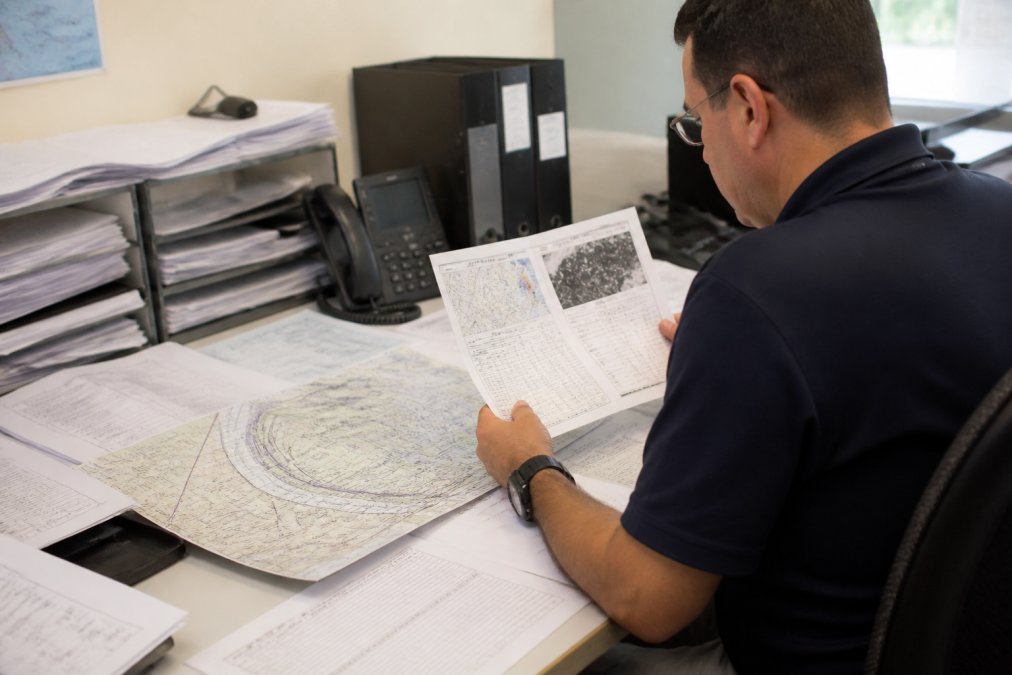
The navigation log is your flight plan in detailed form. It documents every waypoint, distance between waypoints, magnetic heading, wind correction angle, groundspeed, fuel burn, and estimated time en route. Completing a navigation log by hand teaches you to think systematically about the flight.
Start with route selection. Identify the departure airport, destination, and alternates. Then choose a route: direct (if terrain and airspace allow), via airways (published routes with defined waypoints), or a combination. The choice depends on weather, aircraft performance, and fuel reserves.
Waypoint selection follows. Mark each waypoint on the chart, note its position relative to landmarks, and calculate distance to the next waypoint using the chart's distance scale. This manual process forces you to engage with the chart spatially. Software does this automatically, but understanding the underlying work makes you a better dispatcher.
Next comes wind correction. Apply winds aloft forecast data to calculate the magnetic heading needed to track the desired ground course. A strong headwind reduces groundspeed and increases fuel burn; a tailwind does the opposite. During hands-on training, you'll practice adjusting your route or altitude to find favorable winds, a core dispatcher skill.
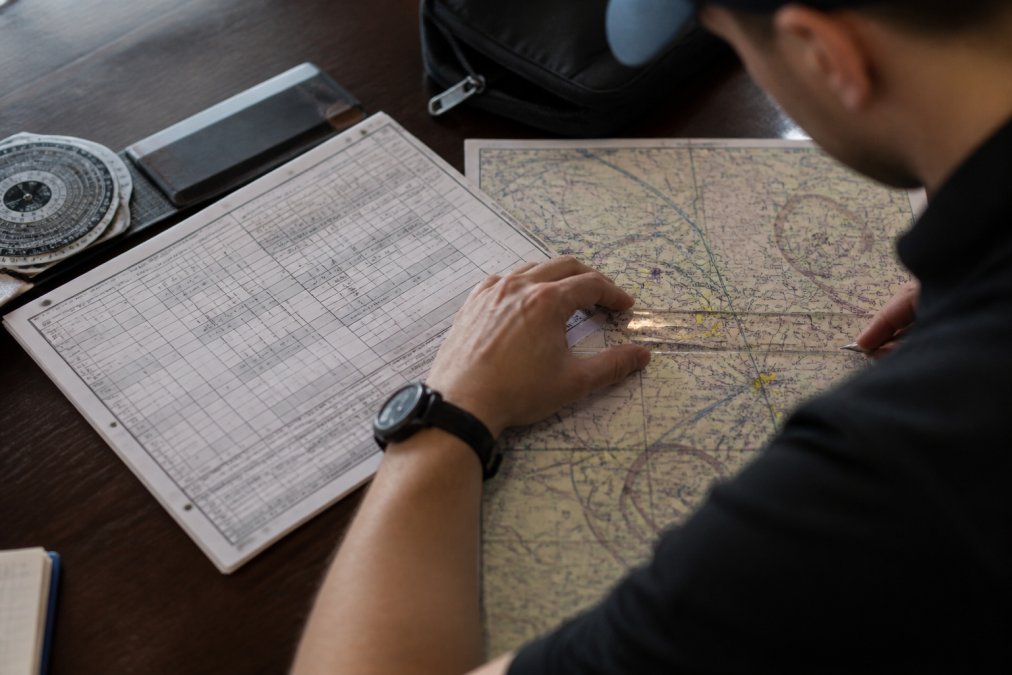
Finally, calculate fuel burn, time en route, and weight and balance. The navigation log ties all of this together and is the document you'll defend in front of an examiner, so every entry must be accurate and defensible.
Aircraft Performance Calculations and Weight and Balance
Aircraft performance calculations determine whether a flight is possible. You need to know whether the aircraft can climb to the planned altitude, whether it has enough fuel to reach the destination with required reserves, and whether runway length is sufficient for takeoff and landing.
Weight and balance is foundational. The aircraft has a maximum takeoff weight, maximum landing weight, and center of gravity envelope. Exceed these limits and the flight is unsafe and illegal. During hands-on training, you'll calculate weight and balance for realistic scenarios using actual forms, entering passenger counts, cargo weight, and fuel quantity, then calculating the resulting center of gravity and comparing it to the aircraft's envelope.
Performance calculations follow. You'll use aircraft performance charts to determine runway requirements for takeoff, maximum altitude the aircraft can climb to in a given distance, and fuel burn at different altitudes and weights. These charts require careful interpolation between values, attention to temperature and pressure altitude, and understanding of how weight affects performance.
A hands-on scenario might ask: "A Boeing 737-800 is loaded to 68,000 pounds at Denver International Airport. Temperature is 25 degrees Celsius. What's the required runway length for takeoff? What's the maximum altitude the aircraft can climb to in the first 100 nautical miles?" You'll extract data from performance charts, account for Denver's high elevation and hot temperature, and defend your calculations in front of an examiner.
Common errors include misreading performance charts, failing to account for non-standard conditions (high temperature, high altitude), and not checking whether the calculated center of gravity is within limits. Hands-on training catches these mistakes before the exam.
How to Defend Flight Plans in Front of an Examiner
The oral defense of your flight plan is where hands-on flight planning training proves its value. The examiner will ask you to explain every decision: why you chose that route, why you selected that altitude, how you accounted for weather, what your alternate airport is and why, and how you calculated fuel burn.
Your preparation starts with understanding the examiner's perspective. They're assessing whether you think like a dispatcher: systematically, safely, and with clear reasoning. An examiner wants to hear, "I selected this route because it avoids the thunderstorm line forecast for the afternoon, it keeps me over suitable terrain for emergency landing, and it minimizes fuel burn compared to alternatives." That's the thinking hands-on training builds.
During practice defenses, which are central to hands-on flight planning training at QNH LLC, you'll present your flight plan to an instructor playing the examiner. They'll challenge your decisions. "Why that altitude instead of Flight Level 350?" You'll explain the trade-off: FL350 would be more fuel-efficient, but winds aloft are stronger there, and the aircraft's service ceiling limits options if weather forces a descent. Your answer shows you've thought through the decision, not just picked a number.
Common mistakes during defense include vague answers, defensiveness when questioned, and inability to explain weather analysis. Hands-on training exposes these weaknesses. You'll practice until your explanations are clear, confident, and grounded in actual data from your flight plan.
The examiner may also ask about regulatory requirements. Why file an alternate airport? Because regulations require one if weather at destination is forecast below minimums at your estimated time of arrival. What's your minimum fuel reserve? 45 minutes for domestic flights. Why that specific alternate? Because it's within the aircraft's range, has suitable runways, and weather forecast to be above minimums. These answers come from studying FAA Part 65 requirements and practicing in realistic scenarios.
Aircraft Dispatcher Flight Planning Software and Digital Workflows
Modern dispatch operations rely on flight planning software integrating weather data, aircraft performance, airways, and regulatory constraints into a single platform. Learning to use these tools is essential, but understanding their limitations is equally important.
Flight planning software automates many calculations: fuel burn, weight and balance, performance limits, and route optimization. You input basic parameters, departure, destination, aircraft type, weight, weather, and the software generates a flight plan. But the software is only as good as your inputs. Hands-on flight planning training teaches you to verify software outputs against manual calculations and question results that seem off.
Digital workflows in modern dispatch centers include electronic flight bags (EFBs), which pilots use to access flight plans, weather, and performance data on tablets. As a dispatcher, you'll prepare the flight plan the pilot receives. Understanding what information the pilot sees and how they'll use it separates good dispatchers from mediocre ones.
Common workflow steps include: file the flight plan with air traffic control, receive clearance, brief the crew on weather and route, monitor the flight in progress, and handle changes if conditions deteriorate. During hands-on training, you'll simulate these workflows, experiencing the time pressure and decision-making intensity of real dispatch operations.
One critical skill is knowing when to use software and when to use manual methods. A quick fuel calculation on paper might be faster than pulling up the software. A quick chart review might catch an issue the software missed. Hands-on training teaches you to blend digital and manual tools effectively.
FAA Part 65 Dispatcher Requirements and Regulatory Compliance
FAA Part 65 certification standards define what you must know and be able to do as an aircraft dispatcher. Understanding these requirements shapes how you approach flight planning training and exam preparation.
Part 65 requires knowledge of meteorology, navigation, aircraft performance, regulations, and flight planning procedures. The knowledge test covers all these areas. The practical test, the checkride, assesses your ability to plan a flight and defend it. The oral and practical exam (ADX) is where hands-on flight planning training becomes critical.
Regulatory requirements also govern what you must include in a flight plan. You must file an alternate airport if weather at destination is forecast below minimums. You must calculate fuel reserves: 45 minutes for domestic flights, 10 percent of flight time for international flights (faa.gov). You must ensure weight and balance is within limits. You must verify that the aircraft can climb to the planned cruise altitude within the required distance. These aren't suggestions, they're regulatory minimums.
Part 65 also addresses crew qualifications, duty time limitations, and operational procedures. As a dispatcher, you share responsibility for safe operations with the pilot in command. Understanding this shared responsibility is crucial to the dispatcher role.
Hands-on flight planning training at QNH LLC incorporates Part 65 requirements throughout. Every flight plan you prepare must meet regulatory standards. Every defense must address regulatory compliance. This integration ensures you're learning to plan flights safely and legally.
Defending a flight plan in front of an examiner demonstrates that you can think systematically under pressure, make decisions grounded in data and regulation, and communicate your reasoning clearly. Hands-on flight planning training builds that capability through repeated practice in realistic scenarios. At QNH LLC, our instructors, experienced airline pilots and former FAA Dispatcher Examiners, create those scenarios and push you to think critically about every decision. The result is dispatchers ready not just for the checkride, but for the responsibility of the role. FAA Part 65 Certification Standards outline the knowledge and skills required. Our program ensures you master them through intensive, personalized instruction in small classes where every student gets the attention they need to succeed.
Frequently Asked Questions
What is the importance of hands-on flight planning in Part 65 certification?
Hands-on flight planning training bridges the gap between theoretical knowledge and real-world dispatcher operations. Part 65 certification requires mastery of navigation logs, weather interpretation, aircraft performance calculations, and route optimization. Practical exercises let you apply these skills under controlled conditions before facing the FAA practical exam, where examiners evaluate your ability to defend flight plans and make sound operational decisions under pressure. Classroom instruction combined with simulation builds the muscle memory and confidence needed to handle actual flight dispatch responsibilities.
How does instructor-led flight planning training compare to self-study programs?
Instructor-led training provides immediate feedback, personalized guidance, and the ability to ask questions when concepts become unclear. Small-class instruction allows instructors to identify knowledge gaps specific to each student and adjust pacing accordingly. Self-study programs move at a fixed pace and lack the Socratic Method approach, where instructors guide you to discover answers rather than simply providing them. For complex topics like weight and balance computations and airspace classification, direct interaction with experienced airline pilots and former FAA Dispatcher Examiners accelerates comprehension and builds the critical thinking skills examiners expect during oral defense of flight plans.
What tools are used in professional aircraft dispatcher flight planning?
Professional dispatchers use a combination of digital and manual tools. Aircraft dispatcher flight planning software automates fuel calculations, route optimization, and compliance checks, while aeronautical charts, NOTAMs, and electronic flight bags (EFBs) provide real-time operational data. Navigation logs remain essential for documenting waypoints, estimated times, fuel burn, and altitude selections. Weather briefings (METAR, TAF) inform route decisions and alternate airport selection. Training programs teach both digital workflows and manual backup procedures, ensuring dispatchers can operate effectively whether systems fail or require verification. Proficiency with both approaches is critical for Part 65 certification.
How do I practice flight planning before my FAA practical exam?
Start with guided simulation exercises that replicate actual dispatch scenarios, including weather challenges and aircraft performance constraints. Work through complete navigation logs from start to finish, calculating fuel requirements, selecting waypoints, and identifying alternates. Practice defending your planned routes verbally, explain why you chose specific altitudes, how weather factors influenced your decision, and what contingencies you've prepared. Use real-world METAR and TAF data from actual flight days to build pattern recognition. Small-class training environments let you present flight plans to instructors who simulate examiner questioning, providing feedback before your official practical. Consistent practice with feedback is the only reliable path to exam readiness.
This article was written using GrandRanker