 how-to
How to Pass the FAA Dispatcher Exam: 7-Step Study Plan
Table of Contents
- Understand the ADX Exam Overview and Structure
- Meet Part 65 Certification Requirements and Exam Eligibility
- Master ADX Exam Study Tips for Knowledge Test Success
- Prepare for the Practical Exam: Real-World Flight Planning Scenarios
- How Long Does It Take to Get a Dispatcher License After Passing
- Master Test Day Procedures and Psychological Preparation
- Understand Retake Policy and Post-Exam Next Steps
- Conclusion
Last Updated: August 21, 2026
Understand the ADX Exam Overview and Structure
The FAA Dispatcher Exam, officially called the ADX, is a comprehensive assessment that tests your knowledge of aircraft operations, meteorology, aviation regulations, and flight planning. Passing the ADX requires mastery of both the written knowledge test and the practical exam components, each designed to verify you can make safe, informed decisions in real airline operations.
Aircraft dispatchers work alongside pilots to plan flights, monitor weather, calculate weight and balance, and manage operational decisions that directly impact safety. The FAA treats this role seriously, and the ADX is rigorous by design.
Knowledge Test Format and Content
The written knowledge test consists of 80 multiple-choice questions covering aeronautical knowledge, aviation regulations, and operational procedures (faa.gov). You'll have 2 hours and 45 minutes to complete it (faa.gov). The questions require precise understanding of concepts rather than surface-level familiarity.
The test draws from several key domains: meteorology (METAR interpretation, SPECI reporting, atmospheric conditions), Part 65 aviation regulations, aerodynamic principles, weight and balance calculations, and flight planning procedures. You need to understand not just the "what" but the "why" behind each regulation and procedure.
The passing score is typically 70%, though you should aim for the 80s to demonstrate genuine mastery to potential employers. The FAA publishes official study materials and test outlines, and many candidates benefit from structured preparation using question banks that mirror the actual exam format.
Practical Exam vs. Knowledge Test
The practical exam tests your ability to defend flight planning decisions, interpret weather data in real time, and handle operational scenarios that dispatchers encounter daily. An examiner will present realistic situations, deteriorating weather, mechanical issues, weight and balance constraints, and ask you to make decisions while explaining your reasoning clearly.
The practical exam typically lasts 1 to 2 hours. Many candidates find this portion more challenging than the written test because you cannot hide gaps in comprehension. An examiner will ask follow-up questions until they're satisfied you truly understand the material.
Meet Part 65 Certification Requirements and Exam Eligibility
Before you can sit for the ADX, you must meet specific eligibility requirements outlined in FAA Part 65. These ensure that only qualified candidates enter the certification process.
Basic requirements include U.S. citizenship or permanent residency, a valid government-issued photo ID, and the ability to read, write, and speak English at a professional level. You must be at least 23 years old (some airlines hire dispatchers as young as 21 with conditional certification). The FAA requires a medical examination confirming you can perform dispatcher duties.
Most importantly, you need documented aeronautical knowledge through formal training from an FAA-approved Part 65 dispatcher school. The curriculum must cover at least 200 classroom hours addressing aeronautical knowledge, meteorology, aviation law, and operational procedures (faa.gov). This is not something you can self-study and expect to pass.
QNH LLC, an FAA-approved Part 65 Aircraft Dispatcher Certification program, delivers comprehensive training with small class sizes and instruction from experienced airline pilots and former FAA examiners. This structure ensures you're building the deep understanding that examiners probe for during the practical exam.
Master ADX Exam Study Tips for Knowledge Test Success
Passing the knowledge test requires a strategic approach. You're building a mental model of how dispatchers think about flight operations, not memorizing trivia.
Build Your Study Schedule
Start preparation at least 3 months before your target test date. This gives you time to absorb material, practice questions repeatedly, and identify weak areas without cramming.
Dedicate 10 to 15 hours per week to study if you're working full-time. Structure your weeks around focused study blocks: meteorology on Monday and Wednesday, regulations on Thursday, and weight and balance calculations on weekends. This rotation prevents burnout and lets concepts consolidate between sessions.

Use Question Banks and Practice Tests
Question banks are your most valuable study tool. Use them religiously and take full-length practice tests every two weeks, tracking performance by topic.
When you miss a question, understand why the correct answer is right and why others are wrong. This is where real learning happens. You need to reach consistent 80%+ performance before test day, with particularly strong scores on high-weight topics like meteorology and regulations.
Practice tests also build test-taking stamina. The actual exam requires 2 hours and 45 minutes of focused concentration.
Focus on High-Weight Topics
Meteorology, Part 65 aviation regulations, and weight and balance calculations appear more frequently than other topics because these are the decision-making domains where dispatcher errors have the highest safety impact.
Allocate your study time proportionally. If meteorology represents 30% of the exam, spend roughly 30% of your study time there. Within meteorology, focus on METAR interpretation, SPECI reporting, and how atmospheric conditions affect aircraft performance.
Prepare for the Practical Exam: Real-World Flight Planning Scenarios
The practical exam separates candidates who memorized answers from those who genuinely understand dispatcher work. The examiner will present realistic operational scenarios and expect you to think through them systematically.
METAR and Weather Reporting Mastery
You must be able to read and interpret a METAR report in seconds, extracting critical information that affects flight planning. A METAR contains wind direction and speed, visibility, precipitation, cloud layers, temperature, and dew point.
The practical examiner will hand you a METAR and ask questions like: "What's the crosswind component for runway 27? Can this aircraft legally depart under these conditions?" You need to understand not just what the data says, but what it means for dispatch decisions.
SPECI reports, special weather reports issued when conditions change significantly, are equally important. An examiner might present a deteriorating weather scenario and ask how you'd monitor it and when you'd consider recalling an aircraft or canceling a departure.
Weight and Balance Calculations
Weight and balance calculations are safety-critical. An aircraft that's too heavy won't climb properly. An aircraft with center of gravity too far aft becomes unstable. You must be able to calculate both accurately and quickly.
The practical examiner will give you a manifest, passenger count, cargo weight, fuel quantity, and ask you to compute the aircraft's weight and center of gravity, then verify it falls within limits. You'll need to understand how fuel burn affects the center of gravity during flight.
How Long Does It Take to Get a Dispatcher License After Passing
After passing both the knowledge test and practical exam, you'll receive your temporary airman certificate from the FAA within 2 to 3 weeks. The permanent certificate arrives by mail 4 to 6 weeks after the practical exam. During this waiting period, you can begin work as a dispatcher under the temporary certificate.
The total timeline from starting formal training to holding a permanent dispatcher certificate is typically 6 to 9 months if studying full-time, or 12 to 18 months if balancing work and study part-time. Once certified, you're eligible to apply for dispatcher positions with airlines. Many new dispatchers are employed within 1 to 3 months of certification.
Master Test Day Procedures and Psychological Preparation
Testing Center Procedures
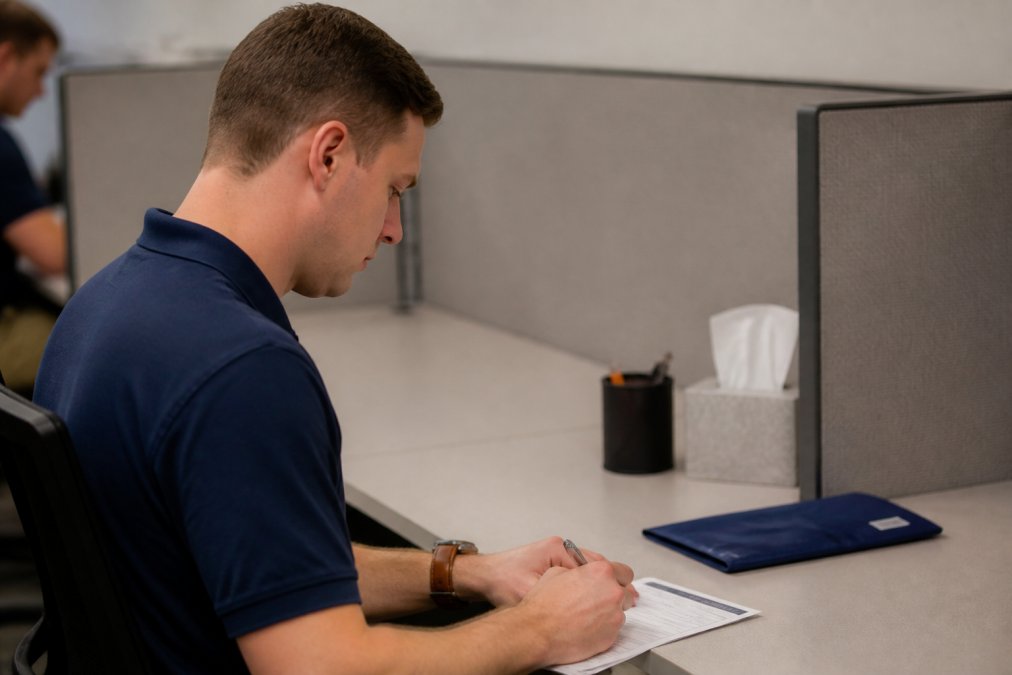
On test day, arrive at the testing center at least 15 minutes early with your government-issued photo ID. You'll check in, confirm your identity, and be escorted to a computer workstation.
The testing center will provide scratch paper and a pencil for calculations. You cannot bring study materials, phones, or personal devices into the testing room. Once you begin the exam, you'll see 80 multiple-choice questions on screen. You can navigate between questions, flag them for review, and change your answers. Pace yourself at roughly 2 minutes per question to allow time for review.
After you submit your exam, the computer displays your score immediately. If you pass, you'll receive a score report required to schedule your practical exam.
Mental Readiness and Confidence
The practical exam is where psychology matters most. Nervousness is normal and helpful if channeled correctly. In the days before your practical exam, review your strongest topics to build confidence. Get a full night of sleep the night before.
During the practical exam, take a moment before answering each scenario question. Breathe. Think through your reasoning systematically. The examiner is testing your judgment, not your speed. If you've spent 200 hours in formal training and studied methodically, you have the knowledge. Trust your preparation.
Understand Retake Policy and Post-Exam Next Steps
What Happens If You Don't Pass
If you don't pass the knowledge test, you can retake it after a typical 30-day waiting period. Use that time to identify specific topics where you struggled and focus your study there.
If you don't pass the practical exam, you can retake that as well. The practical is often more forgiving in one respect: the examiner can see your reasoning process. Use feedback from your first attempt to guide your preparation for the second.
Your Path Forward After Certification
Once you hold your dispatcher certificate, begin your job search. Airlines hire dispatchers continuously, and new certificants are in demand. Many airlines will interview candidates close to certification.
When interviewing, emphasize your formal Part 65 training. Hiring managers know that accredited programs like QNH LLC produce better-prepared candidates than self-study. After you're hired, your airline will conduct additional training specific to their operations, aircraft, and procedures. You'll work under supervision initially, gradually taking on more responsibility as you gain experience.
Passing the FAA dispatcher exam requires systematic preparation, deep understanding of complex material, and mental readiness on test day. The 200-hour formal training requirement exists because dispatcher knowledge is genuinely demanding. QNH LLC's FAA-approved Part 65 program delivers comprehensive training through small classes and instruction from experienced airline pilots and former FAA examiners, ensuring you master meteorology, aerodynamic principles, weight and balance calculations, and aviation regulations. Reserve now to begin your path toward becoming a professional aircraft dispatcher.
Frequently Asked Questions
What is the passing score for the FAA ADX exam?
The FAA requires a minimum score of 70% on the ADX knowledge test to pass. The practical exam is scored differently, with examiners evaluating your ability to defend flight plans, interpret weather data, and make safe operational decisions. Passing both components is required for your dispatcher license. Some study programs recommend aiming for 80% or higher on practice tests to build confidence before test day.
How should I use ADX exam study tips to prepare efficiently?
Focus your preparation on high-weight topics like meteorology, aviation regulations, and flight planning. Use question banks and practice tests to identify weak areas, then target those sections with deeper study. Build a consistent study schedule starting 6-8 weeks before your exam date. Review METAR codes, SPECI reports, and weight and balance calculations repeatedly, as these appear frequently on both the knowledge test and practical exam.
What are the key FAA aircraft dispatcher practical exam requirements I need to master?
The practical exam tests your ability to handle real-world dispatcher responsibilities. You must demonstrate competency in interpreting weather reports (METAR and SPECI), calculating aircraft weight and balance, planning safe flight routes, and making decisions under pressure. Examiners assess your aeronautical knowledge, regulatory compliance understanding, and decision-making skills. You'll defend hypothetical flight plans and explain your reasoning for operational choices, so understanding the 'why' behind regulations matters as much as memorizing facts.
How long does it take to get a dispatcher license after I pass the ADX exam?
After passing both the knowledge test and practical exam, you must complete your Part 65 aeronautical knowledge requirements (typically 200 classroom hours through an FAA-approved program). Once you finish the course, the FAA issues your dispatcher certificate. The total timeline depends on your program's schedule: full-time programs take 4-6 weeks, while part-time options extend over several months. Many employers hire candidates who have passed the ADX exam while still completing their classroom hours, so you can begin your career sooner.
This article was written using GrandRanker