 how-to
Common Mistakes During Dispatcher Practical Exams
Table of Contents
- Why Dispatcher Practical Exams Trip Up Prepared Candidates
- Mistakes by Practical-Test Task and FAA Standard
- Aircraft Dispatcher Oral Exam Questions: Where Answers Fall Apart
- Aircraft Dispatcher Weather Briefing Practice: Building the Right Habits
- Aircraft Dispatcher Practical Exam Scenarios: Worked Examples
- Step-by-Step Error-Proofing Checklist for a Dispatch Scenario
- Recovering After an Incorrect Answer or Calculation
- Scoring, Unsatisfactory Performance, and Retest Implications
- Frequently Asked Questions
Last Updated: October 12, 2026
Why Dispatcher Practical Exams Trip Up Prepared Candidates
Most candidates who fail an aircraft dispatcher practical exam do not lack knowledge. They fail because they cannot apply it under pressure, in front of an examiner, while defending every decision.
The practical test is a live demonstration of operational judgment. The examiner asks you to build a flight plan, brief the weather, and justify your choices.
This guide breaks those mistakes down by task and FAA standard: the oral questions that derail candidates, the weather habits that matter, two worked scenarios, and a checklist for every practice session.
Mistakes by Practical-Test Task and FAA Standard
The FAA organizes dispatcher certification around specific knowledge and skill areas, and examiners test you against them directly. Grouping mistakes by task makes them easier to fix.
Flight Planning and Dispatch Release Errors
The most common error is building a flight plan that looks complete but cannot be defended. Candidates pick a route, fill in the numbers, and stop, forgetting that a dispatch release is a legal document tying route, altitude, fuel, and weather into one decision.
Watch for these specific mistakes:
- Choosing a route without explaining why it beats the alternatives
- Ignoring how payload and fuel trade off against each other
- Failing to state the operational limitations that apply to the flight
Memorizing a sample release instead of understanding each line's logic is a common mistake. When the examiner changes one variable, a memorized answer collapses.
Weather Briefing and METAR/TAF Reading Errors
Reading a METAR or TAF out loud is not a weather briefing. Candidates often decode symbols correctly but never connect the forecast to the flight.
The recurring errors:
- Reciting a METAR without saying what it means for the departure or arrival
- Missing a SPECI that signals a fast change in conditions
- Failing to compare forecast conditions against actual weather
An examiner listens for whether you can turn raw weather data into a go or no-go judgment. Decoding is easy; interpretation is where candidates lose points.
Aircraft Dispatcher Oral Exam Questions: Where Answers Fall Apart
Aircraft dispatcher oral exam questions expose the gap between knowing a fact and explaining it. The examiner wants reasoning you can defend, not a recital.
Answers that fall apart share a pattern: rehearsed, generic, and disconnected from the specific flight in front of you. When the examiner asks "why," a memorized answer has nowhere to go.
The Question Types That Sink Candidates
Most oral questions cluster into a few recognizable families. Knowing the family tells you what the examiner is really testing.
- Definition-then-application. "What is a contingency fuel requirement, and how did you apply it on this release?" The first half is recall; the second is where candidates stall because they never tied the definition to their own numbers.
- Trade-off questions. "You could carry more fuel or more payload. Why did you choose what you chose?" There is no single right answer, but there is a defensible one. Name the trade-off and justify your side.
- What-if questions. "The destination goes below minimums after you depart. Walk me through what happens." These test whether you understand the release as a living document, not a static form.
Why Follow-Ups Break Scripted Answers
A rehearsed answer survives the first question and dies on the second. The examiner's follow-up finds the edge of your understanding; if you memorized a sentence, you have no next layer.
Prepare one level deeper than you think you need. For every fact you plan to state, ask "why" and "what if" before the examiner does. If you can answer your own follow-up, you can answer theirs.
Mapping Your Answers to Task Areas
The oral portion is scored against the same knowledge and skill areas the practical tasks cover: flight planning and the dispatch release, weather interpretation, NOTAMs and their operational impact, aircraft performance and limitations, fuel planning and reserves, route and alternate selection, and the governing regulations.
Three habits fix the rest:
- Practice answering out loud, not in your head.
- Always tie your answer back to the flight you are planning.
- Expect a follow-up question and prepare one level deeper.
If you can explain your reasoning in plain language, you are ready. If you can only repeat a definition, you are not.
Aircraft Dispatcher Weather Briefing Practice: Building the Right Habits
Aircraft dispatcher weather briefing practice should mirror the real exam: brief a live or realistic scenario out loud, from raw data to decision, every time. Most candidates treat the briefing as a decoding exercise; the examiner treats it as a judgment exercise. Refining this analytical approach requires the same disciplined preparation found in a comprehensive licensing exam roadmap to ensure that your decision-making process remains consistent under pressure.
The Briefing Structure Examiners Expect
A defensible briefing follows a repeatable order. Skipping a step is the most common way candidates lose points on weather tasks.
- Big picture first. State the synoptic situation: frontal positions, pressure systems, and the general trend across the route. This frames everything that follows.
- Departure weather. Read the current METAR, note any SPECI, and say what it means for takeoff and initial climb.
- En route weather. Identify the significant weather along the route and how it affects altitude or routing choices.
- Destination weather. Read the current METAR, then the TAF, then compare the two. Name the difference out loud.
- Alternate weather. Read the alternate's current and forecast conditions and state why it qualifies.
- NOTAMs. Name each NOTAM that touches the flight and state its operational impact in one sentence.
- Decision. End with a clear go or no-go, or a conditional decision with the condition named.
"Conditions are marginal, so here is my alternate and here is my fuel plan" is a briefing. "Here is the METAR" is not.
Reading METARs and TAFs for Meaning, Not Just Symbols
Decoding is the easy part. The examiner listens for whether you can turn raw data into a decision. Practice these interpretation habits:
- Compare current to forecast. A METAR that matches the TAF is a stable picture; one that diverges is a warning. Say which one you are looking at.
- Watch for trend indicators. A TEMPO or BECMG group in a TAF signals change. Name the change and its timing.
- Flag SPECI reports. A SPECI means conditions changed faster than the routine cycle. Treat it as a signal, not a footnote.
Turning the Briefing Into a Decision
The briefing is not finished until you state a decision and the reasoning behind it. End every briefing with one sentence naming the decision, the controlling factor, and the fallback. For example: "Destination forecast is marginal, so I am planning the alternate and adding holding fuel in case the approach is delayed." That sentence is what the examiner waits for.
Recording yourself during practice reveals filler words and skipped steps you never noticed. Review the recording against the checklist later in this guide.
Aircraft Dispatcher Practical Exam Scenarios: Worked Examples
Aircraft dispatcher practical exam scenarios reward candidates who walk through a problem step by step and catch their own errors. The two below show how small slips compound.
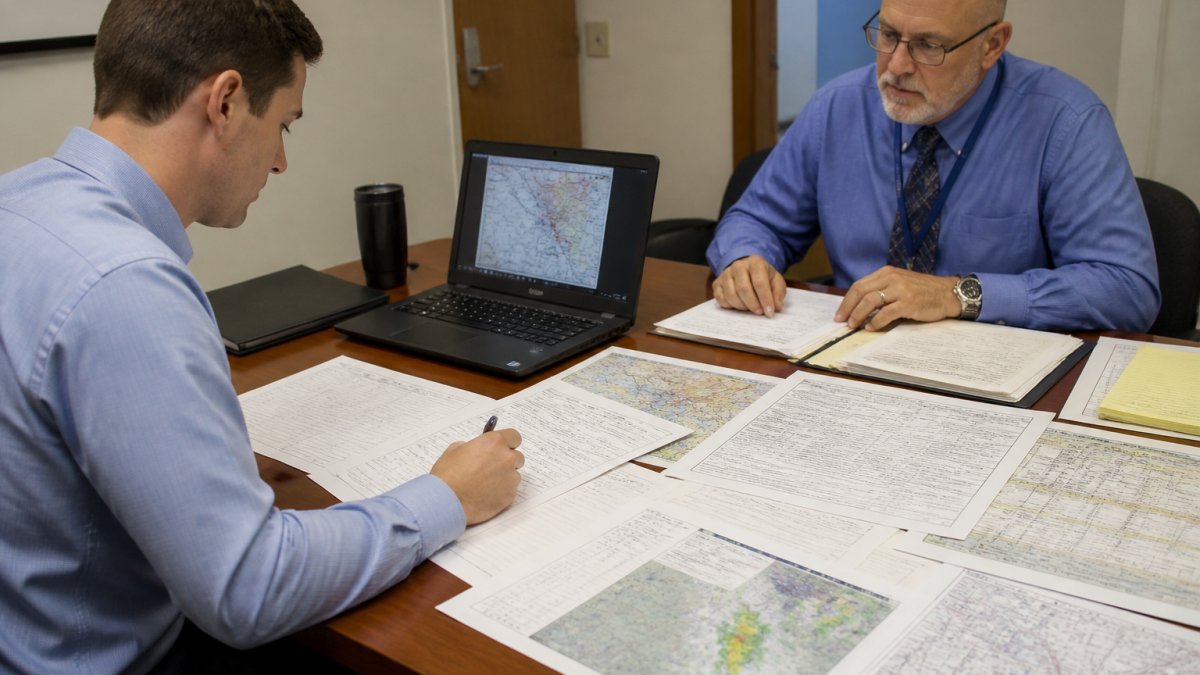
Scenario 1: Fuel Planning and Reserve Calculation
A candidate plans a flight and calculates fuel to the destination, forgetting to add the required reserve on top of trip fuel and never checking alternate fuel against the forecast.
The examiner catches it with one question: "What happens if you divert?"
The fix is a fixed order of operations: trip fuel, then reserve, then alternate, then holding or contingency.
Scenario 2: Alternate Airport Selection Under Changing Weather
A candidate picks an alternate based on the morning forecast. By briefing time, a new TAF shows conditions trending down, and they never recheck.
The examiner asks whether the alternate still qualifies. The candidate has no answer.
The lesson: alternate selection is not a one-time decision. Recheck the forecast against actual weather right before you commit. If conditions are changing, say so and adjust.
Step-by-Step Error-Proofing Checklist for a Dispatch Scenario
Run this checklist in order every time you practice a full dispatch scenario. It turns scattered knowledge into a repeatable process that holds up under test pressure.
- Read the route and confirm it matches the release
- Pull the current METAR, SPECI, and TAF for departure, destination, and alternate
- List every NOTAM that affects the flight
If you can complete this list without skipping a step, you have covered the tasks examiners test most. It also doubles as a self-review tool after each practice run.
Recovering After an Incorrect Answer or Calculation
An incorrect answer does not end the exam. How you recover often matters more than the mistake. Examiners watch for whether you catch the error and correct it calmly.
The recovery sequence:
- Stop and acknowledge the error out loud.
- Recalculate or re-reason from a clean starting point.
- State the corrected answer and how it changes your decision.
- Move on without apologizing repeatedly.
What sinks candidates is not the wrong number but the panic that follows, causing a second and third error. Practicing recovery in study sessions builds the muscle to stay calm when it counts.
Scoring, Unsatisfactory Performance, and Retest Implications
The practical test is scored pass or fail across the required tasks, not on a percentage.
That is why task-by-task preparation matters: one weak area can cost you the whole attempt even if everything else is strong. The FAA's practical test standards define the tasks, required knowledge and skill, and common errors for each one, so treat them as your study map rather than a formality.
For current details on scoring, retest rules, and the standards that apply, check the official FAA guidance before your test date. FAA practical test standards and dispatcher certification guidance
Before you book your test, confirm the eligibility and experience requirements for a dispatcher certificate under Part 65. FAA Part 65 aircraft dispatcher certification requirements
The candidates who pass are not the ones who never make mistakes, but the ones who built habits that catch mistakes before the examiner does.
The practical exam rewards preparation that goes beyond reading.
Frequently Asked Questions
What mistakes do candidates commonly make on the aircraft dispatcher practical exam?
The most frequent errors involve skipping steps in the flight planning sequence, misreading METAR or TAF trends, and failing to explain the reasoning behind a decision. Candidates also lose points by not cross-checking fuel reserves against actual weather and NOTAM conditions, and by giving rehearsed answers that do not match the scenario the examiner presents. Practicing with realistic scenarios and a step-by-step checklist reduces all of these.
What happens if you fail the aircraft dispatcher practical exam?
If the examiner marks unsatisfactory performance on any required task, the practical test ends at that point. You receive a notice of disapproval listing the failed task, and you must retest on the incomplete items. The retest typically happens after additional training and a logbook endorsement from your instructor. There is no limit on attempts, but each retest requires a new application and fee.
How should I use weather information in an aircraft dispatcher exam scenario?
Start with the big picture: read the forecast for the route and terminals, then compare it against current METARs and SPECIs to spot trends. Identify where conditions are deteriorating or improving, and connect that to your alternate airport choice and fuel plan. During aircraft dispatcher weather briefing practice, narrate your reasoning aloud so the examiner hears how each data point drives your decision.
How can I practice aircraft dispatcher exam scenarios?
Build a set of realistic dispatch problems using actual weather archives, NOTAMs, and aircraft performance data. Work each scenario end to end: select the route, compute fuel, pick alternates, and brief the weather. Time yourself, then review where you hesitated or skipped a step. Study groups and instructor-led sessions help because another person can play the examiner and challenge your reasoning in real time.