 how-to
How to Conduct a Mock Practical Exam: Step-by-Step
Table of Contents
- Step 1: Set Up Realistic Conditions for a Mock Practical Exam
- Step 2: Build a Mock Practical Exam Checklist
- Step 3: Choose Mock Practical Exam Scenarios That Mirror the Real Test
- Step 4: Assign the Examiner Role and Time Each Task
- Step 5: Apply a Mock Exam Scoring Rubric
- Step 6: Run the Mock Exam Feedback and Debrief Session
- Step 7: Track Progress and Repeat Practice Before the Real Exam
- Common Mistakes When Conducting a Mock Practical Exam
- Frequently Asked Questions
Last Updated: October 9, 2026
Step 1: Set Up Realistic Conditions for a Mock Practical Exam
A mock practical exam is a timed rehearsal of the hands-on portion of a certification test, run under the same conditions as the real thing. According to FAA Airman Testing Standards, candidates are evaluated on observable performance, not memorized answers. That single fact changes how you should run every practice session.
At QNH LLC, we build this realism into our Part 65 Aircraft Dispatcher training from day one. Here is the core principle: if your practice room is quiet, roomy, and forgiving, your results will lie to you.
Room, Tools, and Materials Checklist
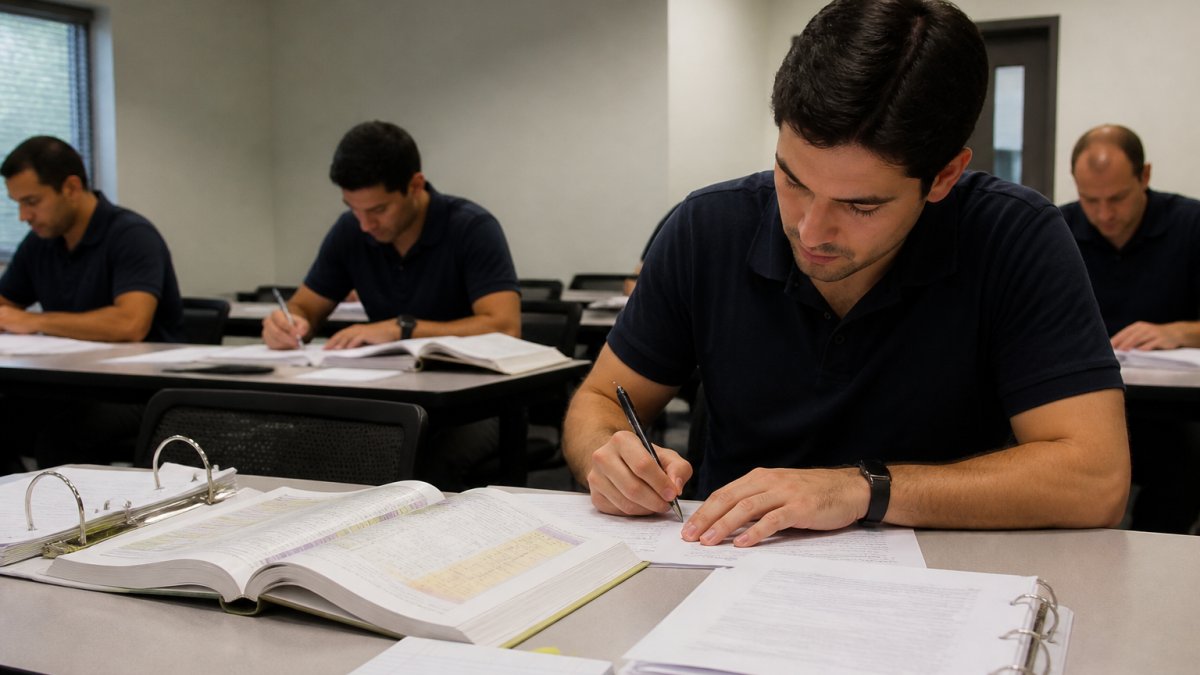
Set up a space that mirrors the actual test center:
- One desk, one chair, nothing else on the surface
- Current charts, plates, and reference documents within reach
- A working calculator and scratch paper
- A visible clock or timer the candidate can see
- No phone, no notes, no study guides in view
Safety, Accessibility, and Accommodations
Some candidates need extra time, a larger screen, or a quieter room. Under ADA testing accommodation guidance, testing entities must provide reasonable accommodations when requested in advance. Build those same adjustments into your mock so the real day feels familiar.
Step 2: Build a Mock Practical Exam Checklist
A mock practical exam checklist is the document that keeps every session consistent. Without one, you will forget to time a task or skip a scoring step. The gap most guides leave open is that a practical exam is not scored on answers, it is scored on observable actions, so the checklist has to capture behavior, not just results.
Build the checklist in three layers.
Layer 1: Session header. Record candidate name, date, scenario ID, examiner name, start time, and end time. The scenario ID matters because you will rotate scenarios across sessions; without an ID you cannot tell whether a score jump came from improvement or from an easier scenario.
Layer 2: Task rows. One row per task, with these columns:
- Task number and task name
- Time limit (in minutes)
- Required observable actions (what the candidate must physically do or say)
- Critical error flag (yes/no)
- Score (use the rubric in Step 5)
- Examiner note (one sentence, written during the task, not after)
Layer 3: Debrief block. Three prompts the examiner fills in before the debrief starts: what went right, the single highest-impact error, and the one drill assigned before the next session.
A worked example for a dispatcher scenario, "winter storm closes two alternates mid-route", might read:
| Task | Time limit | Required observable actions | Critical error |
|---|---|---|---|
| Re-route around closed alternates | 12 min | Identifies both closures, selects a new alternate, verifies fuel to the new alternate, states the change aloud | Failing to verify fuel to the new alternate |
| Recompute fuel | 8 min | Recalculates burn, checks reserve, records the new figure on the flight plan | Skipping the reserve check |
| Brief the change | 5 min | States the new route, the new alternate, and the fuel figure in one pass | Omitting the fuel figure |
Two rules keep the checklist honest. First, write the observable actions before the session, not during it, if you invent criteria while watching, you will unconsciously grade easier. Second, keep the same checklist across sessions for the same scenario so the numbers are comparable.
Our instructors keep a running checklist for each candidate across all practice sessions. That way, progress is visible, not remembered.
Step 3: Choose Mock Practical Exam Scenarios That Mirror the Real Test
Strong scenarios pull from the same skill areas the real test covers. For dispatcher candidates, that means weather analysis, fuel planning, weight and balance, and route selection.
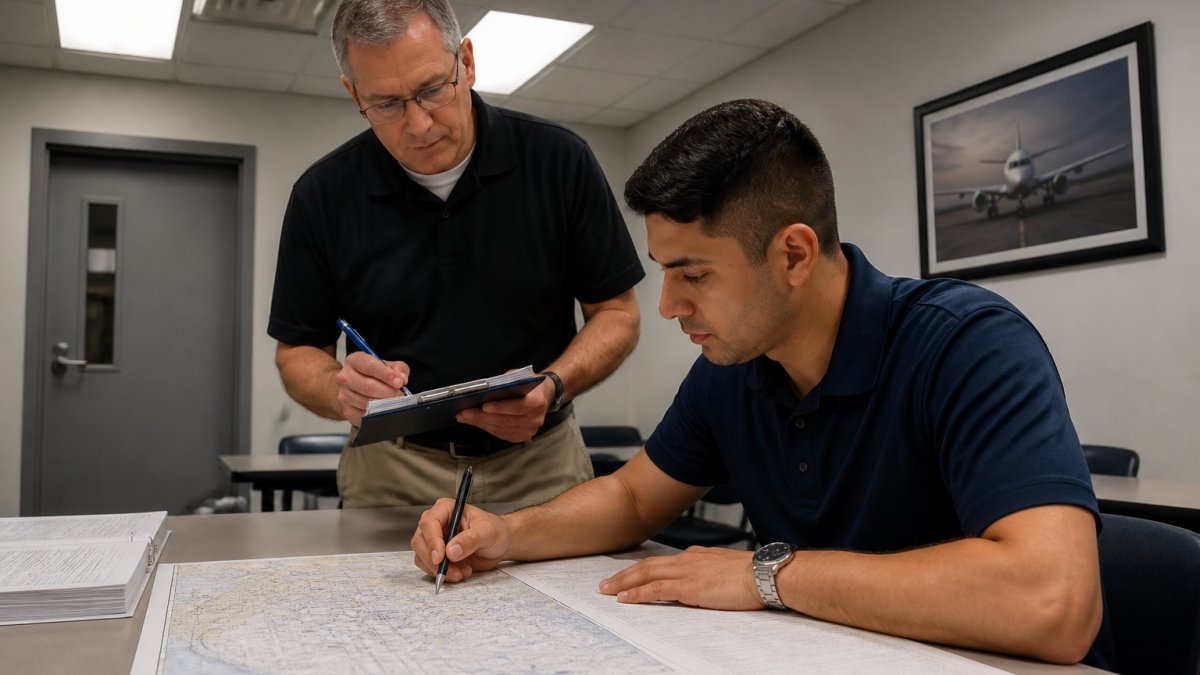
Scenario Examples for Dispatch and Flight Planning
- A winter storm closing two alternate airports mid-route
- A weight and balance issue discovered after loading
- A fuel stop added due to unexpected headwinds
- A mechanical delay forcing a full re-plan
Rotate scenarios so no single skill area gets ignored. Candidates tend to practice what they enjoy. The test does not.
Step 4: Assign the Examiner Role and Time Each Task
The examiner role is the part most self-study guides skip. Someone has to watch, time, and score, and that person should not be the candidate.
Give each task a hard time limit. If a real task takes 15 minutes, the mock takes 15 minutes. Stop the candidate when time runs out.
Step 5: Apply a Mock Exam Scoring Rubric
A mock exam scoring rubric turns vague impressions into a number you can track. The problem with most rubrics is that they score the outcome and ignore the process. On a practical exam, a candidate can reach the right answer through an unsafe or non-standard procedure and still pass a results-only rubric. That is the failure mode this section fixes.
Score each task on two axes, not one.
Axis 1: Outcome. Did the candidate produce the correct result?
Axis 2: Process. Did the candidate follow the required sequence, use the required references, and avoid unsafe or non-standard actions?
Combine them into a single 1-4 score:
| Score | Outcome | Process | Meaning |
|---|---|---|---|
| 4 | Correct | Fully standard, on time | Ready for harder scenarios |
| 3 | Correct | Minor deviation or slow | Add time-pressure drills |
| 2 | Partly correct | Major deviation | Re-teach the task |
| 1 | Wrong or unsafe | Any | Full review before retest |
A task scored 1 for an unsafe action is a critical error regardless of whether the final answer was right. Track critical errors separately from the total score, a candidate can average a 3 and still be unready if they logged two critical errors.
Separate procedural errors from knowledge gaps. Before you assign a score, ask one question: could the candidate explain the correct procedure but fail to execute it? If yes, it is a procedural error, the fix is repetition under time pressure. If no, it is a knowledge gap, the fix is re-teaching before the next mock. Mixing the two produces study plans that drill the wrong thing.
Set a pass threshold before the first session. A common pattern among training programs is to require a 3 or better on every task and zero critical errors across two consecutive sessions before declaring readiness. Pick your threshold in advance and write it on the checklist. If you set it after seeing the scores, you will move it to match the candidate.
Score the same way every session. Consistency is what makes the numbers useful.
Step 6: Run the Mock Exam Feedback and Debrief Session
Mock exam feedback and debrief should happen the same day, while details are fresh. Start with what went right, then walk through each missed step.
Ask the candidate to explain their reasoning before you explain the fix. This is the Socratic Method in practice, and it is how QNH LLC instructors run every debrief. Candidates who talk through their own mistakes remember the correction far longer.
Keep the debrief under 30 minutes. Long lectures lose the room.
Step 7: Track Progress and Repeat Practice Before the Real Exam
A single mock tells you almost nothing. Repeat practice across several weeks is what builds readiness.
Track three numbers per session:
- Total score
- Tasks completed on time
- Tasks with critical errors
When all three trend up, the candidate is ready. When they stall, adjust the study strategy before adding more sessions.
Common Mistakes When Conducting a Mock Practical Exam
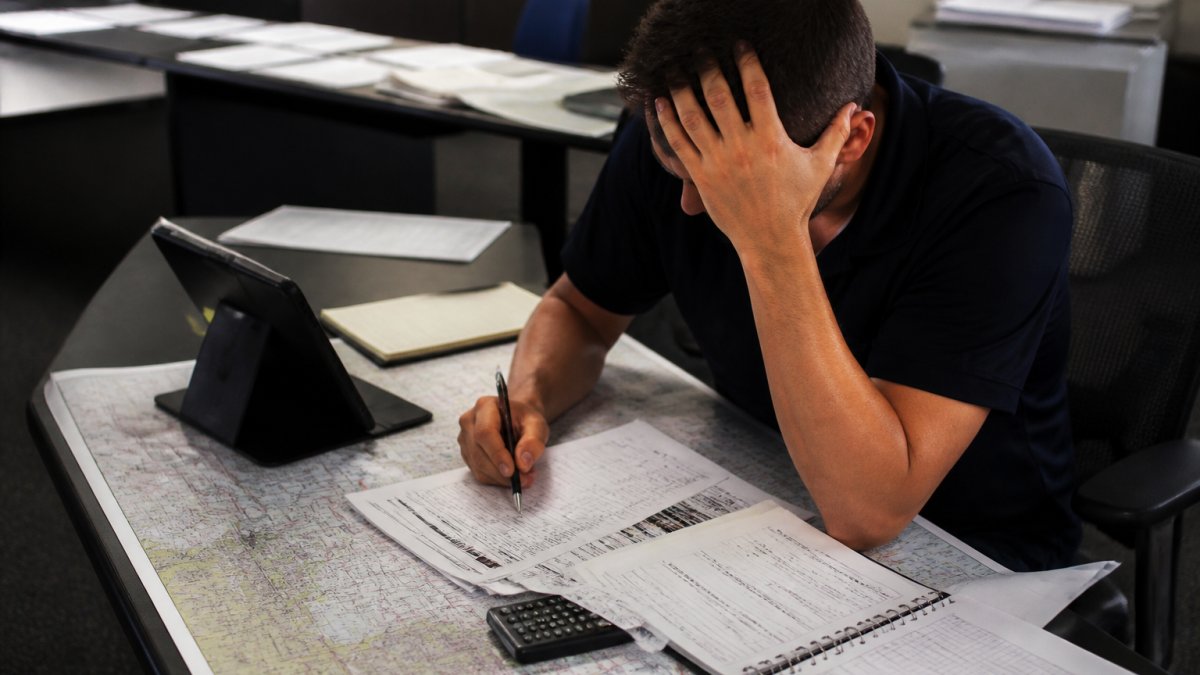
The biggest mistake is treating the mock like a study session. Candidates pause, look things up, and take breaks. Then the real test removes all three.
Other frequent errors:
- No timer, so tasks run long
- The examiner coaches mid-task instead of observing
- Scoring from memory instead of a rubric
- Skipping the debrief because everyone is tired
Fix these and your mock practical exam becomes a real predictor of performance. At QNH LLC, our 200-hour Part 65 program pairs every classroom block with timed practical runs led by experienced instructors, including former FAA Dispatcher Examiners. Small classes mean every candidate gets watched, scored, and debriefed. Fall registration includes a free Gleim Online Ground School course.
Frequently Asked Questions
How long should a mock practical exam take?
Match the real exam's time limit as closely as possible. For an FAA practical test, oral questioning and hands-on tasks often run two to four hours depending on the certificate. Set a timer for each scenario, allow the same breaks the real test allows, and stop the candidate when time expires. If the mock runs much shorter, add more scenarios; if it runs long, the candidate needs work on question timing and task prioritization. Consistent timing builds the internal clock candidates need on test day.
What should a mock practical exam include?
A complete mock practical exam should include realistic scenarios drawn from the actual exam format, a checklist of required tasks, a scoring rubric with defined competency thresholds, and a structured debrief. Include at least one scenario the candidate has not seen before to test independent practice. Add a safety and accommodations review so the candidate knows what to expect. The goal is to replicate authentic conditions, not just quiz knowledge, so include hands-on tasks like weight and balance computations and flight plan defense.
How do you score a mock practical exam?
Use a mock exam scoring rubric that breaks each task into observable criteria and rates performance on a simple scale, such as meets standard, needs improvement, or unsatisfactory. Score consistently by writing the criteria before the exam, not after. Record specific examples of what the candidate did well or missed. After scoring, compare results across attempts to see whether weak areas are improving. A rubric turns a subjective impression into data you can act on.
What should you do after a mock practical exam?
Run a debrief within 24 hours while the details are fresh. Walk through each scenario, share the scored rubric, and let the candidate self-assess first. Identify two or three weak areas to focus practice on, then schedule the next mock exam. Review answers together, adjust the study strategy, and repeat practice on the specific tasks that scored lowest. This cycle of test, review, and focused practice is what moves a candidate from marginal to ready.
The gap between knowing the material and performing under pressure is where most candidates lose their shot. QNH LLC closes that gap with FAA-approved Part 65 training, small classes, and instructors who have sat on the examiner's side of the table. Reserve your seat and walk into the real exam already tested.