 ultimate-guide
How to Become an Aircraft Dispatcher: 2026 Guide
Table of Contents
- What Aircraft Dispatchers Actually Do
- FAA Part 65 Dispatcher Requirements
- Aircraft Dispatcher Training Duration and Curriculum
- The ADX Written Exam and Practical Examination
- Aircraft Dispatcher Salary Expectations and Career Outlook
- Financial Aid and Funding Your Dispatcher Certification
- How to Choose the Right Aircraft Dispatcher Training Program
- Conclusion
Last Updated: August 17, 2026
What Aircraft Dispatchers Actually Do
An aircraft dispatcher is one of the most consequential roles in commercial aviation that most passengers have never heard of. At QNH LLC, we train candidates to understand this from day one: the dispatcher is not a glorified scheduler. Under federal aviation regulations, the dispatcher holds joint operational control over every flight alongside the pilot-in-command. That shared authority is legally defined, not a courtesy.
Operational Control and Shared Authority with the Pilot-in-Command
Operational control is the legal authority to initiate, conduct, or terminate a flight. Under FAA regulations governing air carrier operations, certificated air carriers must assign a licensed dispatcher to share this authority with the pilot-in-command on every domestic and international commercial flight.
If a dispatcher determines that a flight cannot be conducted safely, they have the authority to withhold the flight release. The pilot cannot legally depart without it. That is real authority, and it carries real responsibility.
A Day in the Life: Flight Release, Fuel Planning, and NOTAMs
A dispatcher's shift typically begins hours before the first departure. The workload is front-loaded and analytically demanding.
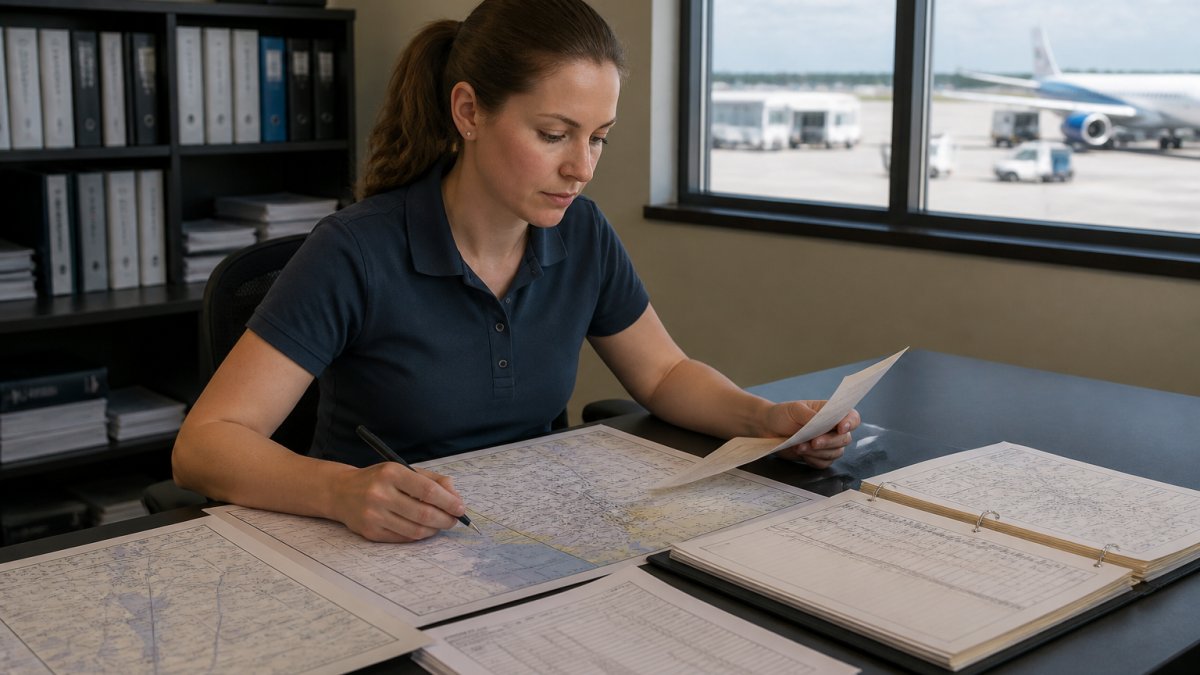
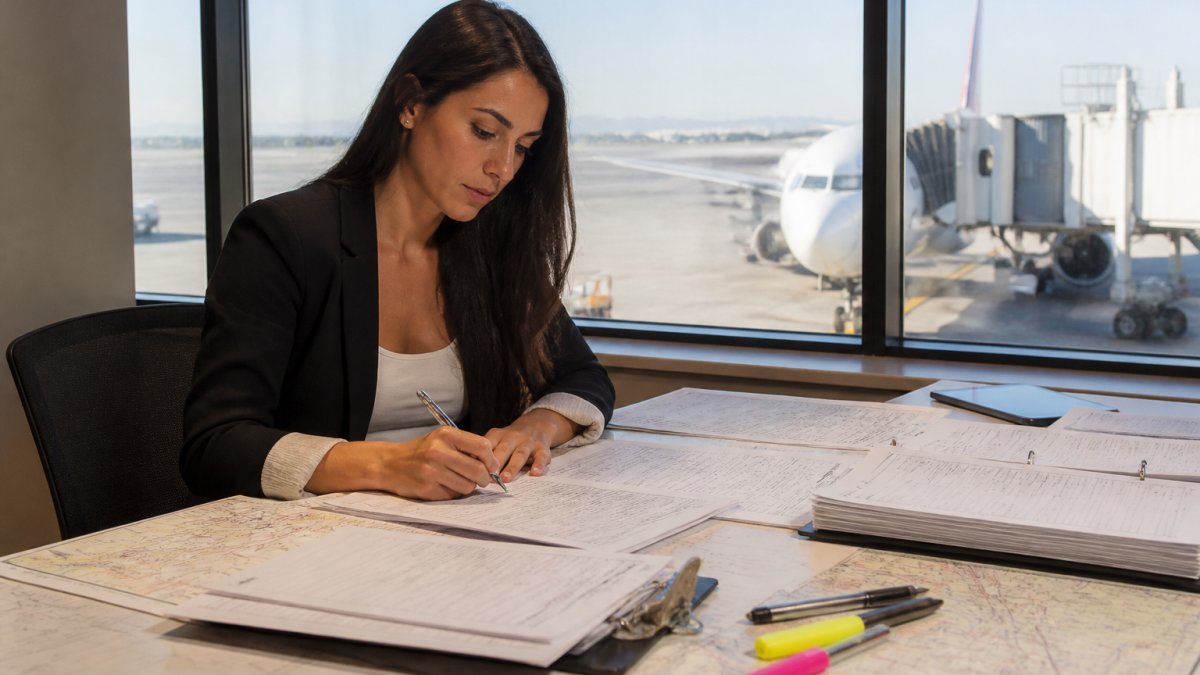
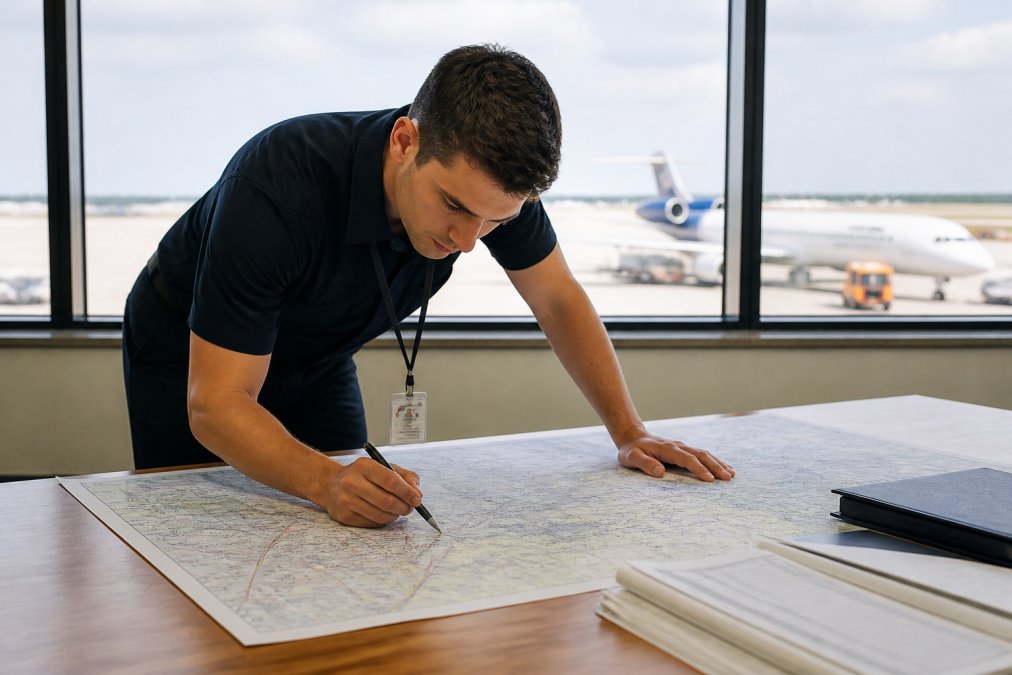
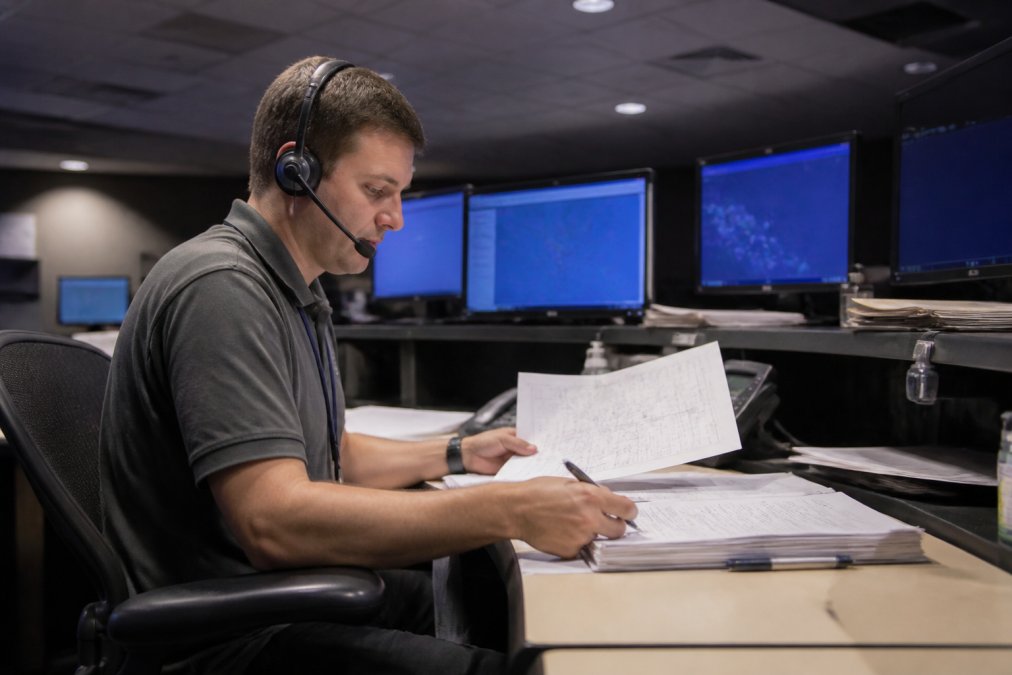
A typical day involves reviewing aviation weather across the entire route, calculating weight and balance, checking NOTAMs for runway closures and airspace restrictions, computing fuel planning figures, coordinating with crew scheduling and air traffic control, issuing the flight release document, and tracking active flights while amending releases when conditions change. The aeronautical decision making required happens fast, often across a dozen flights simultaneously.
FAA Part 65 Dispatcher Requirements
FAA Part 65 defines the certification standards every aircraft dispatcher must meet before they can legally exercise operational control at a certificated air carrier.
Age, Education, and Aviation Experience Prerequisites
To qualify for a dispatch certificate, an applicant must be at least 23 years of age, hold a high school diploma or GED equivalent, be able to read, speak, write, and understand English, and complete an FAA-approved dispatcher training course of at least 200 hours of instruction.
No prior aviation experience is required to enroll in a training program. The 200-hour curriculum is designed to build competency from the ground up, covering everything from basic meteorology to federal aviation regulations and aircraft performance calculations.
Background Screening and Drug Testing
Commercial aviation is a safety-sensitive industry, and hiring standards reflect that. Airlines conduct thorough background screening before extending offers to dispatcher candidates, typically including criminal history review, employment verification going back ten years, and education credential confirmation.
Drug testing is mandatory. The FAA and Department of Transportation require pre-employment drug testing for all safety-sensitive aviation positions, and dispatchers fall squarely within that category. Ongoing random testing is standard throughout employment.
Aircraft Dispatcher Training Duration and Curriculum
Aircraft dispatcher training duration is a fixed regulatory floor. The FAA mandates a minimum of 200 hours of instruction at an approved program. What varies between programs is the quality of instruction, the depth of the curriculum, and how well it prepares candidates for the practical examination that follows.
What the 200-Hour Curriculum Covers
The 200-hour curriculum is comprehensive by design. A well-structured program covers:
| Subject Area | Why It Matters |
|---|---|
| Meteorology and aviation weather | Dispatchers interpret weather products daily; errors cost lives |
| Federal aviation regulations | Legal authority and responsibility flow from FAR knowledge |
| Navigation and flight planning | Route construction, alternate selection, fuel planning |
| Aircraft performance | Weight and balance, takeoff/landing data, performance limits |
| Air traffic control procedures | Coordination with ATC affects every flight release |
| Emergency procedures | Dispatchers must know how to support crews in abnormal situations |
| Crew scheduling and operational control | Understanding the full operations picture |
| Aeronautical decision making | Judgment under pressure, not just rule recall |
QNH LLC's FAA-approved Part 65 program delivers all 200 classroom hours with instruction from experienced airline pilots and former FAA Dispatcher Examiners. Weight and balance computations, meteorology interpretation, and flight plan construction are taught to proficiency, not familiarity.
In-Person vs. Online Training: What to Weigh
The ADX practical examination requires candidates to defend a complete flight plan in front of an FAA examiner. That oral examination tests judgment, not just recall. Candidates trained in a classroom environment where instructors push back on reasoning and force articulation of decisions consistently perform better.
The Socratic Method used by QNH LLC's chief and lead instructors, who are Sheffield Graduates, is specifically designed to build reasoning under pressure. A pre-recorded video lecture cannot replicate it.
The ADX Written Exam and Practical Examination
The FAA Aircraft Dispatcher certification process has two distinct examination phases: the ADX written exam and the practical examination, which includes both an oral component and a flight plan defense. Passing both is required before a dispatch certificate is issued.

ADX Written Exam Overview
The ADX written exam is administered at FAA-approved testing centers and covers meteorology, navigation, aircraft performance, federal aviation regulations, air traffic control, and emergency procedures. Candidates must score 70% or higher to pass.
The exam draws from the FAA's Airman Knowledge Testing Supplement, which includes actual charts, weather products, and performance data that candidates must interpret. This is not a memorization test. Many questions require multi-step reasoning using real aviation tools. Preparation through a structured ground school, such as the Gleim Online Ground School course included with QNH LLC's fall class registration, gives candidates a significant advantage.
Oral Examination and Flight Plan Defense
The practical examination is where certification candidates either prove their readiness or reveal gaps that classroom shortcuts left open. An FAA Designated Pilot Examiner conducts the oral portion, asking candidates to demonstrate their understanding of operational control, aeronautical decision making, and emergency procedures.
The flight plan defense requires candidates to construct a complete flight release, including route, alternates, fuel planning, weight and balance, and weather analysis, and then justify every decision. Candidates trained by former FAA Dispatcher Examiners have the advantage of knowing exactly what examiners look for.
Aircraft Dispatcher Salary Expectations and Career Outlook
Aircraft dispatcher salary expectations vary significantly based on experience, carrier size, and seniority. The career outlook for qualified dispatchers remains strong, driven by ongoing commercial aviation growth and mandatory FAA staffing ratios at certificated carriers.
Entry-Level vs. Senior Dispatcher Compensation
Entry-level dispatchers at regional carriers typically earn less than their counterparts at major airlines, where union contracts and seniority scales govern compensation. The gap between early-career and senior dispatcher pay at a major carrier is substantial. Many dispatchers describe the first three to five years as the investment phase: building seniority, gaining experience across aircraft types, and moving toward the compensation levels that make the career financially compelling.
According to Bureau of Labor Statistics Occupational Outlook for Air Traffic Controllers and Airfield Operations Specialists, aviation operations roles have seen consistent demand as air travel volumes recover and expand. Dispatcher roles are not subject to the same mandatory retirement age as pilots, which means experienced dispatchers can build seniority over a longer career arc.
Career Progression: From Dispatch Desk to Flight Operations Management
The dispatch desk is the starting point, not the ceiling. Experienced dispatchers move into roles including senior dispatcher with expanded route authority, training dispatcher, dispatch supervisor, flight operations manager, and Director of Operations. The career progression path rewards seniority and demonstrated judgment.
Financial Aid and Funding Your Dispatcher Certification
Dispatcher training is a professional certification investment, and the cost is real. Many candidates explore these avenues:
- Federal Pell Grants and Title IV aid: Some FAA Part 65 programs at accredited institutions qualify for federal student aid.
- Workforce development programs: State workforce agencies often fund aviation training for candidates entering high-demand fields. The Department of Labor's CareerOneStop resource for training funding lists state-by-state programs that may apply.
- Employer sponsorship: Airlines with internal candidate pipelines sometimes fund or reimburse training for employees transitioning into dispatch roles.
- Veterans' education benefits: GI Bill benefits can apply to FAA-approved training programs.
- Payment plans: Some training programs offer installment arrangements.
How to Choose the Right Aircraft Dispatcher Training Program
Not all FAA-approved programs deliver the same outcome. The certificate is standardized. The preparation is not.
The questions worth asking before enrolling:
- What is the instructor background? Instructors who have worked as airline dispatchers or FAA examiners bring operational credibility.
- What is the class size? Small classes allow individual attention on concepts that cause the most difficulty.
- How does the program prepare students for the oral examination? Look for programs that conduct mock oral exams and require students to defend flight plans under pressure.
- What is the pass rate? A program confident in its outcomes should be able to document candidate success.
- What is included in the cost? Ground school supplements, exam prep materials, and instructor access vary by program.
- Is the schedule compatible with your situation? Candidates working full-time at airlines need programs that accommodate shift work.
The oral examination experience is almost entirely determined by how much pressure your instructors put on you during training. A program where instructors accept vague answers produces candidates who fail the practical exam.
QNH LLC's small class model and Socratic Method instruction exist specifically to close that gap. Candidates who can defend their decisions under an experienced airline pilot's questioning are prepared for what the FAA examiner will ask.
Becoming an aircraft dispatcher requires meeting specific FAA Part 65 requirements, completing a rigorous 200-hour training curriculum, and passing both the ADX written exam and a demanding oral practical examination. The career offers genuine authority, competitive long-term compensation, and a clear progression path in commercial aviation. QNH LLC's FAA-approved Part 65 program, built on small class sizes, instruction from former FAA Dispatcher Examiners, and a curriculum that covers meteorology, aerodynamics, aviation laws, and weight and balance computations, prepares candidates to pass certification and get hired. Reserve now and take the first step toward a career in flight operations.
Frequently Asked Questions
How long does it take to become an aircraft dispatcher?
The FAA requires a minimum of 200 hours of instruction to qualify for the aircraft dispatcher certificate under FAA Part 65. Most full-time programs complete this in six to eight weeks. Part-time schedules can stretch to three or four months. After finishing the course, you still need to pass the ADX written exam and a practical oral examination before you receive your dispatch certificate and can work in commercial aviation.
What are the FAA requirements for aircraft dispatcher certification?
Under FAA Part 65, you must be at least 23 years old, hold a high school diploma or GED, and complete 200 hours of approved dispatcher instruction. You must pass the ADX written exam with a score of 70% or higher, then pass an oral and practical examination administered by an FAA-designated examiner. A pre-employment background screening and drug test are standard requirements before airlines will place you in an operational control role.
Do flight dispatchers get paid well?
Aircraft dispatcher salary expectations vary by carrier size and experience. Entry-level dispatchers at regional airlines typically earn in the low-to-mid $40,000s annually, while experienced dispatchers at major carriers can earn $80,000 to over $100,000 per year. Dispatchers covered by union contracts often receive additional benefits including retirement contributions, health coverage, and travel privileges. Salary growth is closely tied to seniority and the size of the operation.
Is it hard to get a job as an aircraft dispatcher?
Hiring demand for certified aircraft dispatchers is steady, particularly as commercial aviation continues recovering and expanding. Candidates who hold an FAA dispatch certificate from an accredited program, have strong knowledge of flight planning, meteorology, and federal aviation regulations, and can demonstrate aeronautical decision making under pressure are competitive. Graduates from programs with direct airline industry connections and small-class instruction tend to enter the hiring pool better prepared than those from self-study-only backgrounds.
Do flight dispatchers get free flights?
Most airline dispatchers receive travel benefits as part of their compensation package, commonly called 'non-revenue' or 'space-available' travel. The scope of these benefits depends on the airline and any applicable union agreement. Typically, full-time dispatchers and their immediate family members can fly standby on their employer's routes at no cost or a nominal fee, and some agreements include reciprocal travel privileges on partner carriers.
What is the difference between a flight dispatcher and a pilot?
A pilot physically operates the aircraft; an aircraft dispatcher shares legal operational control of every flight from the ground. Under federal aviation regulations, both the pilot-in-command and the dispatcher must sign the flight release before departure. Dispatchers handle weather analysis, fuel planning, weight and balance, NOTAMs, crew scheduling coordination, and route optimization. Dispatchers do not need a pilot's license, but they must hold an FAA dispatch certificate earned through the same rigorous examination process.
This article was written using GrandRanker