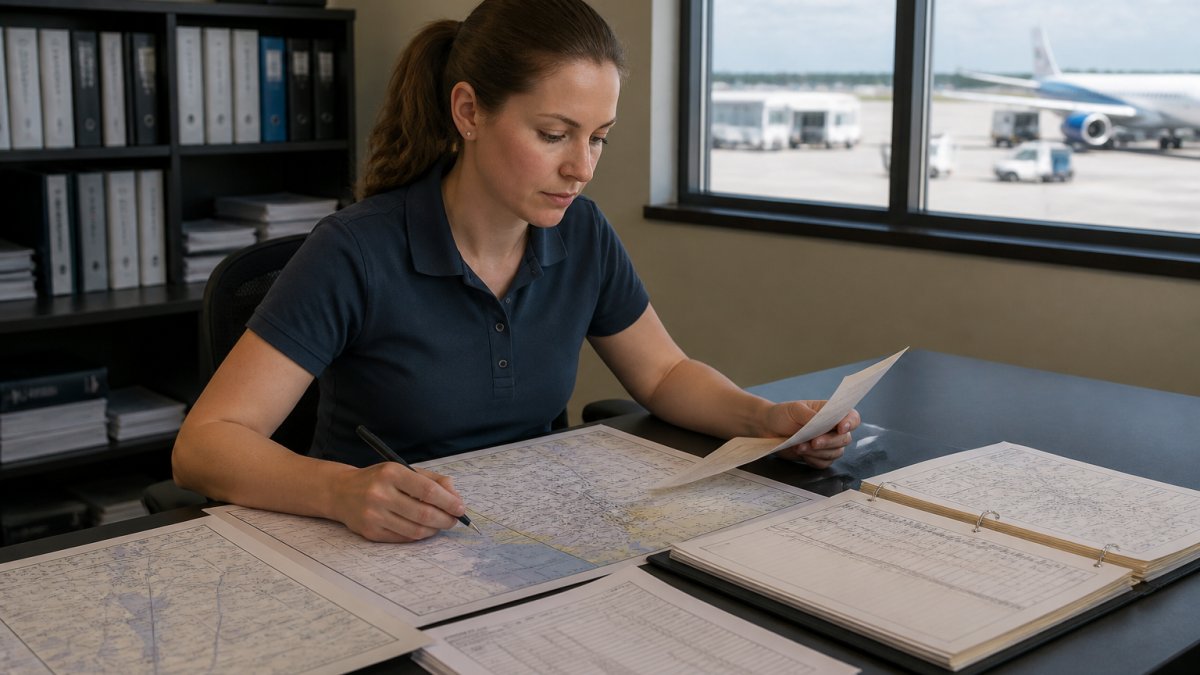
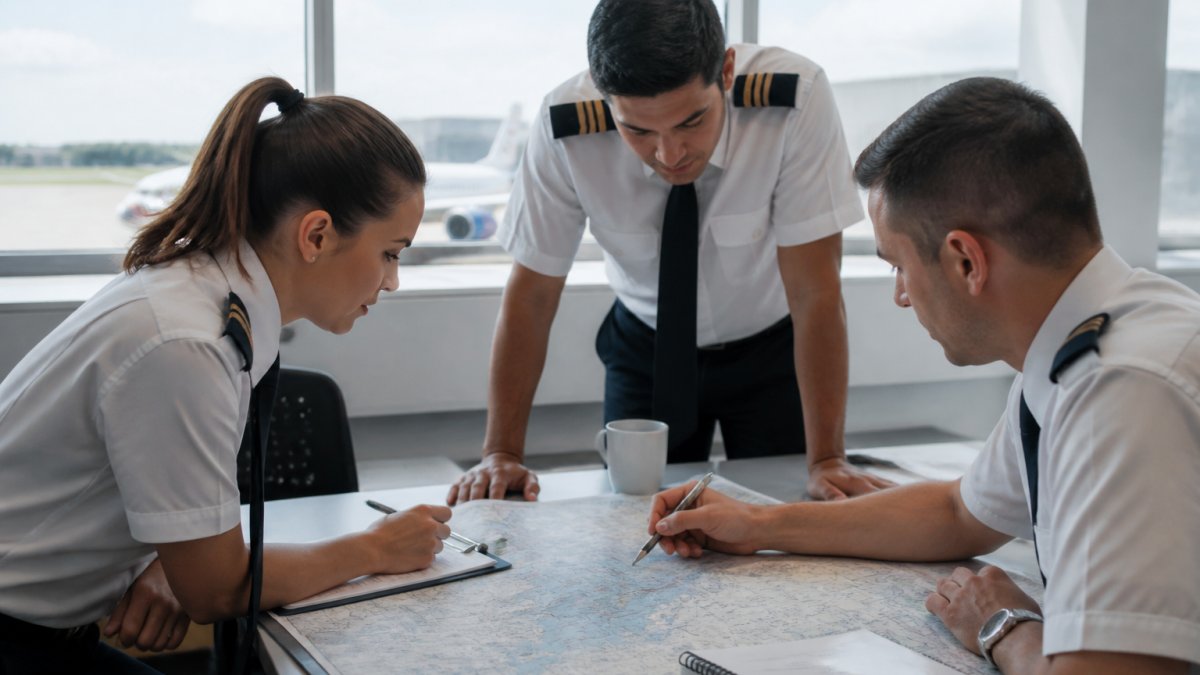
 ultimate-guide
Hireable Aviation Candidates for Flight Planning
Table of Contents
- What Makes Aviation Candidates Hireable in 2026
- Role-Specific Qualifications Airlines Actually Screen For
- Aircraft Dispatcher Certification: The FAA Part 65 Foundation
- Aircraft Dispatcher Training That Builds Job-Ready Skills
- Aircraft Dispatcher Flight Planning: From Preflight to Fuel Planning
- Screening, Interviews, and Aircraft Dispatcher Interview Questions
- Flight-Planning Software and Digital Workflow Proficiency
- Competency Map for Flight Schedulers and Dispatchers
- Conclusion
- Frequently Asked Questions
Last Updated: October 13, 2026
What Makes Aviation Candidates Hireable in 2026
Hireable aviation candidates in 2026 are defined less by hours logged than by verified competency: the right certificates, demonstrable flight planning skill, and the judgment to defend a decision under pressure. That shift matters because the best preparation of hireable candidates for the aviation industry for simplify flight planning now starts with training that mirrors the job, not just the written exam. At QNH LLC, we build our Part 65 curriculum around that reality, and this guide breaks down exactly what employers screen for and how candidates get ready for it.
The core tension is simple. Airlines and charter operators need dispatchers and planners who can walk into a flight operations center and produce a legal, safe, fuel-efficient plan on day one. Most training programs optimize for a passing test score instead.
That gap is where hiring managers get frustrated and where prepared candidates stand out.
Role-Specific Qualifications Airlines Actually Screen For
Airlines screen for role-specific qualifications first, because a general aviation enthusiast is not the same as a hireable dispatcher. Recruiters look for a certificate that matches the seat, documented training hours, and evidence the candidate understands the operational weight of the job.
The screening checklist most operators use looks like this:
- Current FAA aircraft dispatcher certificate or equivalent pathway
- Documented classroom and practical training hours
- Working knowledge of weather assessment and route planning
- Familiarity with weight and balance computations
- Clear communication under time pressure
Candidates who can speak to each of these in specifics move forward. Those who speak only in generalities usually do not.
Aircraft Dispatcher Certification: The FAA Part 65 Foundation
Aircraft dispatcher certification is the regulatory foundation of the career, and in the United States it runs through FAA Part 65. The certificate is what legally authorizes a dispatcher to share operational control of a flight with the pilot in command.
The FAA Part 65 regulations on aircraft dispatchers set the training and testing requirements, including the knowledge areas an applicant must demonstrate. That regulatory spine is why employers treat certification as a baseline filter rather than a bonus.
Licenses, Certifications, and Technical Skills That Matter
Beyond the certificate itself, operators want proof of technical range. Meteorology, aerodynamics, and aviation law form the knowledge base. On the skills side, avionics literacy, air traffic procedures, and the ability to read flight information quickly separate strong candidates from weak ones.
Aircraft Dispatcher Training That Builds Job-Ready Skills
Aircraft dispatcher training only counts as preparation when it produces job-ready skills, not just exam familiarity. The difference shows up in how a candidate handles a live scenario: a deteriorating forecast, a tight fuel margin, a reroute.
Programs that work share a few traits. They run long enough to build real understanding, they use small classes so instructors can correct thinking in real time, and they put candidates in front of operational scenarios repeatedly. Our 200-classroom-hour curriculum at QNH LLC follows that model, taught by airline pilots and former FAA Dispatcher Examiners who have made these calls for real.
Training Pathways and Career Advancement
Training pathways should map to a career, not just a certificate. A candidate coming from outside aviation needs a program that starts from fundamentals. An internal airline candidate needs depth that accelerates promotion.
Career advancement in dispatch follows demonstrated competency. Dispatchers who master flight planning and regulatory compliance early tend to move into scheduling, operations control, and training roles faster.
Aircraft Dispatcher Flight Planning: From Preflight to Fuel Planning
Aircraft dispatcher flight planning is the daily core of the job: assembling weather, route, aircraft performance, and fuel into a plan the pilot can fly safely and legally. It is a sequence, and candidates who learn it as a sequence perform better. Integrating these procedural steps ensures that the dispatcher remains focused on safety, which naturally extends to the critical task of managing flight crew fatigue throughout the duration of the mission.
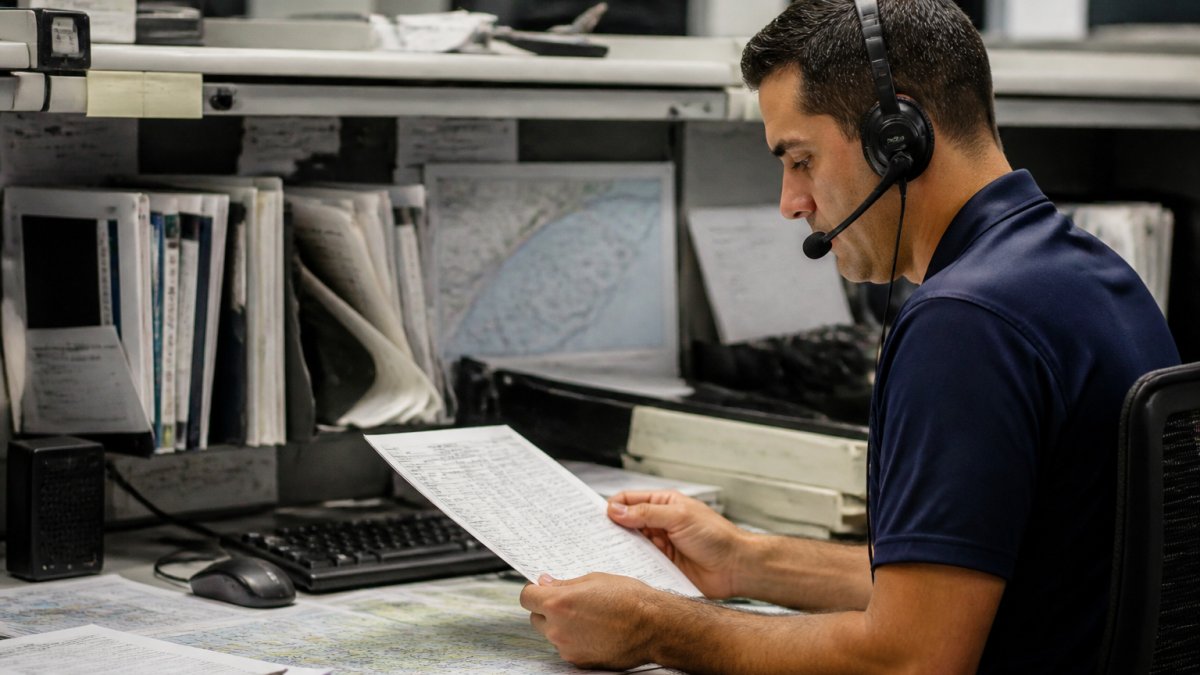
The workflow runs through predictable stages:
- Preflight preparation - review aircraft status, crew, and known constraints
- Weather assessment - evaluate forecasts, turbulence, icing, and alternates
- Route planning - select and file the most efficient legal route
- Fuel planning - calculate required fuel with reserves and contingencies
- Risk assessment - document and communicate the go/no-go logic
Practical Flight-Planning Skills Assessment for Hiring
A practical flight-planning skills assessment is the hiring tool most operators underuse. Instead of asking a candidate to describe the process, give them a real scenario and watch them build the plan.
A workable assessment format:
| Stage | What to Evaluate | Red Flag |
|---|---|---|
| Weather read | Correctly identifies the limiting factor | Misses icing or wind shear |
| Route choice | Picks a legal, efficient route | Ignores airspace restrictions |
| Fuel math | Builds reserves correctly | Skips contingency fuel |
| Communication | Explains the plan clearly | Cannot justify a choice |
Candidates who complete this cleanly are hireable. Candidates who stumble reveal exactly where training needs to go.
Screening, Interviews, and Aircraft Dispatcher Interview Questions
Aircraft dispatcher interview questions are designed to test judgment, not recall. The strongest operators ask scenario-based questions because a dispatcher's value shows up in decisions, not definitions.
Structured Interviews and Scenario-Based Safety Decisions
A structured interview uses the same core questions for every candidate, which makes comparison fair and defensible (Structured Interviews). Scenario-based safety decisions then test how a candidate applies knowledge when the answer is not obvious.
Common prompts include a marginal weather departure, a fuel diversion decision, and a maintenance discrepancy discovered late. Interviewers listen for sound judgment, situational awareness, and clear communication.
Flight-Planning Software and Digital Workflow Proficiency
Flight-planning software proficiency is now a baseline expectation, not a specialization. Modern operations run on digital workflows, and a dispatcher who cannot move quickly through planning software slows the whole desk. The gap most training programs leave is that they teach the concepts but never put candidates in front of the tools they will actually touch on day one.
What "Proficient" Actually Means on a Dispatch Desk
Proficiency is not a list of software names on a resume. It is a set of observable behaviors. A hireable candidate can:
- Pull and interpret a full weather package, METARs, TAFs, SIGMETs, AIRMETs, winds aloft, and prognostic charts, without being walked through each product.
- Build a route in a flight-planning system (foreflight-style or airline-grade dispatch software) and explain why the system's first suggestion was accepted or overridden.
- Reconcile a filed plan against a real-time update, a new SIGMET, a runway closure, a weight-and-balance change, and re-file or amend without losing the operational thread.
- Read a load sheet and a fuel slip and catch a discrepancy before the release is signed.
- Hand off a plan verbally in under two minutes with the limiting factor stated first.
A candidate who can do all five is job-ready. A candidate who can only describe the software is not.
A Practical Software-Proficiency Exercise for Hiring
Instead of asking a candidate to list tools, give them a short scenario and a workstation. A workable format:
| Step | What to Observe | Strong Signal | Weak Signal |
|---|---|---|---|
| Weather pull | Speed and completeness of the briefing | Pulls all required products in one pass | Hunts for each product separately |
| Route build | Uses the system's optimizer, then validates | Explains the override | Accepts the first output blindly |
| Fuel check | Cross-checks system fuel against manual reserve math | Catches a discrepancy | Trusts the number without review |
| Update handling | Amends the plan after a mid-build change | Re-files cleanly, notes the change | Restarts from scratch |
| Handoff | Verbal brief to an examiner | States limiting factor first | Buries the risk in details |
This exercise takes 30-45 minutes and reveals more about day-one readiness than any software-name checklist.
How Training Builds Digital Fluency
Classroom hours alone do not produce software fluency. Programs that work build it three ways:
- Repetition under time pressure, candidates build the same plan multiple times with shrinking time budgets.
- Tool-agnostic fundamentals, teach the underlying logic (why a route is legal, why fuel is reserved) so the candidate can learn any operator's system quickly.
- Cross-team coordination drills, practice briefing a pilot, a maintenance controller, and a scheduler with the same plan, because digital workflow is really a communication workflow.
The FAA guidance on aviation weather services is a good place for candidates to build fluency with the weather products they will actually use, and most operators will let a serious candidate sit at a training workstation for a short assessment.
Competency Map for Flight Schedulers and Dispatchers
A competency map for flight schedulers and dispatchers turns vague hiring into a checklist. Map the role into domains, then define what competent performance looks like in each.
Use this structure:
- Regulatory compliance - knows and applies Part 65 and operational rules
- Flight planning - builds legal, efficient, well-fueled plans
- Weather assessment - reads and acts on forecasts correctly
- Risk assessment - identifies and communicates operational risk
- Communication - briefs pilots and teams clearly under pressure
- Software proficiency - works efficiently in digital planning tools
Candidates who can self-assess against this map arrive at interviews prepared. Employers who use it hire more consistently.
Conclusion
The hard part is not finding people who want aviation careers. It is producing candidates who can defend a flight plan in front of an examiner and then do the job on a live desk. That requires training built around real scenarios, small classes, and instructors who have made these decisions themselves. QNH LLC provides FAA-approved Part 65 Aircraft Dispatcher Certification training with 200 classroom hours, instruction from airline pilots and former FAA Dispatcher Examiners, and practical training in weight and balance computations. Reserve now and start building the skills that make you genuinely hireable.
Frequently Asked Questions
How do you become an aircraft dispatcher?
You must be at least 23 years old, pass a knowledge test, and complete an FAA-approved Part 65 certification course. QNH LLC offers a 200-classroom-hour program in Miami that covers meteorology, aerodynamics, aviation law, and weight and balance. After training, you take the practical exam and receive your dispatcher certificate. Many candidates also need to complete an interview with an airline before being hired.
What training is required to become an aircraft dispatcher?
The FAA requires completion of an approved Part 65 course, which includes both classroom instruction and practical exercises. QNH LLC's program provides 200 hours of training with small classes and individual attention from college professors, airline pilots, and former FAA Dispatcher Examiners. You will learn aircraft dispatcher flight planning, weather assessment, and regulatory compliance. The course also includes a free Gleim Online Ground School for fall registrants.
How long does aircraft dispatcher training take?
Most FAA-approved Part 65 programs run between 5 and 8 weeks of full-time study. QNH LLC's 200-classroom-hour course can be completed in approximately 6 weeks. Part-time options may be available for working professionals. The exact duration depends on the schedule and whether you need additional time for weight and balance computations or other complex topics.
What skills do airlines look for in aircraft dispatcher candidates?
Airlines prioritize sound judgment, clear communication, and situational awareness. They also value technical skills like flight planning, fuel planning, weather assessment, and risk assessment. Candidates who can demonstrate regulatory compliance and operational readiness stand out. Practical exam performance and structured interview responses often reveal whether a candidate can defend a flight plan under pressure.
Is aircraft dispatcher certification difficult?
The ADX exam is challenging because it requires applying knowledge to real-world scenarios, not just memorizing facts. QNH LLC's program uses the Socratic Method to build critical thinking, and small classes ensure you get help with weight and balance and other tough subjects. Many students find that 200 hours of focused instruction prepares them well for the practical exam and the job itself.