 how-to
How to Defend Flight Plans: DVFR & ADIZ Guide
Table of Contents
- What It Means to Defend Flight Plans in ADIZ Airspace
- DVFR Flight Plan Requirements Every Pilot Must Know
- ADIZ Penetration Procedures: Step-by-Step
- How to File a DVFR Flight Plan Correctly
- Activating and Closing Your DVFR Flight Plan
- Common Filing Errors and How to Avoid Them
- Real-World Scenario: Defending a Flight Plan as a Dispatcher
- Conclusion
Last Updated: August 20, 2026
What It Means to Defend Flight Plans in ADIZ Airspace
Learning to defend flight plans is one of the most operationally critical skills in aircraft dispatch. The phrase "defend a flight plan" refers to the formal process of filing, activating, and adhering to a Defense Visual Flight Rules flight plan when penetrating an Air Defense Identification Zone. It is not optional, and the consequences of getting it wrong extend well beyond a failed checkride.
Defense VFR (DVFR) is a specific flight rule designation that applies when a VFR aircraft intends to enter or transit an ADIZ. An ADIZ is a designated airspace over land or water where the identification of all aircraft is required in the interest of national security. The core distinction is this: standard VFR lets you fly without filing a flight plan in most uncontrolled airspace. DVFR removes that option entirely. The moment your route crosses an ADIZ boundary, you are subject to mandatory filing, mandatory transponder operations, and mandatory two-way radio communication.
Defense VFR vs. Standard VFR: Key Differences
Standard VFR operations allow flight under visual meteorological conditions with minimal ATC interaction outside controlled airspace. DVFR imposes an entirely different layer of requirements. The table below captures the critical distinctions:
| Element | Standard VFR | Defense VFR (DVFR) |
|---|---|---|
| Flight plan required | No (recommended) | Yes, mandatory |
| ADIZ penetration authorized | No | Yes, when properly filed |
| Transponder requirement | Class B/C/D airspace | Required at all times |
| Two-way radio | Required in controlled airspace | Required throughout ADIZ |
| ATC position reports | Situational | Mandatory at specific intervals |
| Filing form | FAA Form 7233-1 | FAA Form 7233-4 or DD Form 1801 |
A pilot flying VFR who inadvertently crosses an ADIZ boundary without a DVFR flight plan on file is in violation of federal airspace security requirements, regardless of their visual conditions or good intentions.
DVFR Flight Plan Requirements Every Pilot Must Know
DVFR flight plan requirements are non-negotiable. The Aeronautical Information Manual, Section 5-6-1, outlines the mandatory elements for any aircraft intending to penetrate an ADIZ.
Every DVFR flight plan must include:
- Aircraft identification and type
- Proposed ADIZ penetration point and estimated time of arrival at that fix
- Estimated time of departure and true airspeed
- Route of flight and destination
- Pilot-in-command name and contact information
- Transponder code (assigned or filed)
- Fuel on board and number of persons on board
A common mistake is omitting the ADIZ penetration point, which will cause the plan to be rejected.
Required Forms: FAA Form 7233-4 and DD Form 1801
FAA Form 7233-4 is the standard domestic flight plan form used for DVFR operations through civilian Flight Service Stations. DD Form 1801 is the DoD International Flight Plan form, used primarily when the flight involves military coordination or crosses into international ADIZ airspace.
For most general aviation pilots operating within domestic ADIZ boundaries, FAA Form 7233-4 is correct. According to FAA Aeronautical Information Manual Section 5-6, pilots must file this plan no earlier than 60 minutes before departure and no later than the time required to allow ATC processing before ADIZ penetration. DD Form 1801 becomes relevant for operations coordinated with the Department of Defense, particularly along coastal ADIZs. If you are unsure which form applies to your route, the local Flight Service Station can confirm.
Transponder Codes and Communication Standards
All aircraft operating in or near an ADIZ must have an operable transponder with altitude encoding capability (Mode C or Mode S) and must operate it continuously from departure through ADIZ exit. Two-way radio communication is mandatory. The pilot-in-command must establish contact with ATC or a Flight Service Station before entering the ADIZ and maintain the ability to communicate throughout the transit.
ADIZ Penetration Procedures: Step-by-Step
The procedural sequence for ADIZ penetration is where most errors occur. Here is the correct sequence:
- File your DVFR flight plan with a Flight Service Station at least 30 minutes prior to departure.
- Obtain a discrete transponder code if required for your specific ADIZ.
- Depart within the filed time window. If departure is delayed by more than 30 minutes, amend or re-file the plan.
- Contact ATC or FSS before reaching the ADIZ boundary to confirm your plan is active and you are radar-identified.
- Cross the ADIZ boundary at the filed penetration point within plus or minus three minutes of the estimated time.
- Maintain radio contact throughout the ADIZ transit.
- Close your flight plan upon exit or arrival at destination.
The three-minute window at step 5 is not a suggestion. Arriving more than three minutes early or late without an amended plan constitutes an unauthorized penetration.
Timing, Position Reports, and Radar Identification
Radar identification is the backbone of ADIZ security. ATC and military radar must correlate your transponder return with your filed flight plan. If that correlation fails, your aircraft becomes an unidentified track, and response protocols escalate quickly.
Position reports are required at designated reporting points and at the ADIZ boundary itself. The FAA Aeronautical Information Manual Chapter 5 provides specific reporting requirements for each ADIZ type.
How to File a DVFR Flight Plan Correctly
Filing a DVFR flight plan correctly requires attention to three variables: the ADIZ penetration point, the departure time window, and the transponder code assignment.
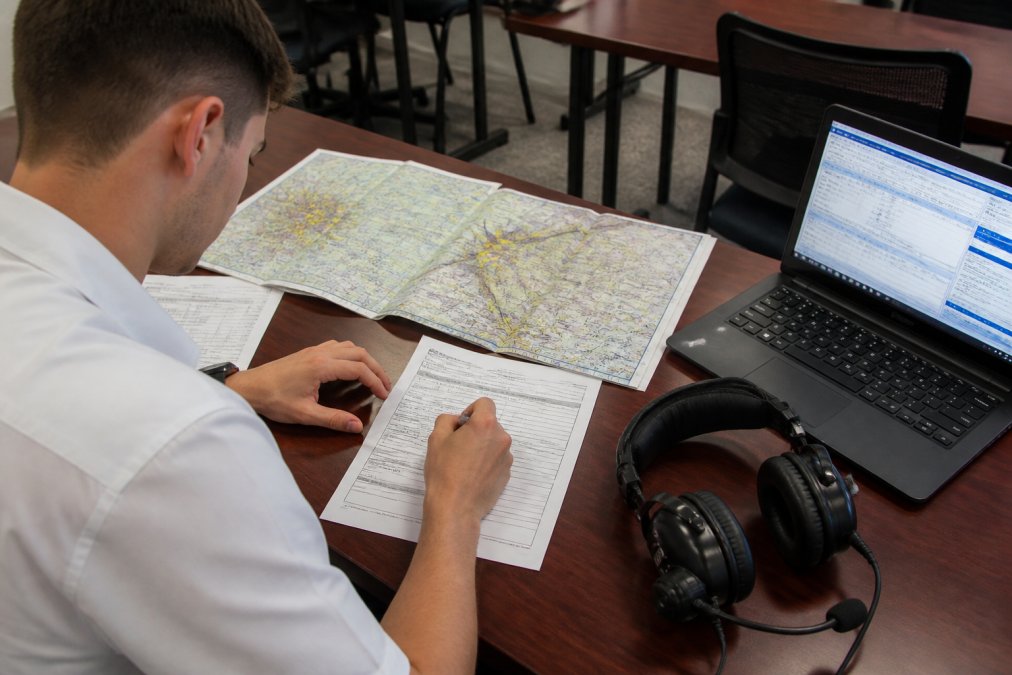
Identify the exact fix at which your route crosses the ADIZ boundary. This is typically a VOR, intersection, or GPS waypoint on the ADIZ boundary line on your sectional chart. Enter this fix in the route of flight field along with your estimated time of crossing.
Digital Tools and Flight Service Station Options
The most reliable filing method for domestic DVFR plans is through Leidos Flight Service, the FAA's contracted flight service provider. Their online portal and phone briefing service accept DVFR plans and can assign transponder codes where required. Several electronic flight bag applications also support DVFR plan filing and flag incomplete fields before submission.
Digital tools will accept a plan with a missing penetration time if the form field is optional in the software. That does not mean the plan is valid. Always verify that your filed plan includes the penetration point and estimated crossing time.
Activating and Closing Your DVFR Flight Plan
A filed DVFR flight plan is not an active flight plan. Activation is a separate step, and failing to activate is one of the most common procedural errors in DVFR operations.
To activate your DVFR plan, contact a Flight Service Station by radio or phone after departure and confirm that your plan is open. The FSS will note your actual departure time and begin the overdue aircraft clock. Closing the plan is equally mandatory. Upon landing at your destination or upon exiting the ADIZ, contact FSS to close the plan. An unclosed DVFR plan triggers search and rescue procedures after the estimated time of arrival plus 30 minutes.
The activation and closure sequence:
- Activate immediately after departure by contacting FSS
- Confirm your ADIZ penetration time is still accurate; amend if conditions have changed
- Close the plan within 30 minutes of landing or ADIZ exit
Common Filing Errors and How to Avoid Them
The errors in DVFR filing are almost always the same ones, made by experienced pilots who assumed DVFR was close enough to standard VFR to wing it.
Missing or incorrect ADIZ penetration point. The route of flight must include the specific fix at the ADIZ boundary. Listing only departure and destination airports leaves the critical security identification element out.
Departure outside the filed time window. If you file for a 1400Z departure and don't leave until 1445Z, your plan is stale. Call FSS and amend before you depart.
Failure to obtain an assigned transponder code. Some ADIZ operations require a discrete code rather than VFR squawk 1200. Check the specific ADIZ procedures in the AIM.
Crossing the ADIZ boundary outside the three-minute window. If you are running more than three minutes late to your penetration point, contact ATC immediately and request an amended crossing time.
Forgetting to close the plan. Set a phone reminder for your ETA plus 20 minutes.
| Error | Root Cause | Fix |
|---|---|---|
| Missing penetration point | Treating DVFR like standard VFR | Use a DVFR-specific checklist |
| Late departure, no amendment | Not monitoring the time window | Amend before departure, not after |
| Wrong transponder code | Skipping the AIM ADIZ section | Confirm code with FSS during briefing |
| Boundary crossing outside window | En route delays ignored | Contact ATC immediately, request amendment |
| Plan not closed | No reminder system | Set ETA reminder before departure |
Real-World Scenario: Defending a Flight Plan as a Dispatcher
A dispatcher at a regional carrier receives a flight release for a positioning flight through a coastal ADIZ. The crew is ready and weather is VFR. The DVFR flight plan was filed two hours ago. Then the crew calls: their departure is delayed 45 minutes due to a ground stop.

The dispatcher's responsibilities are specific:
- Amend the DVFR flight plan with the revised departure time before the original window expires.
- Recalculate the ADIZ penetration time based on the new departure and confirm the amended crossing time is within the three-minute tolerance.
- Notify the crew of the amended plan details, including the updated transponder code if one was assigned.
- Document the amendment in the dispatch release and operations log.
A dispatcher who waits for the crew to sort it out has failed their legal responsibility under FAA regulations. The pilot-in-command and the dispatcher share joint responsibility for the safety of the flight under 14 CFR Part 121. That shared responsibility is why dispatcher training programs spend significant time on ADIZ procedures and DVFR filing.
For authoritative reference on dispatcher responsibilities, the FAA 14 CFR Part 121 Subpart U outlines the specific legal framework governing dispatch release authority and amendment procedures.
Knowing how to defend flight plans in ADIZ airspace is a foundational competency for both pilots and aircraft dispatchers. The procedures are precise, the timing tolerances are tight, and the consequences of errors extend into federal enforcement territory. For candidates serious about mastering DVFR procedures, ADIZ penetration planning, and the full scope of dispatch authority, QNH LLC's FAA-approved Part 65 Aircraft Dispatcher Certification program delivers 200 classroom hours of instruction from former FAA Dispatcher Examiners and active airline pilots. The curriculum covers exactly these operational scenarios, with small class sizes that ensure every student works through the reasoning, not just the rules. Reserve your seat now and build the competency that airlines actually hire for.
Frequently Asked Questions
What is a Defense VFR (DVFR) flight plan?
A Defense VFR flight plan is a specific flight plan required when operating under Visual Flight Rules inside or through an Air Defense Identification Zone. Unlike a standard VFR flight plan, a DVFR flight plan is mandatory, not optional. It provides security identification to military and FAA radar facilities so your aircraft is recognized as authorized traffic. The Aeronautical Information Manual outlines the exact requirements, including position reporting, transponder use, and communication procedures pilots must follow to defend flight plans through ADIZ airspace.
When is a DVFR flight plan required?
A DVFR flight plan is required any time a VFR flight will penetrate an Air Defense Identification Zone. This applies to domestic ADIZs, the Distant Early Warning Identification Zone, and contiguous ADIZ boundaries. Mandatory filing applies regardless of whether the flight is departing from, arriving at, or transiting through ADIZ airspace. Failing to file makes your aircraft unidentified on radar, which can trigger intercept procedures. The FAA specifies these DVFR flight plan requirements in 14 CFR Part 99 and the Aeronautical Information Manual.
What happens if you fail to close a DVFR flight plan?
Failing to close a DVFR flight plan after landing triggers an overdue aircraft alert. ATC and search and rescue services will begin attempting to locate the flight, which can result in costly SAR operations and potential FAA enforcement action against the pilot-in-command. Unlike a standard VFR flight plan, a DVFR plan carries security implications. Always close your plan immediately after landing by contacting a flight service station or the appropriate ATC facility. Never assume the plan closes automatically.
How does a DVFR flight plan differ from a standard VFR flight plan?
A standard VFR flight plan is optional and exists primarily for search and rescue purposes. A DVFR flight plan is mandatory when penetrating an ADIZ and carries aviation security requirements beyond SAR. DVFR flights must meet specific transponder code assignments, position reporting intervals, and ATC communication standards that standard VFR flights do not require. Dispatchers and pilots defending flight plans through ADIZ airspace must also adhere to strict departure time windows to maintain radar identification continuity throughout the flight.
This article was written using GrandRanker