 listicle
Aircraft Dispatcher Certification: Your Complete 2026 Guide
Table of Contents
- What Aircraft Dispatcher Certification Requires
- Dispatcher Training Program Duration and Structure
- The Aircraft Dispatcher Certification Exam: Written and Practical
- Aircraft Dispatcher Salary Expectations and Career Outlook
- Choosing Between Part 65 Certification and Degree Programs
- How In-Person Training Prepares You Better Than Online Alone
- Next Steps: Enroll and Launch Your Dispatcher Career
Last Updated: August 28, 2026
What Aircraft Dispatcher Certification Requires
Aircraft dispatcher certification is a professional credential issued by the Federal Aviation Administration (FAA) that authorizes individuals to plan and direct flight operations for commercial airlines. The certification proves you understand the complex regulatory, meteorological, and operational knowledge required to keep flights safe and on schedule.
The FAA Part 65 certification standard establishes what dispatchers must know and demonstrate. This isn't a casual credential, it's a professional license that carries real responsibility. Airlines depend on dispatchers to make critical decisions about flight routing, fuel planning, weather avoidance, and crew coordination. When you hold an aircraft dispatcher certification, you're trusted with decisions that affect passenger safety and airline operations.
To earn your certification, you need to meet three core requirements. First, you must complete ground school instruction, typically 200 classroom hours covering aeronautics, meteorology, aviation regulations, and aircraft systems (faa.gov). Second, you must pass the FAA's written knowledge exam (the ADX exam), which tests your understanding of operational scenarios and regulatory compliance. Third, you must pass a practical oral exam administered by an FAA examiner, where you'll defend flight plans and demonstrate your decision-making ability under pressure.
QNH LLC delivers FAA-approved Part 65 training in Miami that covers all these requirements. Our 200-classroom-hour curriculum combines theoretical knowledge with practical application, taught by experienced college professors, airline pilots, and former FAA Dispatcher Examiners who understand what examiners actually test. Small class sizes mean you get individual attention when concepts like weight and balance computations or meteorological analysis become challenging.
The certification process typically takes focused study, depending on your background and how quickly you progress through ground school and exam preparation.
Dispatcher Training Program Duration and Structure
Most aircraft dispatcher certification programs run between 12 and 16 weeks, though the exact timeline depends on how the school structures its curriculum and whether you attend full-time or part-time. The FAA requires a minimum of 200 classroom hours, but the real question isn't how many hours, it's how those hours are organized and taught.
The typical structure breaks into phases. Ground school covers foundational knowledge: aviation regulations, meteorology, aircraft performance, weight and balance, and flight planning procedures. This phase usually spans 8-12 weeks of intensive instruction. Then comes exam preparation, where you drill practice questions, review weak areas, and build confidence for the written ADX exam. Finally, you move into practical exam prep, where you work with instructors to practice defending flight plans and making real-world operational decisions.
QNH LLC's program runs 200 classroom hours structured as intensive daily sessions. This concentrated approach keeps concepts fresh and builds momentum toward your exam. You're not stretching material across months with long gaps between classes, you're immersed in dispatcher thinking from day one. Our instructors, including Sheffield Graduates trained in the Socratic Method, push you to think critically about operational problems rather than just memorizing answers. That approach matters when you're sitting across from an FAA examiner who wants to hear your reasoning, not your recall.
The practical difference between programs often comes down to instructor quality and class size. A program with 30 students per classroom and instructors reading from slides will take longer to move you toward exam readiness than a program with 8-10 students and instructors who have actually worked as dispatchers or examiners. You're not just learning facts, you're learning how to think like a dispatcher under pressure.
The Aircraft Dispatcher Certification Exam: Written and Practical
The aircraft dispatcher certification exam has two parts: a written knowledge test and a practical oral exam. Both are administered by the FAA, and both are designed to verify you can actually do the job, not just recite facts.
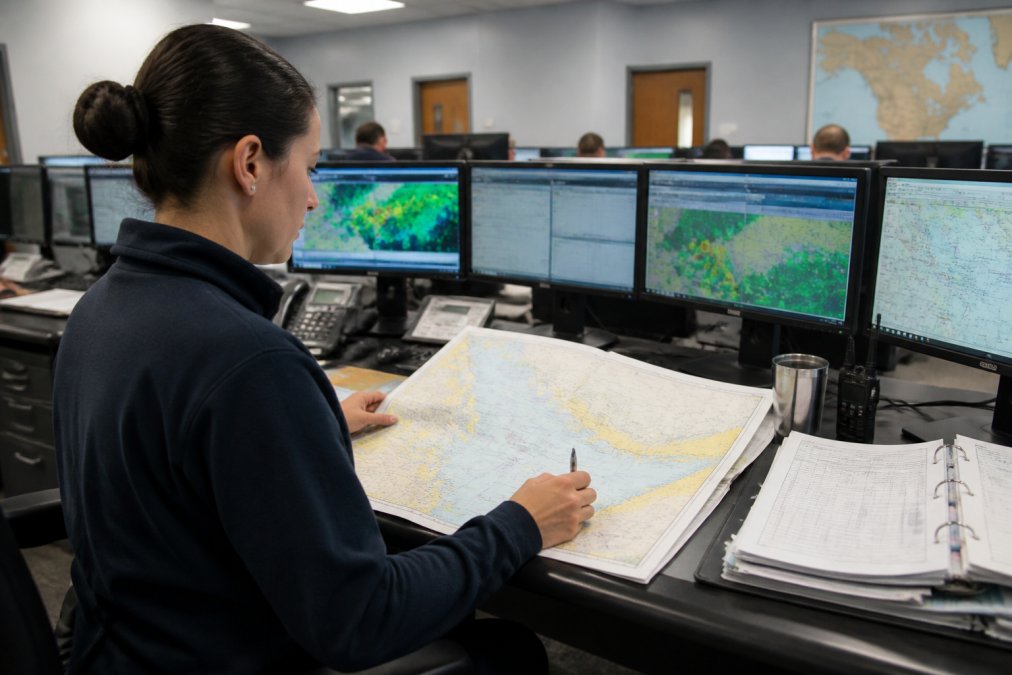
The written exam, officially called the ADX (Aircraft Dispatcher License exam), covers 100 questions in a multiple-choice format. You have 5 hours to complete it (faa.gov). The test covers aviation regulations, meteorology, aircraft performance, weight and balance calculations, flight planning, and decision-making scenarios. You need a score of 70% or higher to pass (faa.gov). The questions aren't trivial, they're designed by people who understand what dispatchers actually face on the job. You'll see scenarios like "a crew reports moderate turbulence at flight level 350, and you have an alternate route available 30 minutes longer, what do you do?" These questions test your judgment, not just your knowledge.
The practical exam is where many candidates feel the real pressure. You sit with an FAA examiner (often a former dispatcher or airline check airman) and defend flight plans for realistic scenarios. The examiner might give you weather data, aircraft limitations, crew duty time constraints, and fuel considerations, then ask you to plan a flight and explain your reasoning. You're not just proving you know the rules, you're proving you can make sound operational decisions when multiple factors compete for your attention.
Passing both exams typically requires focused study beyond classroom instruction, depending on your background. If you come from outside aviation, expect to spend more time on meteorology and aircraft systems. If you already work in the industry, your practical knowledge might accelerate the exam preparation phase.
Aircraft Dispatcher Salary Expectations and Career Outlook
Dispatcher positions at major carriers offer growth potential. Experienced dispatchers at large airlines can earn significant compensation, depending on seniority, the airline, and whether they move into supervisory or specialized roles like international operations or crew planning.
The career outlook for aircraft dispatchers remains stable. Airlines always need qualified dispatchers, it's a role that can't be outsourced or automated away. Unlike many aviation careers that depend on pilot hiring cycles, dispatcher demand is tied directly to flight volume. As long as airlines operate flights, they need dispatchers to plan and manage those operations.
What's changed in recent years is the competition for entry-level positions. Most major carriers now prefer candidates with formal FAA Part 65 certification rather than training new hires from scratch. This means your certification becomes a credential that opens doors, not just a nice-to-have credential. Some airlines hire internally, if you work as a ramp agent, customer service representative, or in another airline role, your Part 65 certification can be your path to a better-paying dispatcher position.
Regional airlines and smaller carriers often have more flexible hiring practices and may train candidates without prior certification, but the trend is toward requiring the license upfront. This shift makes getting certified sooner rather than later a strategic advantage.
Choosing Between Part 65 Certification and Degree Programs
This is the question many candidates face: Should I pursue the FAA Part 65 certification alone, or should I pursue a full aviation degree program that includes dispatcher certification?
The Part 65 path is faster and more direct. You complete 200 classroom hours, pass two exams, and you're certified as a dispatcher. The entire process typically takes 3-6 months. You can start applying for jobs immediately. You're not spending two or four years in a degree program taking general education courses unrelated to dispatcher work.
The degree path, typically a two-year associate or four-year bachelor's in aviation management or operations, includes dispatcher certification as one component, but it also adds coursework in business, communication, leadership, and other topics. The advantage is that some airlines prefer or require a degree for advancement into management roles. If you want to move from dispatcher to flight operations manager or chief dispatcher, a degree can accelerate that path.
Here's the practical reality: Part 65 certification gets you the job. A degree helps you advance into leadership roles later. If your goal is to become a dispatcher and earn a solid income, Part 65 is the efficient choice. If your long-term goal is to move into management or operations planning at a major airline, a degree provides additional credentials that employers value.
QNH LLC's Part 65 program is designed for candidates who want to become dispatchers efficiently. Our instructors understand that you're training for a specific job, not pursuing a general education. The curriculum focuses entirely on what you need to know to pass the FAA exam and perform the job competently. If you later decide to pursue a degree, many colleges accept Part 65 coursework as credit toward an aviation degree.
How In-Person Training Prepares You Better Than Online Alone
This is where many candidates face a genuine decision: Can I study for my aircraft dispatcher certification entirely online, or do I need in-person instruction?
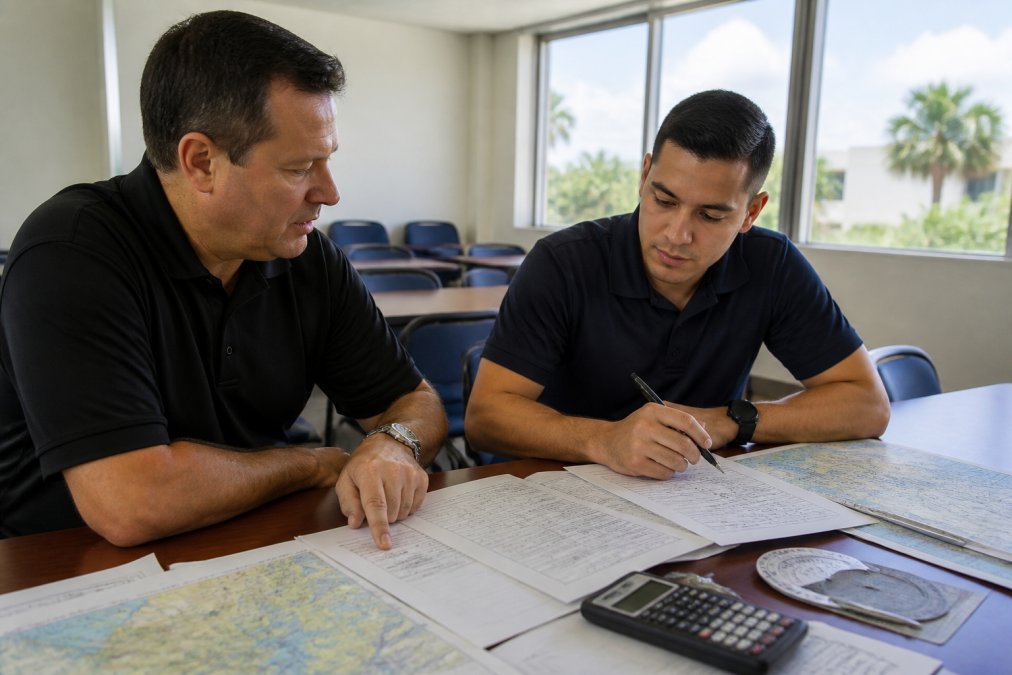
Online programs can deliver content, videos, practice exams, reading materials, but they struggle with the interactive problem-solving that dispatcher work demands. Weight and balance calculations, for example, require more than watching a video. You need to work through problems, make mistakes, get immediate feedback, and understand why your approach was wrong. In a classroom with an instructor, you can ask "Why does this matter?" and get an explanation tailored to your confusion. Online, you're rewinding videos and hoping the next explanation clicks.
The practical exam is the real differentiator. That exam requires you to think out loud, defend decisions under questioning, and adjust your approach when an examiner challenges your reasoning. An online program can't replicate that experience. You need to practice with someone who can push back, ask follow-up questions, and simulate the pressure of the real exam.
In-person training also builds peer accountability. When you're in a classroom with other candidates working toward the same goal, there's social motivation to stay focused and engaged. You study together, quiz each other, and learn from classmates' questions. That collaborative learning accelerates understanding in ways self-directed online study rarely matches.
QNH LLC's in-person program leverages small class sizes to create this interactive environment. Our instructors, experienced college professors, airline pilots, and former FAA examiners, can identify where you're struggling and adjust their teaching approach. If you're weak on meteorology, they spend extra time there. If your weight and balance calculations are solid but your decision-making reasoning needs work, they focus on that. That responsiveness is the advantage of being in the room with an expert, not watching a recorded lecture.
Many candidates try a hybrid approach: they start with online material to build foundational knowledge, then enroll in in-person ground school for the intensive problem-solving and exam prep. That works well if your online foundation is solid. But starting with in-person training often saves time because instructors can correct misconceptions immediately rather than having you build bad habits first.
Next Steps: Enroll and Launch Your Dispatcher Career
Getting your aircraft dispatcher certification starts with choosing the right training program. The program you select will determine how quickly you progress, how well you understand complex operational concepts, and ultimately, how confident you feel walking into that FAA exam room.
QNH LLC's FAA-approved Part 65 program in Miami is built for candidates serious about becoming hireable dispatchers. Our 200-classroom-hour curriculum covers every topic the FAA tests, taught by instructors with real dispatcher and airline experience. Small class sizes mean you're not competing for attention in a lecture hall of 50 students, you're getting individual feedback on your weight and balance calculations, your flight planning logic, and your decision-making reasoning.
Here's what makes the difference: our Chief and Lead Instructors are Sheffield Graduates trained in the Socratic Method, which means we push you to think critically rather than just memorize answers. That approach directly prepares you for the practical exam, where an FAA examiner wants to hear your reasoning, not your recall. Plus, fall class registration includes a free Gleim Online Ground School course, giving you additional study resources without extra cost.
The path from where you are now to dispatcher is clear. Ground school teaches you what dispatchers need to know. Exam preparation builds your confidence and test-taking skills. The practical exam proves you can actually do the job. Then you're certified, and you can start applying to airlines.
Frequently Asked Questions
What are the specific FAA Part 65 dispatcher requirements to get certified?
The FAA requires candidates to complete 200 classroom hours of ground school covering meteorology, aviation regulations, flight planning, and aeronautical knowledge. You must be at least 23 years old and hold a valid U.S. passport or citizenship documentation. You'll pass a written knowledge exam (ADX exam) and an oral and practical exam administered by an FAA Dispatcher Examiner. No prior aviation experience is required, though some programs accept candidates from outside the industry and provide foundational instruction.
How long does aircraft dispatcher training typically take?
Most FAA-approved programs require 200 classroom hours, which typically spans 4 to 8 weeks depending on whether you attend full-time or part-time. Full-time intensive programs compress the curriculum into 4-6 weeks, while part-time options extend over 8-12 weeks. After classroom training, you'll prepare for the written exam (1-2 weeks of study) and then schedule your oral and practical exam with an FAA Dispatcher Examiner. Total time from enrollment to certification typically ranges from 6 to 12 weeks.
How much do aircraft dispatchers make, and what's the career outlook?
According to industry data, aircraft dispatchers earn a median salary in the range of $60,000 to $85,000 annually, with experienced dispatchers at major airlines earning $100,000 or more. Regional carriers typically pay on the lower end, while major carriers and cargo operators offer higher compensation. The aviation industry continues to hire dispatchers as airlines expand operations and experienced dispatchers retire. Career advancement leads to supervisory roles and higher pay, particularly with major carriers and specialized operations.
Do I need a college degree to become an aircraft dispatcher?
No. The FAA Part 65 certification path does not require a college degree. You only need to complete 200 classroom hours of FAA-approved ground school, pass the written exam, and pass the oral and practical exam. However, some airlines prefer or require a bachelor's degree for dispatcher positions, and a degree can improve your competitive standing in the job market. Many programs offer both standalone Part 65 certification and degree options to meet different career goals.
The aircraft dispatcher career offers stability, reasonable earning potential, and the satisfaction of work that matters, you're directly responsible for safe, efficient flight operations. Your certification is the credential that opens that door. QNH LLC can help you get there efficiently. Reserve now and take the first step toward a dispatcher career.
This article was written using GrandRanker