 listicle
Best Aircraft Dispatcher Training Programs 2026
Table of Contents
- How We Ranked the Best Aircraft Dispatcher Training Programs for 2026
- Aircraft Dispatcher Training Duration: Online vs. In-Person
- FAA Part 65 Dispatcher Requirements: What You Need Before Enrolling
- Aircraft Dispatcher Certification Cost Breakdown: Tuition, Exams, and Equipment
- Top Programs Compared: Curriculum, Instructors, and Pass Rates
- What Employers Look For: Regional vs. Major Airline Hiring Trends
- A Day in the Life of an Aircraft Dispatcher
- Conclusion: Choosing Your Path to Certification
- Frequently Asked Questions
Last Updated: September 7, 2026
Choosing the right FAA-approved school is the single biggest decision you will make in your aviation career, yet most aspiring dispatchers pick a program based on name recognition alone. The reality is that curriculum structure, class size, and instructor quality vary dramatically between providers, and those differences directly influence whether you pass the ADX exam on your first attempt and actually get hired. Aircraft dispatcher training programs in 2026 are not created equal, and this guide breaks down exactly what separates a program that prepares you for the job from one that simply checks a regulatory box.
Aircraft dispatcher training is the structured education required to earn your FAA Part 65 certification, covering flight planning, meteorology, aircraft performance, and aviation regulations. The best programs go beyond minimum requirements to build practical decision-making skills you will use on day one of the job. Below, we compare online versus in-person formats, break down the real costs, and show you what employers actually look for when hiring. We include the specific criteria that matter most for your career progression, not just marketing claims.
How We Ranked the Best Aircraft Dispatcher Training Programs for 2026
We evaluated programs across five weighted criteria: FAA approval status and regulatory compliance, instructor credentials and experience, curriculum depth beyond minimum Part 65 requirements, class size and individual attention, and documented job placement outcomes. Programs that simply meet the 200-hour minimum without offering hands-on training or examiner-led instruction ranked lower than those that treat the practical exam as a core outcome.
The FAA requires dispatcher candidates to complete an approved training course before sitting for the written and practical exams, as outlined in the FAA Part 65 certification standards. We prioritized schools whose instructors include former FAA Dispatcher Examiners and active airline pilots, since their insight into what examiners look for during the oral examination and dispatch release defense is invaluable. Completion rate matters, but so does whether graduates are actually hireable.
Aircraft Dispatcher Training Duration: Online vs. In-Person
The standard FAA-approved curriculum requires 200 classroom hours, but how those hours are delivered varies significantly between formats. In-person programs typically compress training into five to eight weeks of full-time study, while online options stretch the same material over three to six months to accommodate working students.
In-person training offers immediate feedback during complex subjects like weight and balance computations and emergency procedures. You can ask questions in real time and practice defending a flight plan before you face an examiner. Online programs provide flexibility for students who work full-time, but they demand strong self-discipline and often lack the spontaneous discussion that builds aeronautical decision making skills. A hybrid concern: many online students report feeling underprepared for the oral examination because they never practiced articulating their reasoning out loud.
FAA Part 65 Dispatcher Requirements: What You Need Before Enrolling
Before you enroll, you need to understand the baseline requirements. You must be at least 21 years old, able to read, speak, and write English fluently, and pass a background check. There is no college degree requirement, but a solid grasp of basic math and physics helps considerably with aircraft performance and weight and balance modules.
The FAA does not require prior aviation experience, though students with a private pilot background or exposure to flight operations often find the meteorology and navigation content easier to absorb. The certification process itself involves a written exam covering flight planning, weather, and regulations, followed by a practical exam where you prepare and defend a complete dispatch release. The FAA dispatcher certification overview confirms that completion of an approved course is the prerequisite for sitting these exams. Programs that assume prior knowledge and skip foundational concepts leave outside-aviation students struggling, so look for schools that explicitly welcome beginners.
Aircraft Dispatcher Certification Cost Breakdown: Tuition, Exams, and Equipment
Understanding the full financial picture is critical before you commit to a program. Understanding the full financial picture is critical before you commit to a program. The total investment for FAA dispatcher certification depends on the training format and what's bundled into the tuition. This can be significantly higher than the base cost of the FAA written and practical exams alone, so it's essential to look beyond the sticker price.
Tuition and Program Fees
In-person programs, which provide dedicated facilities, instructor-led classroom time, and often more hands-on flight planning resources, generally command a premium. Online programs, which offer greater flexibility and lower overhead for the provider, typically offer different pricing structures. However, a lower tuition is not always the better value if it excludes essential components.
The Hidden Costs: Exams and Materials
The FAA charges a written exam fee, which is currently around $150, paid directly to the testing center (like PSI) when you schedule your ADX (faa.gov). The larger variable cost is the practical exam, administered by a designated FAA examiner. This fee is not set by the FAA and can range from $800 to $1,500 depending on the examiner and the location. This is a significant, unavoidable cost that many students overlook.
Study materials are another line item. A comprehensive test prep package, such as the Gleim Online Ground School, is a common and recommended investment. While some programs, like the one offered by QNH LLC, include this as a complimentary part of their fall registration, many others do not, adding this cost to your out-of-pocket total.
Financial Aid and Payment Plans
Unlike university degree programs, most private dispatcher training schools are not eligible for federal Title IV financial aid. This means federal student loans are generally not an option. However, many established academies offer in-house payment plans that allow you to split tuition across the duration of the course. Another common pathway is employer sponsorship; if you are already working for an airline or aviation company, inquire about tuition reimbursement or professional development funds. Some students also successfully use private education loans or personal lines of credit to finance their training.
Calculating Your Return on Investment
When evaluating cost, consider the starting salary for an entry-level dispatcher at regional airlines. A program that provides superior job placement support and a higher first-attempt pass rate can pay for itself within the first few months of employment. The real question is not just "What is the tuition?" but "What is the total cost to become hireable, and does this program provide the resources to get me there efficiently?"
Top Programs Compared: Curriculum, Instructors, and Pass Rates
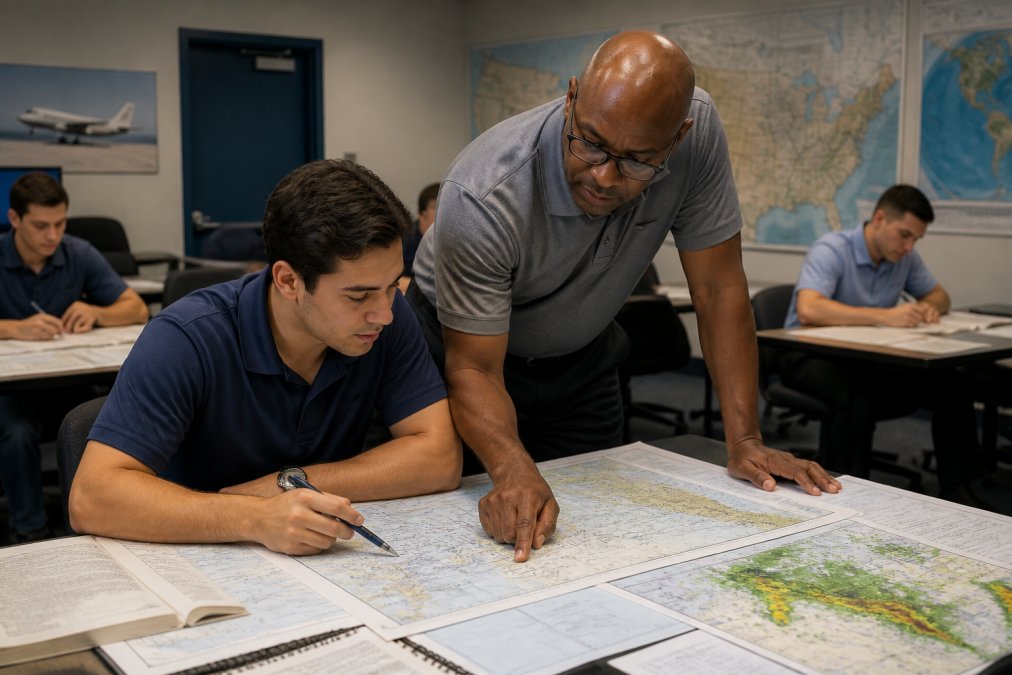
The most common mistake in choosing a dispatcher school is comparing only tuition and duration. The real differentiators, curriculum depth, instructor pedigree, and the school's operational connections, are harder to quantify but far more impactful on your career trajectory. Here, we move beyond the marketing language to dissect the structural differences that matter.
The Curriculum Divide: Minimum Standards vs. Operational Readiness
The FAA mandates a 200-hour curriculum, but the quality of those hours varies drastically. A curriculum that simply checks regulatory boxes will teach you the mechanics of flight planning and weather theory. A program focused on operational readiness, however, will structure its modules around real-world scenarios, such as irregular operations, rapid rerouting decisions, and complex fuel management. When evaluating a school, ask for a syllabus. Does it include dedicated time for simulator-based dispatch exercises? Does it teach you how to use the same flight planning software (e.g., FlightAware, ForeFlight, or airline-specific systems) that you will encounter on the job? Programs that integrate these practical tools into their coursework provide a significant advantage.
Instructor Quality: The Examiner Factor
The single most valuable asset a program can offer is an instructor who has served as a designated FAA Dispatcher Examiner. These individuals do not just teach the material; they know precisely how it is evaluated on the practical exam. Their feedback is calibrated to the standards of the oral and practical test, helping you avoid common pitfalls and build the confidence to defend your decisions. Look for programs that employ a mix of former examiners, active airline dispatchers, and meteorologists. This diversity of experience ensures you are learning from both regulatory and operational perspectives. The Socratic method, used by QNH LLC, is a powerful tool in this environment, fostering critical thinking and forcing you to articulate your reasoning rather than just recite facts.
The Post-Graduation Mentorship Gap
A critical gap in the market is the lack of structured post-graduation support. Most schools end their relationship with you once you pass the ADX exam. The transition from student to certified dispatcher to a first job at a regional airline is a challenging one, and having a mentor during this phase is invaluable. When researching programs, ask about their alumni network and mentorship opportunities. Do they offer a direct line to instructors for questions after you graduate? Do they have formal connections with regional airline chief pilots or hiring managers? A program that actively facilitates introductions and provides career guidance beyond the classroom is investing in your long-term success, not just your certification.
What Employers Look For: Regional vs. Major Airline Hiring Trends
Hiring managers evaluate dispatcher candidates on more than just a passing ADX score. They want evidence of sound aeronautical decision making, the ability to work under pressure, and a genuine understanding of flight operations. A candidate who can articulate why they made a specific fuel planning decision will always outperform one who simply memorized the correct answers.
Regional airlines often hire entry-level dispatchers with fresh certifications, viewing them as trainable talent. Major airlines prefer candidates with experience, frequently promoting from regional carriers or hiring dispatchers with several years of operational exposure. This means your first job may be at a regional carrier, and that is a normal and expected step in career progression. Programs that include practical exercises mimicking real dispatch scenarios give you a hiring advantage because you arrive with hands-on training already completed.
A Day in the Life of an Aircraft Dispatcher
A dispatcher shares legal responsibility with the captain for every flight they release. The role involves continuous weather monitoring, fuel planning adjustments, and coordination with air traffic control and crew scheduling. You are the ground-based pilot, making decisions that affect safety and efficiency in real time.
A typical shift starts with reviewing overnight weather changes and NOTAMs before the first dispatch release of the day. You then monitor active flights, rerouting aircraft around thunderstorms or mechanical issues as they arise. The job demands calm decision making under pressure, especially during irregular operations. It is a high-stakes role that suits people who thrive on responsibility and can communicate clearly with pilots, gate agents, and maintenance crews. This is not a desk job; it is an operational career where every decision matters.
Conclusion: Choosing Your Path to Certification
The program you choose sets the foundation for your entire dispatcher career. A school that offers small classes, examiner-led instruction, and a curriculum built around practical decision making will prepare you not just to pass the ADX exam but to excel in your first job. QNH LLC delivers FAA-approved Part 65 certification with instructors who have sat on the other side of the examiner's table, plus the individual attention that builds genuine competence in weight and balance, meteorology, and emergency procedures.
Get started with QNH LLC and reserve your seat in the next certification class.
Frequently Asked Questions
How hard is it to pass the FAA aircraft dispatcher exam?
The FAA ADX exam is challenging, with a reputation for testing practical application, not just memorization. Success depends on the quality of your training. Programs that emphasize hands-on flight planning, weather briefings, and mock oral exams prepare students to defend their decisions under pressure. Look for schools with high pass rates and instructors who are former FAA examiners. A structured 200-hour course with daily practice is the most reliable way to build the confidence needed for both the written and practical components.
How much does aircraft dispatcher training cost?
The aircraft dispatcher certification cost breakdown varies significantly by program type. Tuition is a major component, but you must also budget for FAA written exam fees, practical test examiner fees, study materials, and potential travel or accommodation if you attend an in-person program away from home. Some schools bundle these costs, while others charge separately. Contact each program directly for a complete cost breakdown to avoid unexpected expenses. Ask about financing options or included resources like online ground school courses.
How long does it take to complete an FAA-approved dispatcher course?
The aircraft dispatcher training duration for a full-time FAA-approved course is typically around 5 to 6 weeks, consisting of roughly 200 classroom hours. Part-time schedules can extend the timeline to several months. Online self-study programs offer the most flexibility but require strong self-discipline and may lack the practical, hands-on flight planning practice that in-person courses provide.
Do I need a college degree to become an aircraft dispatcher?
No, a college degree is not a strict requirement to become an aircraft dispatcher. The primary prerequisite is meeting the FAA Part 65 dispatcher requirements, which include being at least 21 years old and passing the required knowledge and practical exams. However, having an associate's or bachelor's degree, especially in aviation, can make you a more competitive candidate when applying to airlines. Many successful dispatchers come from diverse backgrounds, including former military and other aviation roles.