 how-to
Aircraft Weight and Balance Calculation Help
Table of Contents
- Understanding Aircraft Weight and Balance Calculation
- The Aircraft Weight and Balance Formula Explained
- Step-by-Step Weight and Balance Calculation Process
- FAA Weight and Balance Regulations and Compliance
- Weight and Balance Software for Pilots and Dispatchers
- Common Calculation Mistakes and Troubleshooting
- Real-World Edge Cases in Weight and Balance Planning
- Conclusion
- Frequently Asked Questions
Last Updated: September 4, 2026
Understanding Aircraft Weight and Balance Calculation
Aircraft weight and balance calculation is the process of verifying that an aircraft's total weight and center of gravity fall within approved limits for a given flight. It is the single most important pre-flight planning task a pilot or dispatcher performs, because an aircraft loaded outside its envelope cannot be safely controlled regardless of pilot skill. This guide from QNH LLC breaks down the math, the regulations, and the real-world judgment calls that keep aircraft within their certified performance limitations.
The consequences of skipping this step are severe. An overloaded aircraft may fail to become airborne within the runway available, stall at a higher speed, or suffer structural failure in turbulence. A center of gravity outside its limits compromises longitudinal stability, making the aircraft difficult or impossible to trim for level flight. Before you touch the throttle, you must know precisely what you are carrying and where it sits in the airframe.
Below, we will walk through the exact formula, a step-by-step calculation method, the FAA rules that govern the process, and the software tools that reduce arithmetic errors. We will also cover the mistakes that catch experienced operators off guard, because the difference between a routine flight and an incident often comes down to a few pounds and a few inches.
The Aircraft Weight and Balance Formula Explained
The weight and balance calculation rests on one core relationship: Weight x Arm = Moment. Weight is the force an object exerts, measured in pounds. Arm is the horizontal distance from the reference datum to the center of that weight, measured in inches. Moment is the product of the two, expressed in pound-inches, and it represents the rotational force that object exerts on the aircraft.
Breaking Down Moment and Arm
The moment is what actually matters for stability. Two items with the same weight can have very different moments if their arms differ. A 100-pound cargo pallet at station 200 exerts twice the rotational force of the same pallet at station 100. When you sum all the moments and divide by the total weight, you get the center of gravity (CG) location in inches aft of the datum.
Arm distance is measured from the reference datum, which is an imaginary vertical plane chosen by the manufacturer. On most aircraft, the datum is located at the firewall or the nose. The manufacturer publishes a list of standard empty weight and arm values for each station: front seats, rear seats, baggage area, and fuel tanks. You do not measure these distances yourself; you look them up in the aircraft's weight and balance records or pilot's operating handbook.
Finding Your Reference Datum
The reference datum is the fixed point from which all arm measurements are taken. The pilot's operating handbook for your specific aircraft model contains a table of stations, each with a corresponding arm. For example, the front seats might be at station 85, the main fuel tanks at station 95, and the baggage compartment at station 120. These numbers are already computed for you, so your job is to multiply the weight you load at each station by that published arm.
The key to mastering the weight and balance calculation is recognizing that you are not doing complex math. You are doing organized arithmetic. The formula never changes, and the arm values are published. The discipline comes from accurate weight estimation, correct station identification, and careful summation.
Step-by-Step Weight and Balance Calculation Process
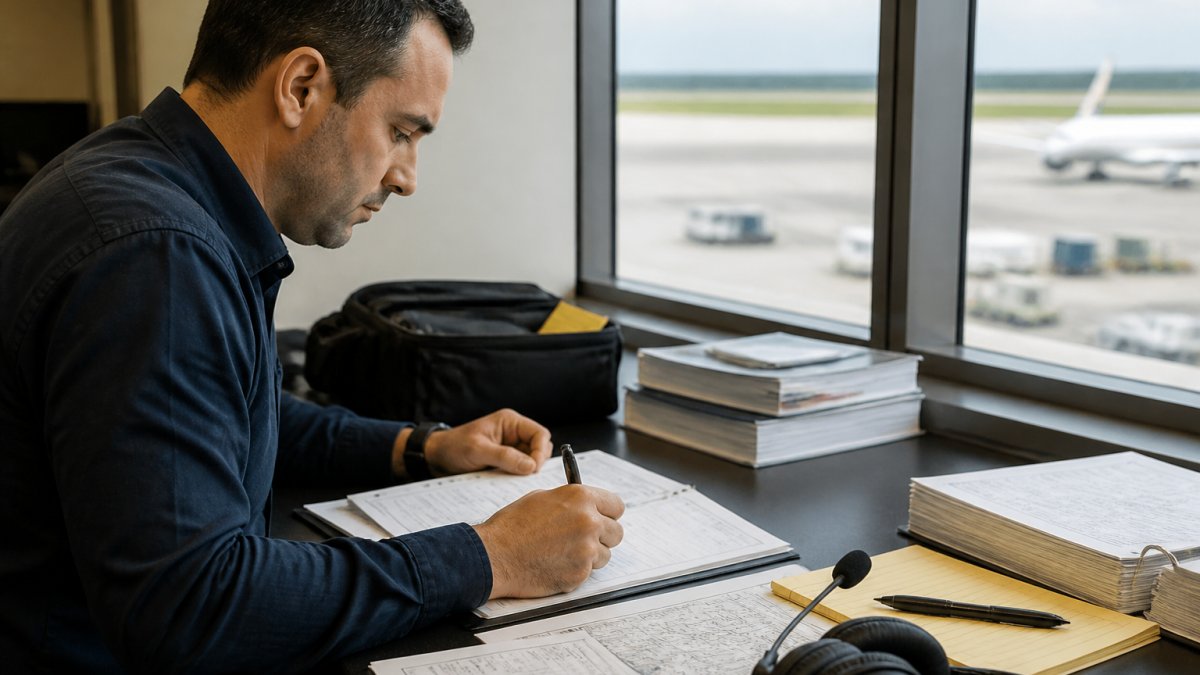
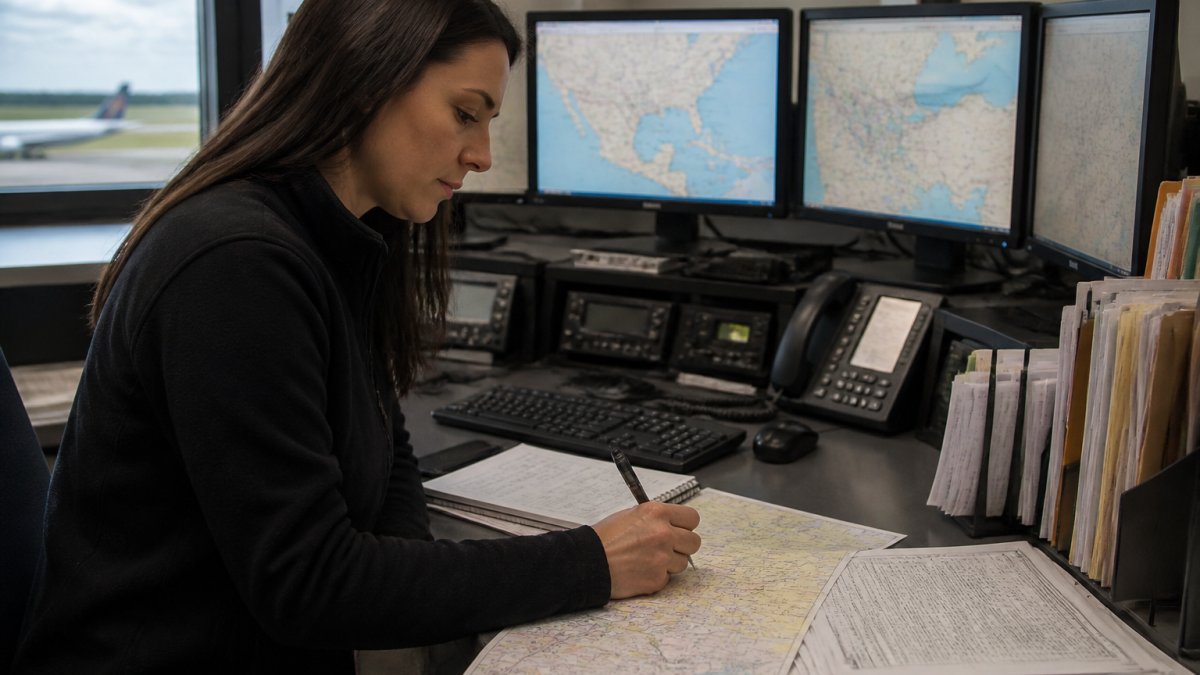
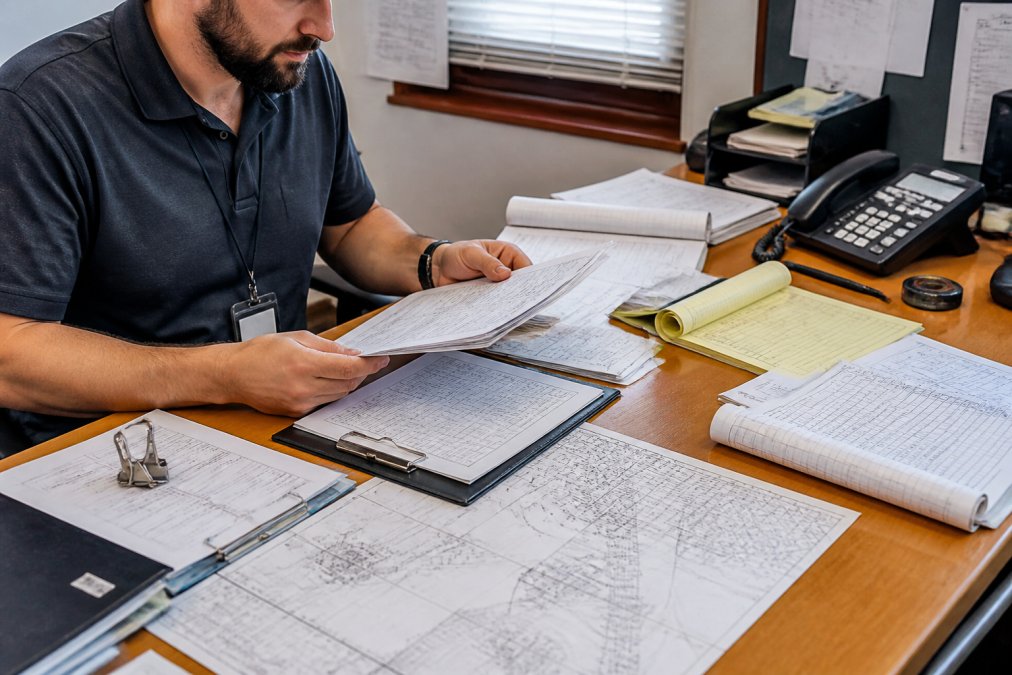
A dispatcher or pilot works through the calculation in a fixed sequence, using a loading manifest that lists every item contributing to the aircraft's weight. The process below mirrors the method taught in professional flight operations courses and follows the format examiners expect to see defended.
Step 1: Gather Aircraft Data and Loading Manifest
Start with the basic empty weight and the empty weight center of gravity from the aircraft's most recent weight and balance record. Add the weights of all occupants, baggage, cargo, and fuel. The loading manifest should identify each item's weight and its station location. A common mistake is using an outdated empty weight that does not reflect recent modifications, so verify the record date before you begin.
Step 2: Calculate Gross Weight and Useful Load
Sum every pound you have loaded to get the gross weight. Compare this against the maximum takeoff weight published in the aircraft type certificate data sheet. The useful load is the difference between the basic empty weight and the maximum takeoff weight, and it must cover passengers, baggage, cargo, and fuel. If your fuel burn requires a full load of fuel, you may need to reduce payload to stay within limits.
Step 3: Determine Center of Gravity and Verify Limits
For each station, multiply the loaded weight by its arm to get the moment. Sum all moments and divide by the total weight to find the center of gravity location. Then check that this CG falls within the forward and aft CG limits for the gross weight at takeoff and at landing. The limits shift as fuel burns off, so you must verify the CG at both the departure weight and the estimated landing weight.
Step 4: Verify Compliance and Document Results
Confirm that the gross weight does not exceed the maximum takeoff weight and that the CG envelope is satisfied at all phases of flight. Record the final numbers on the loading manifest, including the computed CG and the fuel quantity used. The pilot in command signs the release, and the dispatcher retains a copy. This documentation is the record that an examiner will ask you to defend during a practical test.
FAA Weight and Balance Regulations and Compliance
The Federal Aviation Administration sets the legal framework for weight and balance under Title 14 of the Code of Federal Regulations (ecfr.gov). The specific requirements vary by operating rule, but the principle is consistent: no person may operate an aircraft unless its weight and center of gravity are within approved limits. The FAA regulations on aircraft loading make the pilot in command directly responsible for ensuring compliance before takeoff.
For Part 121 air carriers and Part 135 operators, the regulations require an approved weight and balance control program. These programs specify how weights are determined, whether actual weights or standard average weights are used, and who is authorized to sign the loading manifest. Dispatchers play a central role in this system, because the dispatcher and the pilot in command share responsibility for the safe conduct of the flight. The FAA advisory circular on weight and balance control provides detailed guidance on acceptable methods for developing these programs.
The practical implication is that weight and balance is not a suggestion or a guideline. It is a regulatory requirement with direct consequences for certificate holders. An operator who releases a flight outside the CG envelope faces enforcement action, and the individuals involved can lose their certificates. This is why training programs emphasize the calculation until it becomes second nature. aircraft maintenance requirements.
Weight and Balance Software for Pilots and Dispatchers
Modern flight operations rarely compute weight and balance by hand on a scrap of paper, though you must still know how to do the math to verify the software output. Weight and balance software for pilots and dispatchers automates the station lookup, performs the moment calculations, and graphically displays whether the CG falls within the envelope. Programs like those integrated into flight planning systems reduce arithmetic errors and speed up the release process.
The software is only as good as the data entered. If you type an incorrect passenger count or use the wrong fuel density, the software will confidently produce a wrong answer. A competent operator treats the software as a calculator, not a decision-maker, and spot-checks the output against a manual calculation for critical flights. During initial certification training, instructors require students to prove they can complete the calculation by hand before allowing them to rely on automation.
For dispatcher candidates, the practical exam includes a weight and balance problem that must be solved and defended without software assistance. This is why the QNH LLC curriculum, an FAA-approved Part 65 Aircraft Dispatcher Certification course, includes hands-on weight and balance computation practice as part of its 200 classroom hours. Students work through realistic loading scenarios until the process is automatic, then learn to verify their work against software output.
Common Calculation Mistakes and Troubleshooting
The most frequent error in weight and balance calculation is not the arithmetic; it is the data entry. Operators misidentify a station, use the wrong arm value from an outdated manual, or forget to include a last-minute bag in the cargo hold. These small errors compound into a CG that looks correct on paper but is wrong in reality.
Troubleshooting a discrepancy requires a systematic check of every input. First, verify the basic empty weight and CG against the current weight and balance record. Second, confirm each station arm against the pilot's operating handbook for the exact model and serial number. Third, recheck the fuel weight using the correct density for the fuel temperature; jet fuel density varies with temperature, and a warm fuel load weighs less than a cold one. Finally, recalculate the moments in a different order to catch a transposition error.
Another common issue is failing to account for configuration changes. If an operator removes a seat to carry cargo or installs a heavy piece of equipment, the empty weight and CG change permanently. The aircraft must be reweighed and new records generated. Operating with an outdated empty weight is a compliance failure that can invalidate every subsequent weight and balance calculation.
Real-World Edge Cases in Weight and Balance Planning
Textbook problems present clean numbers, but real operations rarely do. A dispatcher must handle the edge cases that fall between the published tables. For example, a flight with full passenger seats, full cargo bins, and a long sector requiring maximum fuel may exceed the maximum takeoff weight. The solution is a fuel-payload trade: reduce cargo or passenger count, or plan a fuel stop to lighten the takeoff weight.
A more subtle edge case involves the CG shift during flight. As fuel burns from the wing tanks, the CG moves, sometimes forward and sometimes aft depending on the tank configuration. The dispatcher must verify that the CG remains within limits at the estimated zero fuel weight, the takeoff weight, and the landing weight. A load that is within limits at takeoff can become unstable at landing if the fuel burn moves the CG aft of the rear limit.
Ballast is the standard solution for a CG that falls outside the envelope with a light load. Adding ballast at an approved station moves the CG back into limits, but the ballast weight itself counts against the useful load. The dispatcher must calculate the minimum ballast required to bring the CG within limits without exceeding the maximum takeoff weight, a problem that requires solving for the ballast weight at a known station.
Conclusion
Mastering aircraft weight and balance calculation is the difference between a routine release and an incident waiting to happen. The formula is simple, but the discipline lies in accurate data, systematic verification, and understanding how the numbers change across the phases of flight. Every pilot in command and every dispatcher owns this responsibility, and the FAA holds both accountable for the outcome.
If you are preparing for a career as an aircraft dispatcher, you need training that treats weight and balance as a core operational skill, not a classroom exercise. QNH LLC delivers FAA-approved Part 65 Aircraft Dispatcher Certification training in Miami, with small classes and instruction from experienced airline pilots and former FAA Dispatcher Examiners. The 200-hour curriculum includes practical weight and balance computation training that prepares you to defend a loading manifest in front of an examiner. Reserve your seat now and build the skills that keep aircraft safe.
Frequently Asked Questions
What is the difference between an arm and a moment in aircraft weight and balance?
The arm is the horizontal distance (in inches) from the reference datum to the point where weight is located. The moment is calculated by multiplying weight by arm distance. For example, if baggage weighing 100 pounds is loaded 50 inches from the datum, the moment is 5,000 pound-inches. Moments determine how weight distribution affects the aircraft's center of gravity and stability.
How do I calculate the center of gravity for weight and balance?
Divide the total moment by the gross weight. If your aircraft has a total moment of 75,000 pound-inches and a gross weight of 3,000 pounds, the center of gravity is at 25 inches from the reference datum. Compare this result to your aircraft's CG envelope limits. If it falls outside the approved range, reposition cargo or fuel to shift the center of gravity within limits before flight.
Do you have to calculate weight and balance before every flight?
Yes. FAA regulations require pilots in command to ensure the aircraft is loaded within weight and balance limits before every flight. This is documented on the loading manifest and verified during pre-flight planning. Even small changes, passenger substitution, cargo addition, or fuel quantity, can shift the center of gravity outside limits and affect aerodynamic stability and performance.
What happens if an aircraft exceeds its center of gravity limits?
Exceeding CG limits compromises longitudinal stability and control authority. An aft CG (too far back) reduces pitch control effectiveness and can cause stalls. A forward CG (too far front) increases control effort and fuel burn. Both conditions degrade flight envelope performance and safety margins. Pilots must adjust loading or fuel distribution to maintain CG within the published envelope before takeoff.
This article was written using GrandRanker