 listicle
Benefits of Getting an Aircraft Dispatcher Certification
Last Updated: November 4, 2026
Quick Summary
An aircraft dispatcher certification is the FAA credential that lets you share legal operational control of a flight with the pilot in command, signing flight releases and making go, reroute, and diversion decisions. It opens airline operations careers without any flight hours, and it carries travel privileges such as jump seat authority.
- You must be at least 23 years old to have the certificate issued, though you can train earlier.
- An FAA-approved course requires a minimum of 200 classroom hours covering meteorology, aerodynamics, and weight and balance.
- Regional airlines and Part 135 charter operators are the most common first employers for new dispatchers.
- Compare base pay, shift differentials, license premium, and schedule together rather than base pay alone.
- Dispatchers work nights, weekends, and holidays on rotating schedules until seniority improves their lines.
Table of Contents
- Why Aircraft Dispatcher Certification Changes Your Career Math
- How to Become an Aircraft Dispatcher: Eligibility and the Certificate Path
- FAA Part 65 Certification Requirements You Must Meet
- Aircraft Dispatcher Training Duration and What the Hours Buy You
- Salary, Benefits, and Travel Privileges That Come With the Certificate
- Flight Dispatcher Jobs: Where the Certificate Takes You
- The Trade-Offs: Shift Work, Responsibility, and Certification Upkeep
- Reserve Your Seat in QNH's Part 65 Dispatcher Course
- Frequently Asked Questions
Why Aircraft Dispatcher Certification Changes Your Career Math
An aircraft dispatcher certification is the FAA credential that lets you share legal operational control of a flight with the pilot in command. It is one of the few aviation careers you can enter without logging a single flight hour, and it puts you inside the decision loop for every departure, reroute, and diversion.
The pattern is consistent: people underestimate what the certificate unlocks and overestimate how hard the entry is. Here is the short version before we get into detail.
What the certificate actually gets you:
- A licensed airman credential under 14 CFR Part 65
- Authority to sign a flight release, which is a legal act, not a clerical one
- A path into airline operations
The catch is that the certificate is not a participation trophy. You have to pass a knowledge test and a practical test, and you have to hold the knowledge after you pass. Below, we break down each benefit, the requirements behind it, and the trade-offs nobody puts in the brochure.
How to Become an Aircraft Dispatcher: Eligibility and the Certificate Path
Becoming an aircraft dispatcher means meeting FAA eligibility, completing an approved training course, passing the aircraft dispatcher knowledge test, and passing a practical test with an FAA inspector or designated examiner. The certificate is issued under FAA Part 65 aircraft dispatcher certification rules, and the sequence is fixed.
The path looks like this:
- Confirm eligibility. You must be at least 23 years old, able to read, speak, and understand English, and hold a high school diploma or equivalent.
- Complete an approved course. Training must come from an FAA-approved Part 65 program.
- Pass the knowledge test. The written exam covers meteorology, flight planning, regulations, and aircraft performance.
- Pass the practical test. An examiner watches you build and defend a flight release in real time.
- Receive your certificate. You are now a licensed aircraft dispatcher.
A common mistake is treating the knowledge test as the finish line. It is the midpoint. The practical test is where candidates who memorized answers instead of understanding systems tend to struggle.
FAA aircraft dispatcher certificate overview
FAA Part 65 Certification Requirements You Must Meet
Part 65 certification requirements are the eligibility gate, and they are stricter than most people expect. The regulation sets minimum age, language, and education standards, and it requires training from an approved provider.
Here is what the FAA actually checks:
| Requirement | What It Means in Practice |
|---|---|
| Minimum age of 23 | You can train earlier, but the certificate issues at 23 |
| English proficiency | Read, speak, and understand English |
| High school diploma or equivalent | Verified before testing |
| Approved training course | Must come from an FAA-approved Part 65 program |
| Knowledge test | Computer-based written exam |
| Practical test | Oral and scenario-based evaluation |
The age rule trips people up. Many candidates finish training at 21 or 22 and then wait. That waiting period is not wasted if you use it to build familiarity with airline operations, but plan for it.
For the full breakdown of what each requirement demands, read our guide to FAA Part 65 dispatcher training requirements.
Aircraft Dispatcher Training Duration and What the Hours Buy You
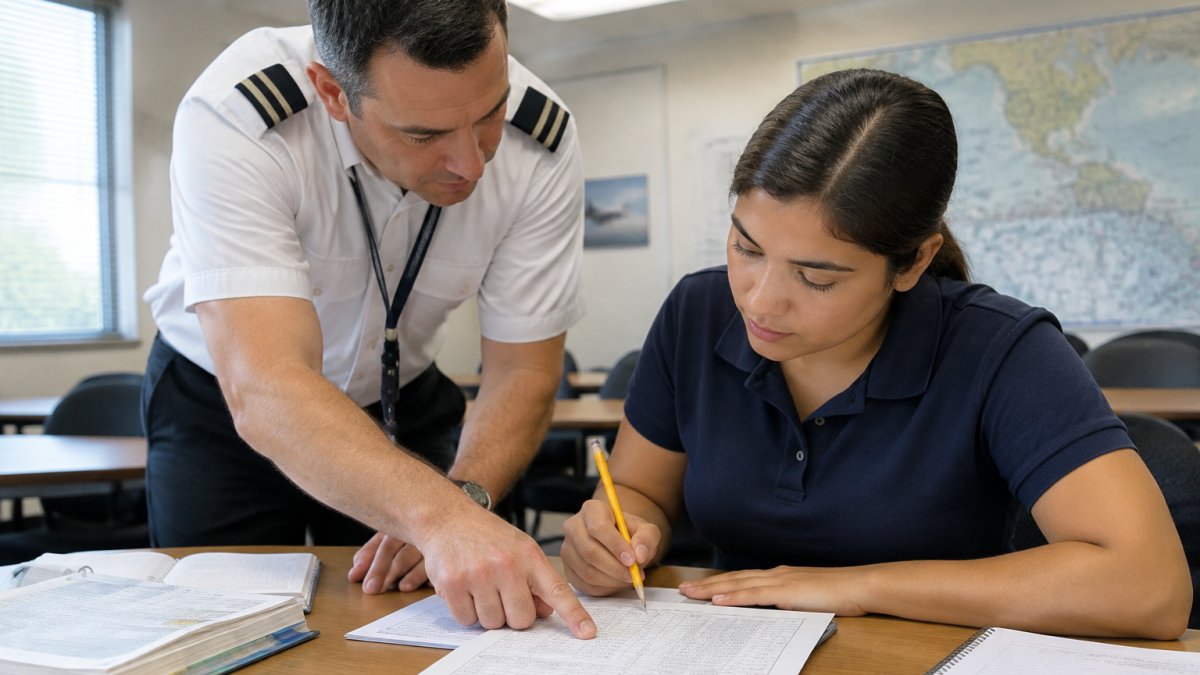
Aircraft dispatcher training duration is set by regulation at a minimum of 200 classroom hours for an approved course. Those hours are not a formality. They are the difference between passing a written exam and being able to defend a release in front of an examiner.
Our program provides 200 classroom hours covering meteorology, aerodynamics, aviation laws, and practical weight and balance computations. The weight and balance block is where math anxiety shows up most, and that concern is common and addressable.
If you are weighing whether the hour requirement is enough on its own, our breakdown of whether 200 hours is enough for dispatch certification covers what the hours do and do not buy you.
The man is American.
Salary, Benefits, and Travel Privileges That Come With the Certificate
Compensation for aircraft dispatchers is negotiated by carrier, so any single figure you see online is a snapshot rather than a rule.
How dispatcher pay is actually built:
- Base pay by seat and seniority. Entry-level dispatchers at regional carriers typically start at the low end of the professional aviation pay scale, while dispatchers at major passenger and cargo carriers sit substantially higher once they hold a line. Pay progresses on a seniority schedule, so the same certificate is worth more in year five than in year one.
- Shift differentials. A 24-hour operation pays premiums for nights, weekends, and holidays. Two dispatchers with identical seniority can earn differently because one holds a day line and the other works rotating nights.
- Overtime and inverse seniority. Short-staffed desks offer overtime, and junior dispatchers are often the ones who can pick it up. That is a real earnings lever in the first few years.
- License premium. Some carriers pay a premium for holding the certificate itself, separate from seat pay. Ask specifically whether the offer includes one.
The benefits package typically includes:
- Health, dental, and disability insurance
- A retirement plan, often with an employer match
- Paid time off that accrues with seniority
- Travel privileges, including reduced-rate travel for you and eligible family members
- Jump seat authority, which lets you ride in the cockpit on many carriers
The travel benefit is the one people ask about first, and it is real. Jump seat authority is a genuine perk of holding a dispatcher certificate, and it is not available to most ground-based airline roles. It is also the benefit most often overstated: it is space-available, subject to carrier agreements, and not a substitute for confirmed travel.
How to read a pay offer. Compare base pay, differentials, license premium, and schedule together, not base pay alone. A regional offer with heavy night differentials can beat a day-line offer at a slightly higher base in the first two years, and then lose as seniority moves you up the scale. Ask for the pay scale by year, not just the starting rate.
Flight Dispatcher Jobs: Where the Certificate Takes You
Flight dispatcher jobs exist at every level of commercial aviation, and the certificate is the common entry ticket. But the certificate does not land you at a major carrier on day one, and the most useful thing a prospective dispatcher can understand is the ladder: which employers hire people with no operational time, what those roles teach, and how you move up.
Entry level: regional and Part 135 operations. Regional airlines and Part 135 charter operators are the most common first employers. They hire dispatchers with a fresh certificate and no desk time, and they are where you build the judgment that later employers pay for. Part 135 work often runs leaner teams, which means broader responsibility earlier and more individual authority over releases. The trade-off is usually lower base pay and less schedule stability than a major.
Mid career: cargo and larger passenger carriers. Cargo operations tend to run leaner desks with more individual authority per dispatcher, and they often reward people who are comfortable with night and international flying. Larger passenger carriers bring higher volume, more complex routing, and the seniority system that governs schedule and pay progression.
Senior: system control and leadership. At a major carrier, experienced dispatchers move into system control roles handling high volume and complex routing, or into supervisory, training, and standards positions. These open after you build operational time, not before.
Adjacent paths. The certificate also supports moves into operations management, regulatory work, and training roles, because the underlying skill is operational decision-making under time pressure.
What the ladder actually looks like in practice:
- Years 0-2: regional or Part 135 desk, building release judgment and weather decision experience
- Years 2-5: move to a larger carrier or cargo operation as seniority and experience allow
- Years 5+: system control, supervisory, training, or standards roles
For a longer view of where the demand sits, read our long-term outlook for flight dispatcher demand.
The man is American.
The Trade-Offs: Shift Work, Responsibility, and Certification Upkeep
Shift work is the honest downside. Airlines operate around the clock, so dispatchers work nights, weekends, and holidays on a rotating schedule. Seniority buys you better lines over time, but you start where the operation needs you.
Responsibility is the other side of the coin. A dispatcher shares operational control with the pilot in command, which means the flight release carries your signature and your judgment. That is what makes the job meaningful and what makes it stressful on weather days.
Certification upkeep is manageable but not optional. You need to stay current, and a lapse in currency can interrupt your career. Our guide to maintaining your aircraft dispatcher certificate walks through the practical steps.
For a deeper look at what the credential is worth over a full career, see our analysis of the benefits of an FAA aircraft dispatcher certificate.
Reserve Your Seat in QNH's Part 65 Dispatcher Course
The certificate rewards people who train properly and punishes people who cut corners. If you want to be hireable rather than merely certified, the training provider matters as much as the exam result.
QNH LLC runs an FAA-approved Part 65 Aircraft Dispatcher Certification course built on 200 classroom hours, with small classes and individual attention from instructors who include college professors, airline pilots, and former FAA Dispatcher Examiners. Fall class registration includes a free Gleim Online Ground School course.
Get started with QNH LLC and walk into your practical test ready to explain your reasoning, not just recite it.
Frequently Asked Questions
Is aircraft dispatcher certification worth it?
For anyone who wants a licensed role in airline operations without pilot training, it usually is. Weigh the classroom hours and exam preparation against the pay and stability you expect to hold for years. Dispatchers share responsibility for every flight release, so the certificate is also a credential employers can verify before they hire.
What are the FAA Part 65 certification requirements for aircraft dispatchers?
You must be at least 23 years old, read, speak, and understand English, and pass the knowledge and practical tests for the aircraft dispatcher certificate. Applicants also need the required aeronautical experience or must complete an approved training course. The practical test covers flight planning, weather analysis, and operational control scenarios. Confirm current eligibility details with the FAA before you enroll, and ask your school how its curriculum maps to each requirement.
How long does aircraft dispatcher training take?
An approved course runs about 200 classroom hours, which most students complete over several weeks to a few months depending on schedule. Add study time for the knowledge test and preparation for the practical test. Ask how much of the 200 hours is hands-on flight planning and weight and balance work, since that is what employers probe in interviews.
How much do aircraft dispatchers get paid?
Pay varies by employer, region, and experience. Compare published salary data for your target employers and ask about starting rates during interviews. Treat any specific number you see online as a starting point, not a guarantee.