 listicle
Benefits of Small Class Aviation Training
Table of Contents
- Why Small Class Aviation Training Produces Better Dispatchers
- Individualized Instruction and Student-Teacher Ratio in the Cockpit Classroom
- FAA Part 65 Dispatcher Certification Requirements and What They Demand from Students
- Aircraft Dispatcher Training Program Duration and Accelerated Learning
- Aviation Safety, CRM, and the Small Group Advantage
- Small Class Aviation Training vs. Online-Only Programs
- What to Look for in the Best FAA Approved Dispatcher Schools
- Conclusion
Last Updated: August 18, 2026
Why Small Class Aviation Training Produces Better Dispatchers
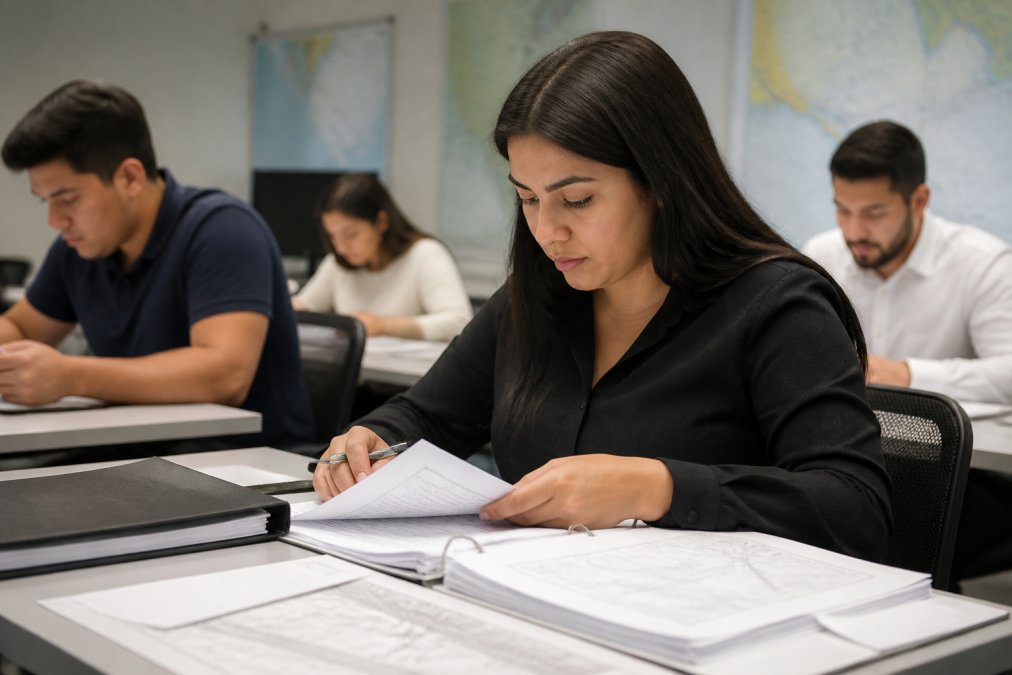
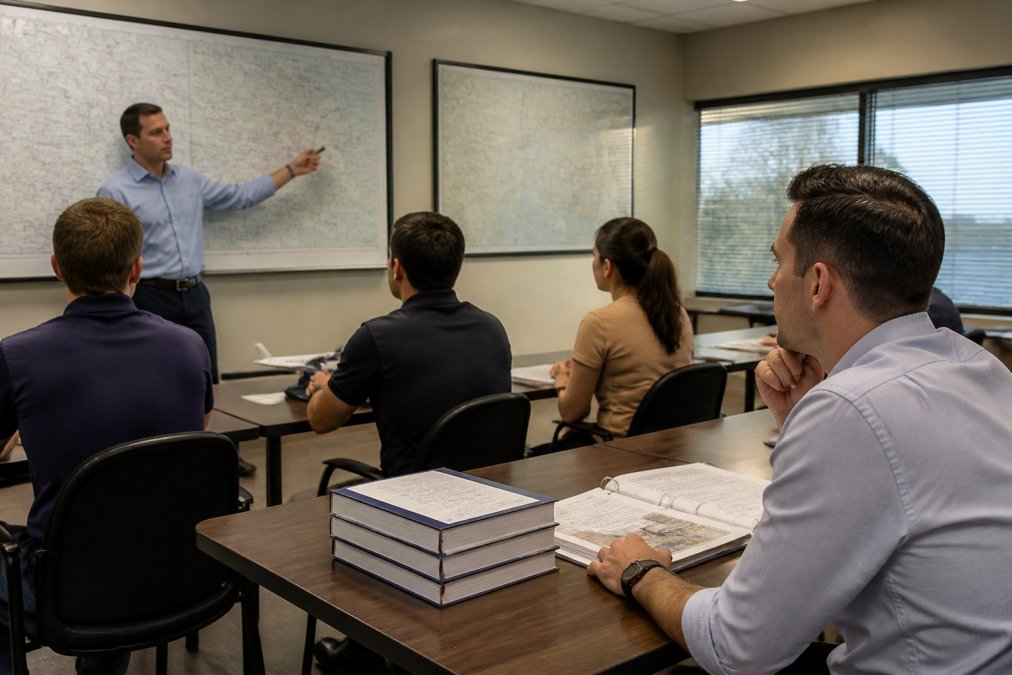
The biggest mistake most aspiring aircraft dispatchers make is treating training like a passive experience. Small class aviation training changes this dynamic entirely. When a class has three or four students instead of thirty, every session becomes interactive. Errors get corrected in real time, misconceptions don't calcify into wrong habits, and the instructor knows your weak spots and progress.
At QNH LLC, this philosophy drives every aspect of the program. The 200-classroom-hour curriculum is built on the premise that aviation dispatch is too operationally consequential for passive instruction. Dispatchers share legal responsibility with the captain for every flight they release.
According to the FAA's Aeronautical Information Manual, the dispatcher's role is co-equal with the pilot in command for flight authorization and release decisions. That regulatory reality makes the quality of instruction a safety issue, not just an academic one.
Below, this guide covers the specific learning advantages of small class formats, the FAA certification requirements students must meet, and what to look for when choosing a program.
Individualized Instruction and Student-Teacher Ratio in the Cockpit Classroom
Individualized instruction is the single greatest structural advantage of small class aviation training. With fewer students per instructor, the ratio of feedback to instruction time shifts dramatically in the learner's favor.
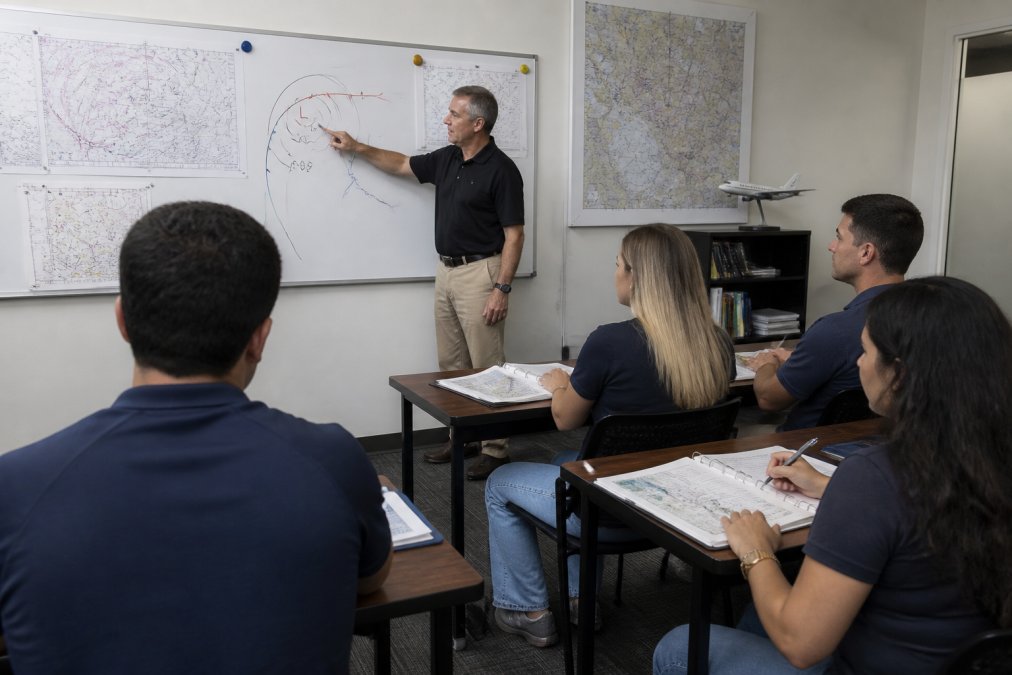
In a large classroom, an instructor manages group pace. In a small one, the instructor manages individual comprehension. This difference is crucial for technically dense material like FAA Part 65 dispatcher certification content, where a misunderstood concept in meteorology or weight and balance can cascade into flawed operational decisions.
How the Socratic Method Works in Small Groups
The Socratic Method guides students toward correct conclusions through targeted questioning rather than direct answers. It requires students to reason through problems aloud, exposing gaps in understanding before they become exam failures or operational errors.
This method only functions in small groups. With twenty or thirty students, it becomes performance anxiety. With three or four, it becomes genuine intellectual engagement. Every student gets questioned and must defend their reasoning. That process builds the critical thinking the ADX exam demands and that airline operations require.
At QNH LLC, the Chief and Lead Instructors are Sheffield Graduates who apply the Socratic Method as a core pedagogical tool.
Weight and Balance: Where Individual Attention Changes Everything
Weight and balance computations are among the most technically demanding components of dispatcher certification. Many students have limited math backgrounds, and the calculations involve multiple variables across aircraft types, fuel loads, and payload configurations.
In a small class, the instructor identifies exactly who is struggling and why, then addresses it directly. Students who worried they weren't mathematically capable often discover that the barrier was instructional pacing, not aptitude. Personalized learning at this level converts anxiety into competence.
FAA Part 65 Dispatcher Certification Requirements and What They Demand from Students
FAA Part 65 dispatcher certification requirements set a demanding standard. To qualify for the Aircraft Dispatcher Certificate, candidates must be at least 23 years old, read, speak, write, and understand English, and pass a rigorous knowledge test covering a broad range of aviation subjects.
As outlined in 14 CFR Part 65 Subpart C, the FAA knowledge areas include meteorology, navigation, aircraft performance, air traffic control procedures, emergency procedures, and federal aviation regulations. The practical test adds another layer: applicants must demonstrate operational competency in flight planning, weather interpretation, and emergency decision-making.
These requirements demand more than memorization. The ADX knowledge test covers approximately 80 subject areas, and the practical examination requires candidates to reason through real-world scenarios under examiner scrutiny. Students who trained in environments where they were regularly questioned and held to a high standard of explanation perform measurably better in that format.
Every hour of Socratic instruction is, in effect, rehearsal for the practical exam. Students who have defended their decisions to an experienced former FAA Dispatcher Examiner are not intimidated by that format.
Aircraft Dispatcher Training Program Duration and Accelerated Learning
Aircraft dispatcher training program duration varies across providers, but the FAA sets a minimum of 200 hours of training for applicants without prior aviation experience. Accelerated learning means higher information density per hour, faster feedback loops, and less time spent reviewing material that some students already understand while others fall further behind. Small class formats naturally accelerate learning because instruction is calibrated to actual student comprehension.
Cost-Benefit Analysis of Accelerated Training Timelines
The financial case for small class training is straightforward. A lower-cost, high-volume program that requires multiple ADX exam retakes or produces graduates who are not competitive in the hiring market is not actually cheaper. Many airlines and aviation employers evaluate dispatcher candidates on the quality of their training background. A certificate earned through a program with experienced airline pilots and former FAA examiners as instructors carries different weight than one from a program with minimal instructor credentials.
For internal airline candidates sponsored by their employer, every additional week in training represents opportunity cost. A program that produces exam-ready graduates on the first attempt delivers better return on that investment.
Visit the QNH LLC website directly for current program pricing and enrollment details, as costs vary by session and registration period.
Aviation Safety, CRM, and the Small Group Advantage
Cockpit Resource Management is the framework by which aviation professionals manage information, authority, and decision-making under pressure. For dispatchers, CRM translates into the ability to communicate clearly with pilots and airline operations centers, to assert critical safety information under time pressure, and to make sound decisions when weather, mechanical issues, or airspace restrictions create operational complexity.
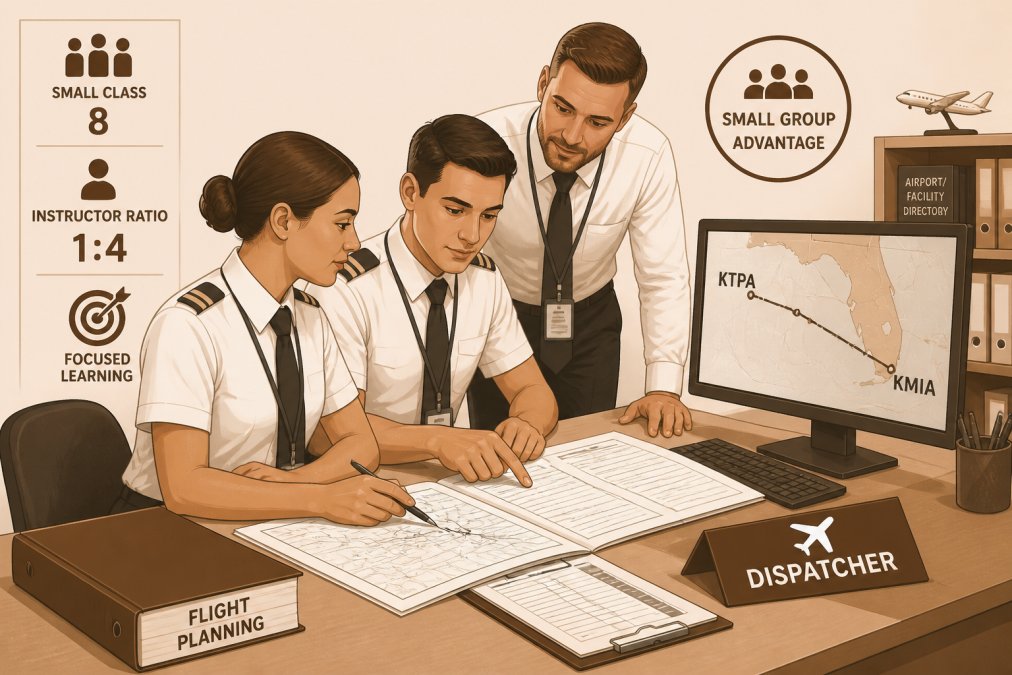
These skills develop through practice, feedback, and simulation of real decision environments. Small group dynamics are uniquely suited to CRM training. Peer-to-peer interaction creates a collaborative learning environment that mirrors actual operational settings. Students practice articulating their reasoning, challenging each other's assumptions, and deferring appropriately to expertise.
According to the FAA Safety Team's CRM training guidance, effective resource management training requires active participation and scenario-based practice, not passive lecture attendance. Small class formats make that standard achievable for every student.
A dispatcher who misreads a SIGMET, miscalculates an alternate fuel requirement, or fails to assert a critical concern to a captain is not just academically deficient. Training that builds genuine competency, not just test-passing ability, is a safety investment.
Small Class Aviation Training vs. Online-Only Programs
Online-only dispatcher programs serve a real purpose for students in remote locations or with severely constrained schedules. But the trade-offs are significant.
The core limitation of online-only training is the absence of real-time, individualized feedback. A student who misunderstands a weight and balance concept in an asynchronous course may complete the module and carry that misunderstanding forward. In a small in-person class, that misunderstanding gets caught within the hour.
There is also the matter of instructor quality and access. Online programs vary enormously in who is actually teaching. In a small in-person program, you know exactly who is instructing you and can ask them direct questions about their operational experience.
| Feature | Small Class In-Person | Online-Only |
|---|---|---|
| Real-time instructor feedback | Yes, immediate | Delayed or absent |
| Socratic / active learning | Fully supported | Rarely supported |
| Peer-to-peer interaction | High | Low to none |
| Instructor credentials visible | Directly verifiable | Variable |
| Exam simulation practice | Regular, structured | Self-directed |
| CRM scenario practice | Integrated | Typically absent |
| Schedule flexibility | Structured sessions | High |
Online resources like the Gleim Online Ground School are valuable as supplementary tools. QNH LLC includes a free Gleim Online Ground School course with fall class registration, recognizing that self-study materials reinforce classroom instruction effectively. Ground school software does not replace the formative assessment that happens when an experienced former FAA Dispatcher Examiner is sitting across the room from you.
What to Look for in the Best FAA Approved Dispatcher Schools
The best FAA approved dispatcher schools share characteristics that go beyond minimum regulatory requirements.
Instructor credentials and operational background. The most important question you can ask a program is who is teaching and what they have actually done in aviation. Instructors who are or have been airline pilots, former FAA Dispatcher Examiners, or credentialed educators bring operational context that no textbook can replicate. At QNH LLC, instructors include college professors, airline pilots, and former FAA Dispatcher Examiners, with a Chief Instructor who is an elected member of the American Meteorological Society.
Class size and student-teacher ratio. Ask directly how many students are in a typical class. If the answer is "it varies" or "up to thirty," that is a large-format program with small-class marketing language.
Curriculum depth and hour count. The FAA minimum is 200 hours for candidates without prior aviation experience. Programs that meet only the minimum are optimizing for throughput, not competency. Look for programs that cover meteorology, aerodynamics, aviation laws, weight and balance, and emergency procedures at a level that prepares you for the practical exam.
Pedagogical approach. Ask whether the program uses active learning methods or primarily lecture. The Socratic Method, case-based instruction, and scenario simulation all produce better retention and exam performance than passive listening.
Track record and graduate placement. Programs with strong relationships with airlines and a history of producing hireable candidates will tell you so. A program that has been delivering professional aviation education since 1979, as QNH LLC has, has a verifiable track record.
According to NBAA's aircraft dispatcher resource center, the aircraft dispatcher role is one of the most operationally critical positions in commercial aviation. The training you receive should reflect that standard.
Conclusion
Choosing the right dispatcher training program is genuinely consequential for exam performance and your viability as a candidate in a competitive aviation job market. QNH LLC offers FAA-approved Part 65 Aircraft Dispatcher Certification training built around small class sizes, instruction from experienced airline pilots and former FAA Dispatcher Examiners, and a 200-classroom-hour curriculum that prepares graduates to operate at the level the industry requires. The Socratic Method, individualized attention, and practical weight and balance training are the mechanisms by which competent dispatchers are built. Reserve your place in the next QNH LLC class and enter the ADX examination process with the preparation it demands.
Frequently Asked Questions
What are the benefits of small class sizes in professional aviation training?
Small class aviation training gives each student direct access to the instructor, faster feedback on mistakes, and a distraction-free classroom environment. For FAA Part 65 candidates covering complex subjects like meteorology, aerodynamics, and weight and balance computations, that individualized instruction accelerates skill acquisition and improves retention rates. Students can ask questions without hesitation, instructors can pace the curriculum to the group's actual comprehension, and collaborative learning among a tight cohort reinforces the material far more effectively than a large lecture hall.
How does a low student-to-instructor ratio improve FAA Part 65 exam pass rates?
A low student-to-instructor ratio means instructors can apply formative assessment continuously, catching gaps in understanding before they compound. The ADX exam tests applied judgment across meteorology, flight planning, and aviation regulations, not just memorized facts. When an instructor can probe each student's reasoning through methods like the Socratic Method, students build the critical thinking skills the exam demands. Small group dynamics also reduce the learning barriers that cause candidates to disengage in larger programs, supporting stronger academic achievement overall.
How long is an FAA-approved aircraft dispatcher training program?
Under FAA Part 65, an approved aircraft dispatcher course must include at least 200 classroom hours of instruction covering subjects such as meteorology, navigation, flight planning, and aviation regulations. Actual program duration depends on the school's schedule format, some programs run intensively over several weeks, while others spread hours across a longer calendar period. Contact the school directly for current scheduling options and confirm the program holds FAA approval before enrolling.
I struggled with math in school, will small class sizes actually help me learn weight and balance?
Weight and balance computations are one of the most math-intensive parts of dispatcher training, and they are also one of the areas where small class aviation training makes the biggest difference. With fewer students, an instructor can identify exactly where your calculation process breaks down and correct it in real time rather than moving on. Repeated, hands-on practice with immediate instructor feedback builds both accuracy and confidence. Most students who find the math difficult at the start of training report that consistent one-on-one guidance closes that gap well before the ADX exam.
This article was written using GrandRanker