 comparison
Is Aircraft Dispatcher School Worth It? A 2026 Guide
Table of Contents
- Is Aircraft Dispatcher School Worth It? The Honest Answer
- What an Aircraft Dispatcher Actually Does on Shift
- FAA Part 65 Aircraft Dispatcher Certification Requirements
- Aircraft Dispatcher Training Cost: What You Actually Pay For
- Aircraft Dispatcher School Duration: How Long Until You're Certificated
- Aircraft Dispatcher School vs. Self-Study: Which Path Fits You
- Jobs, Pay, and Career Progression After Certification
- How to Choose an FAA-Approved Dispatcher Training Program
- Frequently Asked Questions
Last Updated: October 18, 2026
Is Aircraft Dispatcher School Worth It? The Honest Answer
Yes, for the right person. Aircraft dispatcher school is worth it if you want a career in airline operations and will complete a structured, FAA-approved training program. The pay is solid, demand is steady, and the certificate is portable across airlines.
School is not worth it if you want a fast, cheap credential you never use. It is worth it if you plan to work in operational control and want training that gets you through the ADX exam and into a hiring pool.
What an Aircraft Dispatcher Actually Does on Shift
An aircraft dispatcher shares responsibility for a flight with the pilot in command, shared authority that makes dispatcher training more demanding than most people expect.
On a shift, a dispatcher builds and monitors flight plans, analyzes weather, calculates fuel, checks aircraft performance, and issues the flight release.
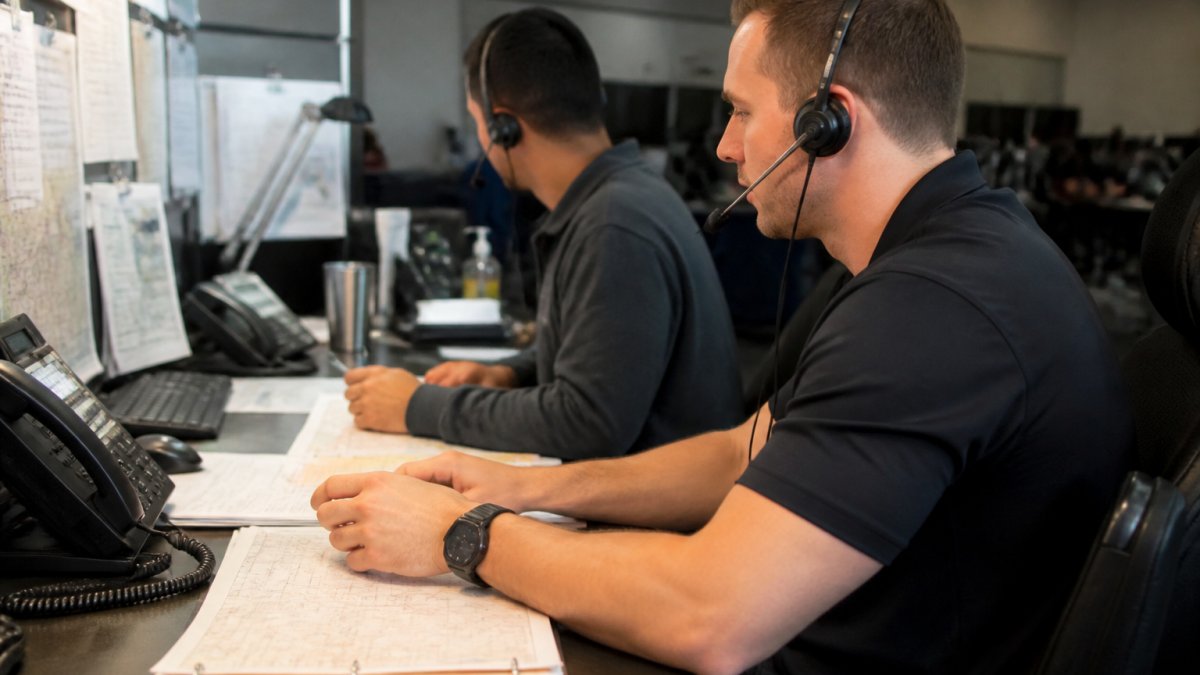
Most of the work is decision-making under pressure.
FAA Part 65 Aircraft Dispatcher Certification Requirements
The FAA sets dispatcher certification rules under Part 65 of the Federal Aviation Regulations. Skipping steps usually means retaking an exam. The core requirements are straightforward:
- Be at least 23 years old
- Read, speak, and understand English
- Pass the FAA knowledge test, known as the ADX
The FAA regulations for aircraft dispatchers under Part 65 spell out the exact eligibility language and the approved-course requirement. Read them before you enroll anywhere.
Eligibility: Age, Experience, and the Knowledge Test
The 23-year age minimum trips up some applicants, so check it early. You can often train before turning 23, but you cannot be certificated until you meet the age requirement.
Prior aviation experience helps but is not mandatory; many successful dispatchers come from outside aviation.
The ADX knowledge test is the first real gate, covering meteorology, flight planning, aircraft performance, regulations, and operational control.
Aircraft Dispatcher Training Cost: What You Actually Pay For
Aircraft dispatcher training cost varies by provider, format, and what is bundled in. Treat any online quote as a starting point, what matters is the all-in number and how long it takes to earn back.
The Cost Buckets You Need to Add Up
Every approved program price is built from the same components. Ask each provider to itemize them, because a low tuition figure often hides fees.
- Tuition for the approved course. This covers the required classroom hours and instructor time. It is usually the largest line item.
- Materials and ground-school content. Textbooks, charts, weather references, and access to practice-test platforms. Some programs bundle these; others charge separately.
- FAA knowledge test (ADX) fee. Paid to the testing center, not the school. Budget for it as a separate line.
A Realistic All-In Range
Most FAA-approved dispatcher programs in the U.S. land in the low-to-mid five figures once you add tuition, materials, test fees, and travel for an in-person course. Online or hybrid formats sit at the lower end because you avoid relocation and housing costs. Build your own estimate:
| Cost Line | What to Ask | Why It Matters |
|---|---|---|
| Tuition | Is the full course included, or is it priced per module? | A per-module price can balloon |
| Materials | Are charts and test-prep platforms included? | These are recurring costs if not bundled |
| ADX test fee | Is it paid to the school or the testing center? | Avoid double-paying |
| Practical test fee | Is examiner scheduling included? | Examiner availability affects timing |
| Retake policy | What does a second attempt cost? | Failure is common enough to plan for |
| Travel and housing | Is the course local, hybrid, or residential? | Can exceed tuition for some students |
Return on Investment: Tuition vs. Entry-Level Pay
Training is only "worth it" if the entry-level paycheck recovers the investment in a reasonable window. Entry-level pay at regional airlines and cargo carriers is modest relative to major-airline pay and improves with seniority and employer size. We will not quote a salary because scales shift by carrier and region, but the mechanism is consistent: start lower, build seniority, move up.
A practical way to frame the decision:
- Estimate your all-in training cost using the table above.
- Ask recent graduates what they were offered at their first dispatcher job, and how long it took to get hired.
- Divide training cost by monthly take-home pay at that entry-level figure to see roughly how many months of work it takes to recover the investment.
- Compare that payback window to other credentials you are considering.
FAA guidance on dispatcher certification and testing
Aircraft Dispatcher School Duration: How Long Until You're Certificated
Aircraft dispatcher school duration is typically measured in weeks, not years.
That intensity is the point. Dispatcher training compresses meteorology, aerodynamics, aviation law, weight and balance, and flight planning into a short window.
How long it takes you personally depends on three things:
| Factor | Typical Range | What It Means for You |
|---|---|---|
| Classroom instruction | Several weeks of full-time study | Intensive pace, limited outside commitments |
| Exam preparation | Weeks of self-study | Practice tests and review before the ADX |
| Practical test scheduling | Depends on examiner availability | Book early to avoid delays |
The practical test is the step most students underestimate. You must defend a flight plan, not just pass a written exam, so build study time around that reality.
Aircraft Dispatcher School vs. Self-Study: Which Path Fits You
Aircraft dispatcher school vs. self-study comes down to how you learn and how much structure you need. Self-study is cheaper.
Self-study works for applicants with aviation background, strong self-discipline, and a clear study plan.
School works for applicants who want a syllabus, instructors who have done the job, and classmates to learn alongside.
A practical way to decide: ask yourself whether you can explain a flight release decision out loud to a skeptical examiner.
Jobs, Pay, and Career Progression After Certification
Getting the certificate is the midpoint, not the finish line. Where you get hired, what you earn, and how the licensing steps work determine whether school was worth it.
The Licensing Steps, Start to Finish
The pathway is set by the FAA under Part 65 of the Federal Aviation Regulations, and the sequence matters:
- Confirm eligibility. You must be at least 23 years old, read, speak, and understand English, and either complete an approved training course or qualify through logged flight hours or prior experience.
- Complete the approved course. The classroom requirement is substantial; many programs run 200 hours of instruction.
- Pass the FAA knowledge test (ADX). This is a computer-based exam covering meteorology, flight planning, aircraft performance, regulations, and operational control.
- Pass the practical test. An FAA examiner asks you to defend a flight release in real time, not just recall facts.
- Receive your dispatcher certificate. At that point you are eligible to be hired into an operational control position.
If you fail a step, you retake it: the ADX after a waiting period, the practical test by rescheduling with an examiner. The cost and delay of a retake are why structured preparation beats a cheap question bank.
Where Entry-Level Dispatchers Get Hired
Entry-level positions cluster at regional airlines, cargo carriers, and charter operators, which staff larger operational control centers and run continuous schedules. Major airlines typically hire from this pool rather than directly from school, so treat the first job as a stepping stone.
The common pattern is regional airline first, then a move to a larger carrier as seniority and experience build. The certificate is portable, so you are not locked in.
What the Pay Actually Looks Like
We will not quote a single salary figure because pay scales shift by carrier, region, and contract. The structure is consistent:
- Entry-level pay at regional and cargo carriers is modest relative to major-airline pay, and it is the number you should use when calculating your training payback window.
- Pay improves with seniority and with moves to larger carriers. Seniority drives both schedule quality and pay progression.
- Overtime and shift differentials are common in 24/7 operations and can materially change take-home pay.
Ask recent graduates what they were offered at their first job and how long it took to get hired. That is more useful than any published average.
Working Conditions: The Part Nobody Mentions in the Brochure
Airlines operate around the clock, and dispatchers cover those hours. Expect nights, weekends, holidays, and rotating shifts, especially early in your career when seniority is low. Operational pressure is real: you make judgment calls on fuel, routing, and diversions while a flight is in the air. If shift work or high-pressure decision-making is a dealbreaker, be honest with yourself before you enroll.
Career Progression Beyond the First Job
The skills that get you promoted are the same ones that get you hired: decision-making, communication, attention to detail, and comfort under pressure. Dispatchers who master these move from regional carriers to major airlines, and some move into training, supervision, or operational management. The certificate is the entry ticket; seniority and judgment are the career.
FAA aircraft dispatcher certification resources
How to Choose an FAA-Approved Dispatcher Training Program
Choosing an FAA-approved dispatcher training program is the decision that most affects your outcome. Compare providers on the same questions:
- Is the program FAA-approved under Part 65?
- How many classroom hours are included?
- What is the class size, and how much individual attention does that allow?
Small classes and experienced instructors matter more than marketing claims.
FAA aircraft dispatcher certification resources
The decision comes down to fit. If you want a career in airline operations and you are ready for an intensive, structured program, dispatcher school is a sound investment.
At QNH LLC, we have prepared hireable candidates for the aviation industry since 1979 through our FAA-approved Part 65 course, with 200 classroom hours, small classes, and instruction from people who have worked the job.
Frequently Asked Questions
Is aircraft dispatcher school worth the cost?
It depends on how you learn and where you want to work. An FAA-approved Part 65 program gives you structured instruction, aircraft performance and weight and balance practice, and a certificate that airlines recognize. Self-study is cheaper but leaves you to build the practical judgment examiners test. If you can commit to the classroom hours and want to be hireable quickly, the investment usually pays back through faster entry into an entry-level position. Request current pricing directly from the school before you decide.
What are the FAA Part 65 requirements for aircraft dispatcher certification?
Under Part 65 you must be at least 23 years old, read and speak English, and pass the FAA knowledge test, which is the ADX written exam. You also need to pass a practical test with an FAA inspector or designated examiner. The practical test requires either an approved training course or relevant aviation experience. Many applicants meet the experience route through logged flight hours or a pilot certificate, but an approved course is the most common path for career changers with no aviation background.
How long does it take to become an aircraft dispatcher?
An FAA-approved course typically runs several weeks of full-time classroom instruction, and QNH's program is built around 200 classroom hours. Part-time or working students usually stretch that over a longer schedule. After the course you still need to schedule and pass the ADX knowledge test and the practical test, so budget extra weeks for exam dates and any retakes. Total time from enrollment to certificate commonly lands in the two-to-four-month range for full-time students.
Can you become an aircraft dispatcher without going to school?
Yes, but only if you already meet the experience route under Part 65, usually through logged flight hours or a pilot certificate. Without that background, an approved training course is effectively the path in. Self-study with ground school materials can prepare you for the written exam, but it does not replace the structured instruction and practical sign-off that a Part 65 course provides. Weigh the lower upfront cost against the extra time and the risk of gaps in your flight planning and operational control knowledge.