 blog
blog
7 Steps to Getting Your Dispatcher License in 2026
Table of Contents
- Step 1: Choose Your Path - Aircraft or Freight Dispatcher License
- Step 2: Verify FAA Part 65 Certification Requirements
- Step 3: Enroll in an FAA-Approved Dispatcher Training Program
- Step 4: Understand Aircraft Dispatcher Training Cost
- Step 5: Pass the FAA Knowledge Exam and Practical Test
- Step 6: Apply for Your Aircraft Dispatcher Certificate
- Step 7: Start Your Career as a Dispatcher
- Conclusion
- Frequently Asked Questions
Last Updated: September 21, 2026
Step 1: Choose Your Path - Aircraft or Freight Dispatcher License
The phrase "dispatcher license" hides two very different careers. An aircraft dispatcher license is a federal certificate; a freight dispatcher license does not exist federally. This guide from QNH LLC walks you through the aircraft route, the only path with a formal license at the end.
| Path | License Needed | Issuing Body | Typical Entry Route |
|---|---|---|---|
| Aircraft dispatcher | FAA certificate | Federal Aviation Administration | Approved training + exams |
| Freight dispatcher | None federally | None (business registration only) | Self-taught or short course |
FAA Aircraft Dispatcher Certification
FAA Aircraft Dispatcher Certification is the federal credential that allows you to plan and release flights for an airline. It is issued under Part 65 of the Federal Aviation Regulations.
Freight Dispatching: No Federal License Required
Freight dispatching is a business, not a licensed profession. You register a company, find carriers and shippers, and take a cut of each load. That route needs no FAA approval and no dispatcher license, which is why so many people confuse the two.
Step 2: Verify FAA Part 65 Certification Requirements
The FAA Part 65 certification requirements are strict and non-negotiable. They live in Part 65 of Title 14 of the Code of Federal Regulations, the same rulebook that governs air traffic controllers. You need to be at least 23 years old, speak English fluently, and hold a high school diploma or GED. Miss any one and the process stops.
Age, Language, and Education Prerequisites
The FAA checks three core requirements before you sit the written exam:
- Age: You must be at least 23 years old to hold the certificate.
- Language: You must read, speak, write, and understand English.
- Education: You need a high school diploma or a GED.
The Two Pathways to Eligibility
Part 65 recognizes two routes to the certificate, and knowing which applies to you changes how you plan your training:
- Approved training program. You complete an FAA-approved dispatcher course, pass the knowledge test, and pass the practical test. This is the route nearly every new entrant takes.
- Practical experience. A limited number of applicants qualify through documented experience in aircraft operations, such as time logged in a related flight-operations or military role. The FAA reviews these on a case-by-case basis, and the documentation burden is heavy.
What the Knowledge Test Requires First
You cannot walk into the written exam cold. The FAA requires evidence of eligibility, typically a graduation certificate or endorsement from your approved training provider, before the testing center admits you. The sequence is fixed: enroll, complete the classroom hours, get your endorsement, then test.
The Distinction That Trips Up Freight Searchers
Many people searching for a "dispatcher license" actually want freight dispatching, a different legal animal. Freight dispatching is not licensed at the federal level: no FAA certificate, no Part 65 subpart, no age minimum. You register a business, find carriers and shippers, and operate as an independent contractor or agency.
| Path | Regulator | Credential |
|---|---|---|
| Aircraft dispatcher | FAA (federal) | Aircraft Dispatcher Certificate |
| Freight dispatcher | None federally | Business registration only |
| Public safety dispatcher | State / local agency | Agency or state certification |
Step 3: Enroll in an FAA-Approved Dispatcher Training Program
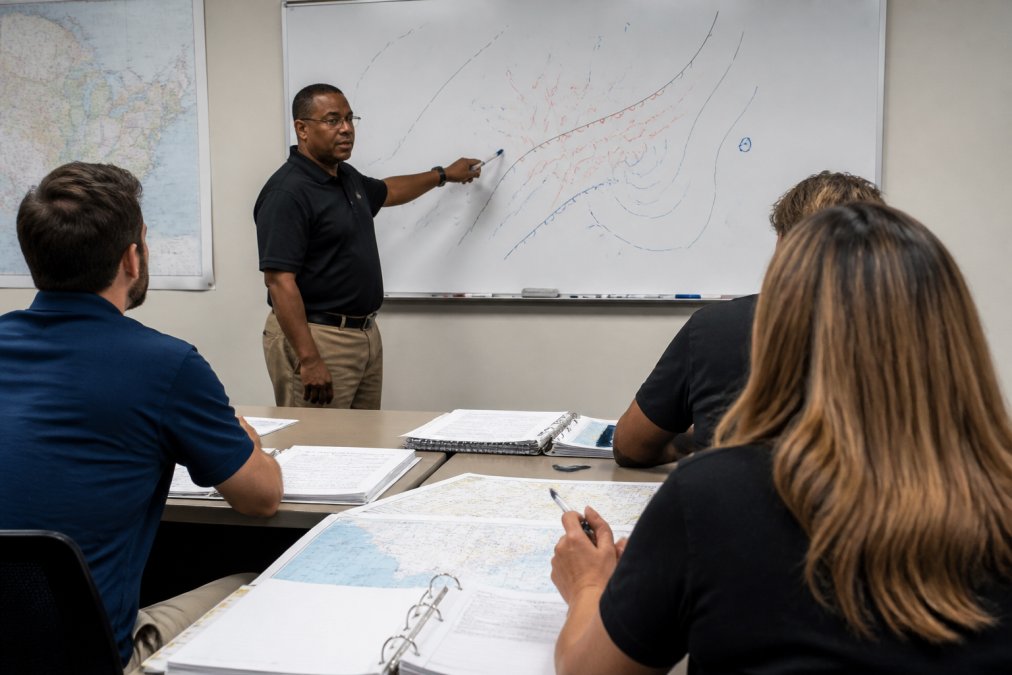
FAA-approved dispatcher training is the only route to the certificate. The FAA does not allow self-study or a standalone online course to qualify you. Approved programs must deliver a set number of classroom hours and cover specific subjects. QNH LLC runs an FAA-approved Part 65 course with 200 classroom hours, taught in small classes by college professors, airline pilots, and former FAA Dispatcher Examiners.
How Long Is Aircraft Dispatcher School?
Aircraft dispatcher school typically takes 5 to 6 weeks of full-time study; part-time and evening formats stretch that to a few months. The FAA requires a minimum number of instruction hours, and most approved programs run 200 to 240 classroom hours. QNH LLC's program sits at 200 hours. Expect coursework in:
- Meteorology and weather analysis
- Aerodynamics and aircraft performance
- Aviation law and regulations
- Weight and balance computations
- Flight planning and fuel calculations
- Emergency and abnormal procedures
Training length is fixed by FAA hour requirements, not by how fast you learn. Pick a program with small classes and real instructors, because the hours are the same everywhere but the teaching is not.
Step 4: Understand Aircraft Dispatcher Training Cost
Aircraft dispatcher training cost varies widely by school, format, and what is bundled in. There is no single national price. Ask each school directly for a full breakdown, then compare line by line.
Watch for these cost components:
- Tuition for the classroom hours
- Study materials and online ground school access
- Exam fees for the FAA written and practical tests
- Travel and lodging if the program is not local
- Retake costs if you do not pass on the first attempt
Step 5: Pass the FAA Knowledge Exam and Practical Test
Two exams stand between you and the certificate. The written exam checks knowledge; the practical test checks whether you can do the job under pressure.
The FAA Knowledge Test
The written test is computer-based and delivered at an FAA-approved testing center. It covers meteorology, aircraft performance, weight and balance, aviation law, flight planning, and emergency procedures. You need a passing score before the practical.
A few things to know before you sit down:
- You must present your training endorsement or graduation certificate at the testing center.
- The test is scored on the spot, so you know immediately whether you passed.
- If you fail, you cannot simply retake it the next day. The FAA requires a period of additional instruction and a new endorsement from your training provider before you can re-test.
- Your knowledge-test results have a limited validity window, so do not let them sit unused while you delay the practical.
The Practical Test
The practical test is where careers are decided. An FAA examiner hands you a real flight scenario and watches you build a flight plan from scratch, defending your fuel loads, weather calls, and alternate selections. The examiner will change the weather mid-scenario to see how you react. A typical practical runs several hours and includes:
- A pre-flight planning exercise using current weather and notices
- Fuel and alternate selection with your reasoning explained out loud
- A diversion or emergency scenario introduced mid-flight-plan
- Oral questioning on regulations, performance, and systems
- A review of your flight-release paperwork for accuracy
The Risk-Management Angle Nobody Talks About
The practical test is hard because the job carries real liability. An aircraft dispatcher shares legal responsibility for a flight's safety with the captain; signing a flight release attests the flight can be conducted safely under the conditions you evaluated. If an investigation traces a problem back to a dispatch decision, an alternate too far, a fuel load too thin, a weather system underestimated, the dispatcher can be named in the findings, and the certificate can be suspended or revoked.
Step 6: Apply for Your Aircraft Dispatcher Certificate
Once you pass both tests, the paperwork is straightforward. Your training provider submits the required documents, and the FAA issues your Aircraft Dispatcher Certificate. You will need proof of age, your education credential, and your exam results, keep copies, because employers will ask. Your certificate does not expire like a pilot's medical, but it can be suspended or revoked for cause.
Step 7: Start Your Career as a Dispatcher
A new certificate opens doors at regional airlines, cargo carriers, and charter operators. Most dispatchers start at a regional and move up. Hiring usually includes an interview and a practical scenario, because airlines want to see how you think when weather turns bad and a fuel stop becomes necessary.
What gets people hired:
- A clean, current certificate
- Confidence explaining flight plans out loud
- Willingness to start on nights and weekends
- A clear understanding of the dispatcher's shared responsibility with the captain
Conclusion
Getting your dispatcher license is a defined path: meet the FAA Part 65 requirements, complete approved training, pass two exams, and apply. The hard part is choosing a program that prepares you to defend a flight plan in front of an examiner.
Frequently Asked Questions
How long does it take to get a dispatcher license?
For an FAA aircraft dispatcher certificate, plan on 5 to 8 weeks of full-time study in an approved program, which requires 200 classroom hours. Part-time schedules stretch that to 3 to 6 months. There is no federal dispatcher license for freight dispatching, so freight training timelines depend on the program you choose, often 4 to 12 weeks.
How much does aircraft dispatcher training cost?
Aircraft dispatcher training cost depends on the provider, format, and what materials are included. In-person programs with small classes, exam prep, and instructor access sit at the higher end, while self-paced online courses cost less but offer less support. QNH LLC does not publish pricing, so contact them directly for current rates and what the tuition covers.
Do you need a license to become a dispatcher?
It depends on the path. Aircraft dispatchers must hold an FAA certificate issued under Part 65 to sign off on flight releases. Freight dispatchers do not need a federal license, but many brokers and carriers require documented training or a certificate from a dispatching school before they will work with you.
What are the FAA Part 65 certification requirements?
To earn an aircraft dispatcher certificate, you must be at least 23 years old, read and speak English fluently, pass the FAA knowledge exam and practical test, and complete an approved training course or gain qualifying experience. You need a high school diploma or GED.