 how-to
How to Use Student-Teacher Ratios in Aviation Education
Last Updated: October 29, 2026
Quick Summary
Aviation education ratios measure how many learners one instructor is responsible for at a time, and they shape how much feedback each student receives. Ask for both class size and ratio, then compare aviation education ratios by activity, since practical work matters more than the headline number.
- A class of 20 with two instructors has a ratio of 10:1; a class of 12 with one instructor has a ratio of 12:1.
- Ask for the ratio during practical exercises, review sessions, and hands-on tasks, not just orientation.
- Divide students by instructors physically present during each activity to get the activity-level ratio.
- Improving a ratio is mostly about scheduling: split practical sessions, add instructors for drills, group by experience.
- At QNH LLC, the FAA-approved Part 65 course is built around small classes and 200 classroom hours.
Table of Contents
- What Student-Teacher Ratios Mean in Aviation Education
- How Aviation Training Class Size Affects Learning Outcomes
- The Benefits of Small Aviation Classes for Career Seekers
- Individual Attention in Aviation Training: What It Actually Looks Like
- FAA Aircraft Dispatcher Training Requirements and the Role of Ratios
- Matching Ratios to Learner Experience Levels and Training Activities
- How to Assess and Improve a Program's Ratio
- Reserve Your Seat in a Small Aviation Class
- Frequently Asked Questions
What Student-Teacher Ratios Mean in Aviation Education
Aviation education ratios measure how many learners one instructor is responsible for at a time. In a ground school or dispatcher program, that number shapes how much feedback each student gets. This guide from QNH LLC explains how to read those ratios and use them when choosing a program. The role of student teacher ratios in aviation education goes far beyond a brochure line. It decides whether you get corrected on a weight and balance error in the same session or a week later.
Ratios matter most in technical training. A dispatcher must defend a flight plan under pressure. That skill grows through repetition and correction, not lectures.
Ratio vs. Class Size: A Distinction That Matters
Student-to-instructor ratio is the number of students assigned to each instructor. Class size is the total number of students in a room. A class of 20 with two instructors has a ratio of 10:1. A class of 12 with one instructor has a ratio of 12:1.
The two numbers answer different questions:
- Class size tells you how crowded the room feels
- Ratio tells you how much individual attention is available
- A large class with strong staffing can beat a small class with one overloaded instructor
Ask for both numbers. Schools often quote only the one that looks better.
How Aviation Training Class Size Affects Learning Outcomes
Smaller aviation training class sizes can support better learning outcomes, but the effect is easiest to see when you look at what aviation employers actually care about. A ratio does not change a test score by magic. An honest review of dispatcher training difficulty can help you weigh how class size and instructor support affect the challenge. It changes how many correction cycles a student gets, and correction cycles are what build competency.
Here is where the effect shows up most clearly:
- Competency attainment. In practical work like flight planning and weight and balance, an instructor who can review every worksheet in the same session catches errors before they become habits. In a large room, errors survive to the next class.
- Time to proficiency. Feedback that arrives while the reasoning is still fresh can help students progress. Repeated attempts are a common part of career training, and they require instructor time.
- Retention. A ratio small enough that the instructor notices a blank look can help students stay engaged.
- Safety events and supervision. In hands-on settings, instructor availability affects hazard recognition. A student practicing a high-risk task with an instructor nearby gets corrected in the moment; a student practicing alone gets corrected after the fact, if at all.
- Oral examination readiness. Defending a flight plan aloud is a performance skill that builds with repetition in front of an instructor.
A small class does not fix everything on its own. Teaching quality and instructor organization also matter, so the ratio should be read alongside instructor qualifications and the weekly schedule.
Engagement, Participation, and Motivation
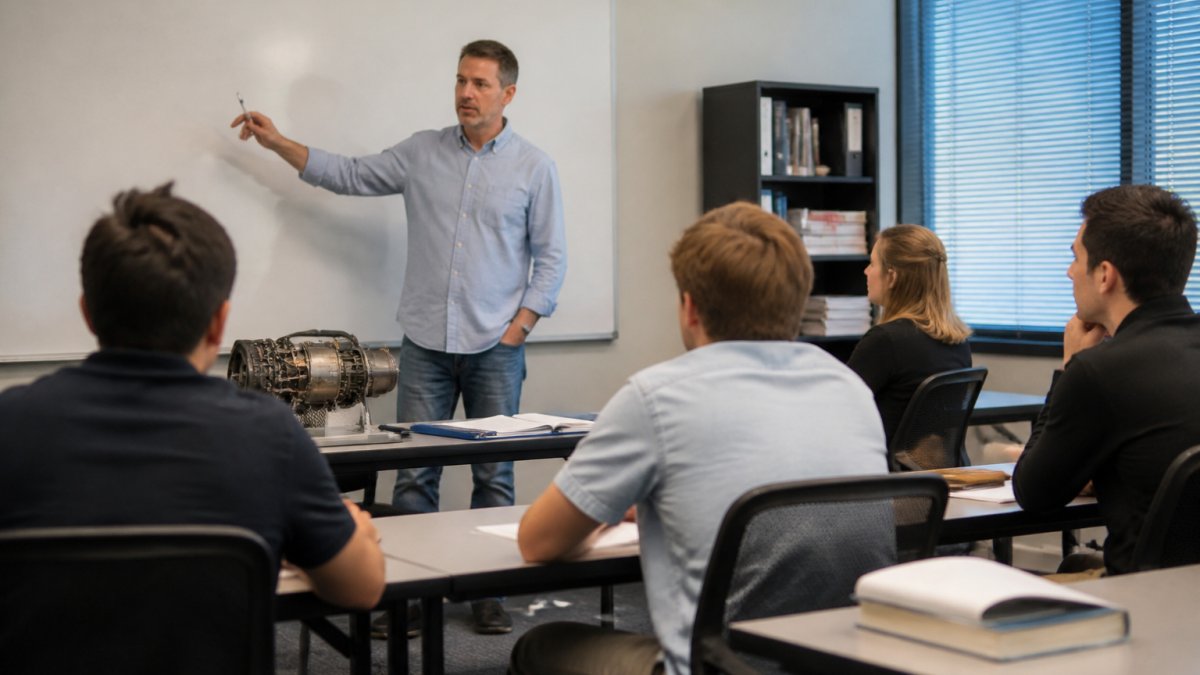
Student engagement rises when the room is small enough that no one can hide. In a large lecture hall, a confused student stays quiet. In a class of eight, the instructor notices the blank look.
That visibility changes student motivation. Adults in career training respond to being seen. When an instructor calls on you by name, you prepare differently.
Ask how many students share one instructor during practical exercises, not during orientation.
The Benefits of Small Aviation Classes for Career Seekers
Career changers gain the most from small aviation classes. If you are coming from outside aviation, you need room to ask basic questions without slowing a group of experienced airline staff. A tight ratio gives you that room.
Small classes can offer:
- Opportunities for faster correction of errors in calculations and flight plan logic
- More speaking time to practice defending a plan aloud
- Direct access to instructors for questions on meteorology and regulations
- A better chance of questions being noticed before students fall behind These intimate learning environments naturally facilitate more consistent methods for tracking student progress throughout the rigorous phases of flight training.
The benefit of a small class is repetition: more individual feedback creates more opportunities to practice.
Individual Attention in Aviation Training: What It Actually Looks Like
Individual attention in aviation training shows up as specific behaviors you can watch for in the first week. At QNH LLC, small classes are designed to support individual attention.
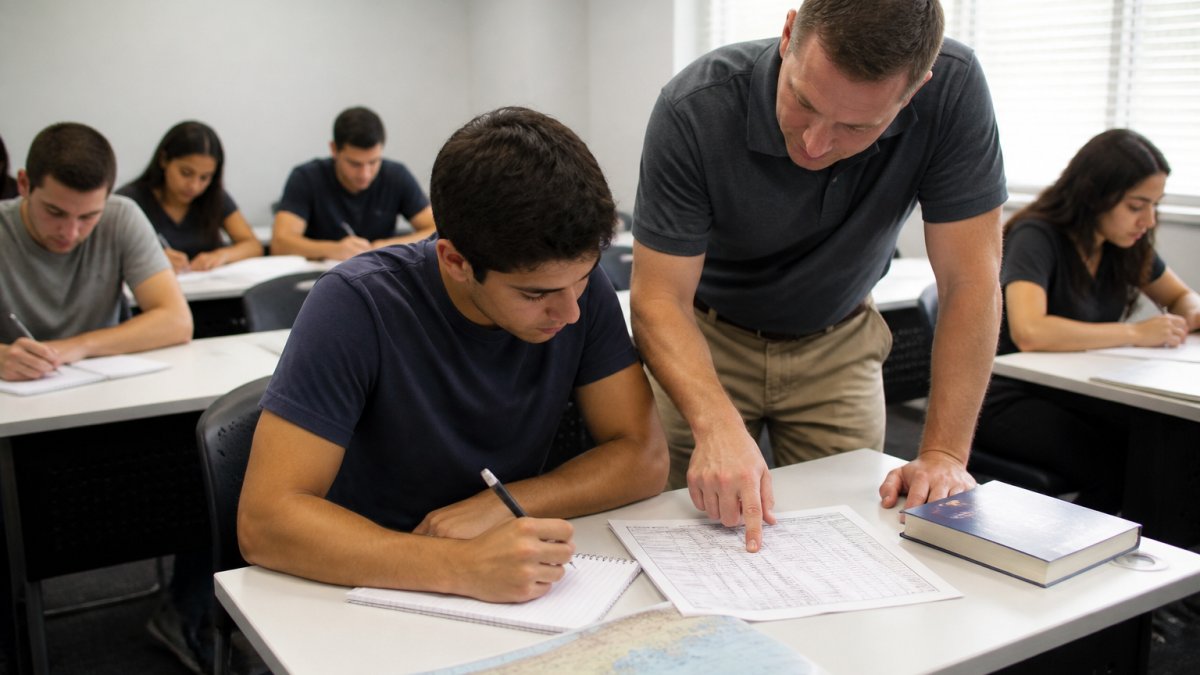
Signs of individual attention to look for include:
- Instructors checking student work during class
- Students being asked to explain their reasoning
- Wrong answers being worked through in the open
The teaching method behind this matters as much as the numbers. Discussion-based instruction that pushes students to reason aloud is one way a small ratio can be used.
FAA Aircraft Dispatcher Training Requirements and the Role of Ratios
The Federal Aviation Administration's Part 65 regulations govern dispatcher certification, and approved programs must meet set classroom hour minimums.
That gap is where quality lives. Two programs can teach very differently even when they follow the same regulatory framework.
So aviation education ratios become your main quality signal. When the regulation is silent, the school's staffing choice tells you what it actually values.
Matching Ratios to Learner Experience Levels and Training Activities
The right ratio depends on who is learning and what they are doing. A beginner-focused training guide can show you what early-stage instruction involves. There is no single best number, and any program that advertises one universal ratio is oversimplifying. What matters is whether the ratio matches the risk and the reasoning load of the activity.
A useful way to think about it is by training activity, not by program brochure:
| Training Activity | Why the Ratio Matters | What to Ask |
|---|---|---|
| Ground school lecture | Lower risk; concepts can be delivered to a group | How many students per instructor, and is there a separate review session? |
| Weight and balance drills | Errors compound silently; immediate correction matters | Does the instructor review every worksheet in the same session? |
| Flight planning exercises | Reasoning must be defended aloud | How many students share one instructor during practical work? |
| Meteorology review | Concepts can be revisited in group format | Is review instructor-led or self-study? |
| Oral examination practice | Performance skill built through repetition | Is practice one-on-one, and how often? |
| Higher-risk hands-on tasks | Supervision affects hazard recognition and safe progression | Who is physically present, and what is the backup plan if an instructor is out? |
A Simple Way to Calculate and Compare Ratios
Ask each program for two numbers per activity: the number of students and the number of instructors physically present during that activity. Divide students by instructors to get the activity-level ratio. Then compare like with like. A program with a strong overall ratio can still have a weak ratio during the practical work that matters most.
How to Assess and Improve a Program's Ratio
Assessing a program's ratio takes four questions and a short conversation. Ask them before you enroll, and ask them again in week one.
- How many students share one instructor during practical exercises?
- Does that number change for weight and balance or flight planning work?
- Who covers the class if an instructor is out?
- Can I see the weekly schedule broken down by activity?
Then check the answers against what you observe. A program that cannot answer clearly is telling you something. What to know about a dispatcher training center can help you judge the answers you receive.
Improving a ratio is mostly about scheduling, not hiring. Schools can split practical sessions into smaller blocks, add a second instructor for calculation drills, and group students by experience level.
Reserve Your Seat in a Small Aviation Class
Choosing a program comes down to the room you will sit in for 200 classroom hours. A comparison of FAA-approved dispatcher schools can help you pick one with the class size you want. A tight ratio means your errors get caught, your questions get answered, and your flight plans get defended out loud before an examiner ever asks.
At QNH LLC, we built our FAA-approved Part 65 Aircraft Dispatcher Certification course around small classes and individual attention. Our instructors include college professors, airline pilots, and former FAA Dispatcher Examiners, and our 200 classroom hours cover meteorology, aerodynamics, aviation laws, and practical weight and balance computations. Fall class registration also includes a free Gleim Online Ground School course.
Frequently Asked Questions
Why is the student-to-teacher ratio important in aviation education?
Aviation training covers dense material like meteorology, aerodynamics, and weight and balance computations, and students need room to ask questions and work through problems with an instructor nearby. A lower student-to-instructor ratio gives each person more time on task with direct feedback. In a 200-hour dispatcher curriculum, those hours of instruction are the time students spend building these skills.
What is a good student-to-instructor ratio for aviation training?
There is no single FAA-mandated classroom ratio for dispatcher programs, so the number to look for depends on the activity. Ground school lectures tolerate larger groups, while weight and balance practice, flight-plan defense, and Socratic questioning work best in small sections. Ask programs how many students sit in a typical classroom session and whether that number changes for hands-on work. A program that keeps classes small across the whole 200-hour curriculum gives you a clearer picture than one that only quotes a ratio for lectures.
Do smaller aviation classes provide more individual attention?
Smaller classes create the conditions for individual attention, but the instructor's method decides whether students actually get it. A 12-person class taught as a straight lecture delivers less personal feedback than an 18-person class built around the Socratic Method, where every student is called on to reason through a scenario. When you compare programs, ask how instructors run a session, how often students present their work, and whether struggling students get extra help. Ratio is one factor; teaching method also matters.
How does class size affect aviation students' learning outcomes?
Class size can influence how often a student participates and how much feedback each person receives. In aviation training, those factors matter for complex operational concepts like aerodynamics and weight and balance, where a small error in reasoning compounds. Smaller groups also reduce the chance a quiet student drifts unnoticed through a module. The practical test is to ask a program how it measures student performance beyond the written exam, and whether instructors track progress throughout the course rather than only at the end.
The ratio question is the one most applicants forget to ask, and it is the one that shapes everything else. If you want a class small enough that your instructor knows your weak spots by week two, QNH LLC is built for that. Our small classes, individual attention, and instruction from experienced airline pilots and former FAA Dispatcher Examiners give you the feedback loop that technical training demands. Get started with QNH LLC and reserve your seat in a small aviation class.