 how-to
Why Is CRM Training Essential for Aircraft Dispatchers?
Last Updated: October 29, 2026
Quick Summary
CRM training is essential for aircraft dispatchers because it teaches the communication, situational awareness, decision-making, and teamwork skills needed to share operational control of a flight safely with the captain. It builds practices like briefings, checklists, and assertiveness that stop human error from reaching the flight.
- A dispatcher shares operational control of a flight with the captain, so the two must think as one team.
- CRM practices include briefings, checklists, assertiveness, workload management, and debriefings after irregular operations.
- Threat and error management asks what threats are present, what errors they could trigger, and how to trap them.
- Measure CRM training through observable behaviors such as briefing quality, assertiveness under pushback, and decision documentation.
- Do not measure CRM training only by safety outcomes, since serious incidents are rare and weak behavior can hide for years.
Table of Contents
- What CRM Training Means for Aircraft Dispatchers
- How CRM Training Prevents Human Error in Operational Control
- Aircraft Dispatcher Communication Skills That Keep Flights Safe
- Dispatcher Pilot Communication: Building a Shared Flight Picture
- Aviation Threat and Error Management in Daily Dispatch Decisions
- Measuring Whether CRM Training Actually Works
- Reserve Your Seat in FAA-Approved Dispatcher Training
- Frequently Asked Questions
What CRM Training Means for Aircraft Dispatchers
Crew resource management (CRM) training is the structured practice of teaching aviation professionals to use every resource available to them, including people, information, and equipment, to run safe and efficient flights. For aircraft dispatchers, CRM training covers communication, situational awareness, decision-making, and teamwork under pressure. The importance of CRM training for aircraft dispatchers shows up on every shift, not just in a classroom.
A dispatcher shares operational control of a flight with the captain. That shared authority means two people must think as one team, often across hundreds of miles and through a phone line. CRM training is what makes that partnership work.
Here is the core idea: a dispatcher who knows weather and regulations but cannot communicate clearly under stress is a liability. A dispatcher who can coordinate, question, and prioritize is an asset.
- Communication: sharing the right information at the right moment
- Situational awareness: knowing what is happening now and what is coming next
- Decision-making: choosing a safe course when conditions change
- Teamwork: treating the flight crew as partners, not recipients of paperwork
The FAA treats human factors as a central safety concern in its safety guidance for operators, and CRM sits at the heart of that effort.
How CRM Training Prevents Human Error in Operational Control
- Briefings before a flight so everyone shares the same picture
- Checklists that stop skipped steps on routine tasks
- Assertiveness so a dispatcher speaks up when something looks wrong
- Workload management so tasks get prioritized when the desk gets busy
- Debriefings after irregular operations to capture lessons
CRM training builds specific practices that stop human error from reaching the flight.
| Practice | What it does |
|---|---|
| Briefings | Share the same picture before a flight |
| Checklists | Stop skipped steps on routine tasks |
| Assertiveness | Speak up when something looks wrong |
| Workload management | Prioritize tasks when the desk gets busy |
| Debriefings | Capture lessons after irregular operations |
Aircraft Dispatcher Communication Skills That Keep Flights Safe
The skills that matter most:
- Clarity: short, direct language with no ambiguity
- Active listening: confirming what the pilot actually said
- Information sharing: pushing updates before they become problems
- Conflict resolution: handling disagreements with calm and facts
- Speaking up: raising a concern even when it feels awkward
If you want a wider view of the soft skills that make a strong dispatcher, our guide on what skills successful flight dispatchers need breaks them down.
Dispatcher Pilot Communication: Building a Shared Flight Picture
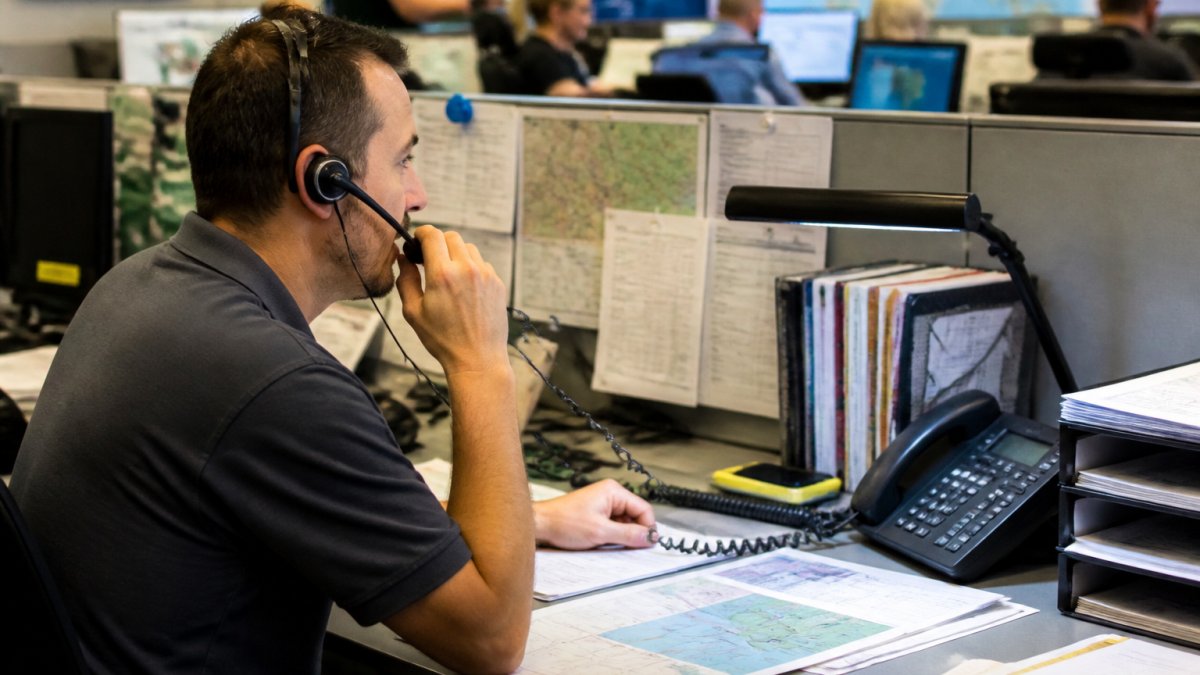
Standard operating procedures and structured briefings keep this loop tight. When a diversion or weather hold comes up, that shared picture is what lets the team act fast instead of scrambling.
Aviation Threat and Error Management in Daily Dispatch Decisions
A threat is any condition that raises risk: a thunderstorm line building over the destination, a mechanical write-up on the inbound aircraft, a crew approaching duty-time limits, a runway closure posted mid-shift. An error is a mistake somebody makes, a transposed fuel figure, a missed alternate, a briefing that never got confirmed. TEM asks three questions on a loop:
- What threats are present right now?
- What errors could those threats trigger?
- What are we doing to trap them?
Dispatcher Scenarios Where TEM and CRM Intersect
- A fast-moving weather system. A line of convection shifts 40 miles east of the forecast. The threat is the new route; the error risk is a dispatcher who re-files without telling the crew. The trap is a structured briefing: what changed, what the new plan is, what the crew should watch for. CRM skills under test: situational awareness, information sharing, and assertiveness when the crew pushes back on a reroute.
- An aircraft diversion under time pressure. A destination goes below minimums and three flights need alternates at once. The threat is compressed decision time; the error risk is task saturation and a skipped fuel check. The trap is workload management, prioritizing which flight is most time-critical, delegating what can be delegated, and documenting the decision so the next shift can follow it.
- A maintenance issue discovered late. A hydraulic write-up surfaces after the release is issued. The threat is an airworthiness question the dispatcher cannot answer alone; the error risk is proceeding on incomplete information. The trap is a coordination loop with maintenance control and the captain, plus a clear record of who decided what and when.
- Incomplete or conflicting information. Two weather sources disagree, or a NOTAM contradicts the flight plan. The threat is ambiguity; the error risk is picking the convenient answer. The trap is a deliberate confirmation step, call the source, confirm with the crew, and brief the resolution.
Why Safety Culture Makes TEM Work
To see how these principles play out shift by shift, read our breakdown of the daily responsibilities of an airline flight dispatcher.
Measuring Whether CRM Training Actually Works
Effective programs measure observable behavior and operational indicators. Here is what that looks like in a dispatch environment.
Observable Behaviors to Assess
- Briefing quality: Does the dispatcher deliver a structured briefing that covers route, weather threats, fuel plan, and alternates, and does the crew confirm it? A one-way read-off scores low; a two-way loop scores high.
- Assertiveness under pushback: When a crew or a scheduler disagrees, does the dispatcher restate the concern with facts and escalate when needed, or does the concern quietly disappear?
- Decision documentation: Is the reasoning behind a reroute, a delay, or an alternate choice recorded clearly enough that the next shift can follow it? Undocumented decisions are a leading indicator of future confusion.
- Workload triage: During a busy period, does the dispatcher prioritize time-critical flights, delegate what can be delegated, and ask for help before saturation, or after?
- Coordination handoffs: At shift change or between dispatch, maintenance control, and operations, is information passed completely, or does the next person have to reconstruct it?
- Error reporting: Does the dispatcher surface near-misses and self-caught errors, or do they only appear in incident reports?
Operational Indicators to Track
- Communication-related errors: misc routed releases, missed alternates, unconfirmed briefings, tracked as a trend, not a single event.
- Coordination errors: handoff failures between dispatch and maintenance control, or between shifts, that required rework.
- Decision rework: how often a decision had to be reversed because information was incomplete or unshared.
- Recurrent training performance: whether scenario scores improve across cycles, not just whether they pass.
- Debrief quality: whether debriefs surface real lessons or restate the timeline.
Building the Measurement Loop
A program that only checks written answers misses the point. CRM is a behavior, and behavior is what you measure. Readers planning for the long term can also review how to maintain your aircraft dispatcher certificate to see how CRM and recurrent training fit into staying current.
Reserve Your Seat in FAA-Approved Dispatcher Training
At QNH LLC, our FAA-approved Part 65 Aircraft Dispatcher Certification course delivers 200 classroom hours with small classes and individual attention. Our instructors include college professors, airline pilots, and former FAA Dispatcher Examiners, and our Chief and Lead Instructors use the Socratic Method to foster critical thinking.
You also get practical training in weight and balance, plus a free Gleim Online Ground School course with fall registration. Explore the accelerated aircraft dispatcher certification course and see what to expect from our aircraft dispatcher training center.
Frequently Asked Questions
What is crew resource management in aviation?
Crew resource management (CRM) is the practice of using all available resources, including people, information, and equipment, to run a flight safely. It covers communication, teamwork, situational awareness, leadership, and decision-making.
Do aircraft dispatchers need CRM training?
Yes. Communication and decision-making are relevant to dispatch work.
How does CRM training improve communication between dispatchers and pilots?
CRM training standardizes how information is shared. Dispatchers learn to use closed-loop communication, confirm that a pilot received and understood a change, and separate urgent items from routine updates. They practice briefings and debriefings, assertiveness, and conflict resolution. The result is fewer misunderstood clearances, faster coordination during weather diversions, and a shared flight picture that both sides can act on when conditions change quickly.
How can dispatchers apply CRM principles during irregular operations?
During irregular operations, dispatchers apply CRM by prioritizing tasks, allocating workload across the desk, and sharing information early with pilots and station staff. Threat and error management gives them a routine: identify the threat, trap the error before it spreads, and debrief afterward. Checklists, briefings, and clear escalation paths keep decisions consistent when weather, maintenance, or delays pile up. Recurrent training and scenario practice keep those habits sharp.
The gap between a dispatcher who passes a test and one who earns a seat in an operations center comes down to how they think and communicate under pressure. CRM training closes that gap. Get started with QNH LLC and build the communication, teamwork, and decision-making skills that keep flights safe.