 blog
Aviation Networking Events in Miami: 2026 Guide
Last Updated: November 7, 2026
Quick Summary
Aviation networking events in Miami include industry conferences, regional socials, safety seminars, hangar meetups, and aerospace education events. Many are free or open to the public, while conferences charge varying ticket prices. Confirm each date, venue, and registration on the organizer's own page before you attend.
- Industry conferences bring together hundreds of attendees over several days, with exhibitor halls and networking receptions.
- Regional socials and cocktail receptions offer lower-pressure evening introductions, often hosted by pilot associations.
- Confirm each event's date, full address, and registration status on the organizer's page, not a third-party calendar.
- Treat listings without a confirmed date, venue, and registration link as unverified until the organizer posts them.
- Set a goal of three meaningful conversations per event and send each contact a specific follow-up note.
Table of Contents
- Aviation Events in Miami This Weekend and Coming Up
- Who Each Aviation Event Suits
- Event Venues, Schedules, and Cost to Attend
- Aviation Networking for Students
- Aviation Industry Networking Tips for Working Professionals
- Training Pathways That Connect You to Miami's Aviation Community
- Start Your Aviation Network: Next Steps for Miami Events
- Frequently Asked Questions
Aviation Events in Miami This Weekend and Coming Up
Looking for aviation networking events in Miami? Aviation professionals, airport staff, business aviation pilots, and regional flyers meet at a range of gatherings throughout the year.
Most aviation networking events fall into a few groups: industry conferences, regional socials, safety seminars, and hangar meetups. Each draws a different crowd. Conferences bring together hundreds of attendees over several days, while smaller socials and workshops leave more time for real conversations.
A Verified Calendar Beats a Scattered Search
Most roundups of Miami-area aviation events are split across organizer pages, association calendars, and general event-discovery platforms. That makes it hard to tell what is actually confirmed for this weekend versus what is tentative months out. Use the checklist below to build your own short list, and treat any listing without a confirmed date, venue, and registration link as unverified until the organizer posts one.
- Confirmed: the organizer's own page shows a date, a street address, and an active registration link.
- Tentative: a date is announced but the venue or registration is not yet posted.
- Stale: the listing shows a past date or a dead registration link, skip it until it updates.
Event Types to Watch For
- Industry conferences: multi-day gatherings with exhibitor halls, keynote sessions, and structured networking receptions. These are where airline, airport, and aerospace companies send teams.
- Regional socials and cocktail receptions: evening meetups, often hosted by pilot associations or professional groups, with lower pressure and shorter time commitments.
- Safety seminars and educational workshops: focused sessions run by associations and training providers, frequently paired with a networking hour.
- Hangar meetups and flight club events: casual gatherings at or near airfields, good for hands-on conversation and introductions.
- Aerospace education and career events: school and industry partnerships that connect students with employers and mentors.
How to Confirm an Event Is Real and Current
Before you block out a weekend, check three things on the organizer's page: the date and time (including time zone), the full street address and parking instructions, and whether registration is open, waitlisted, or closed. A common pattern is for a listing to stay live after a venue change, so confirm the address on the organizer's site rather than a third-party calendar.
Watch out: a date that appears on a discovery platform but not on the organizer's own page is usually tentative, and showing up to an unconfirmed venue wastes an evening.
Schedules change, and this guide will not replace the event organizer's own page. Use it to narrow your options, then verify each event directly before you register.
Who Each Aviation Event Suits
Not every event fits every goal. Choosing the right one saves time and money.
- Industry conferences: Best for working professionals, executives, and vendors looking for business leads.
- Regional socials and cocktail receptions: Good for students and career changers who want easy, low-pressure introductions.
- Safety seminars and educational workshops: Useful for anyone building technical knowledge while meeting people in their field.
- Hangar meetups and flight club events: Ideal for pilots and enthusiasts who want a casual setting and hands-on conversation.
If you are a student, start with smaller regional events. You will meet people more easily, and many attendees remember how helpful they were to them early on.
Event Venues, Schedules, and Cost to Attend
Event venues across South Florida include hotel conference rooms, airport-area facilities, and community halls. Some locations sit in Miami Beach, Coral Gables, Opa-locka, and Miami Gardens, so check the distance and drive time before you register, a venue that looks close on a map can be a long trip in traffic.
Compare Cost and Access Before You Commit
Costs vary widely, and the biggest practical gap in most event roundups is a clear answer to "what does it cost and who can get in?" Use these categories to sort events before you spend time on registration:
- Free and open to the public: community and association socials, some career fairs, and many hangar meetups. No ticket needed, but RSVPs are often requested for headcount.
- Paid, open registration: conferences and workshops where anyone can buy a ticket. Pricing usually depends on the ticket tier and how early you register.
- Member-only: association events where you must join or be sponsored by a member. Membership dues are separate from any event fee.
- Invitation-only: executive briefings, sponsor receptions, and some airline or airport-hosted gatherings. These are not listed publicly and are not worth planning around unless you have an invitation.
For any paid event, confirm what registration includes before you buy: exhibit-hall access, sessions, meals, receptions, and parking are often priced or bundled differently. Contact each organizer directly for a current quote, since pricing changes by tier and date.
Practical Attendance Details
-
Parking and transit: confirm parking costs and any access requirements with the organizer before the day of the event.
-
Dress expectations: most conferences and socials are business casual; hangar events are casual and practical. Check the organizer's page if you are unsure.
-
Registration deadlines: many paid events close registration several days early, and receptions with catering often cap attendance. Register as soon as you decide to attend.
A Simple Schedule Check
Most regional socials run in the evening on weekdays, while conferences span two to four days and often include a reception on the first or second night. Build your calendar around the receptions if networking is your main goal, that is where most introductions happen.
The table below sorts the event types covered in this section by how they are typically accessed and priced, so you can screen options before you register.
| Event type | Access | Cost and registration |
|---|---|---|
| Community and association socials | Open to the public | Often free; RSVP usually requested |
| Career fairs | Open to the public | Often free |
| Hangar meetups | Open to the public | Often free; RSVP often requested |
| Conferences and workshops | Open registration | Paid; price varies by tier and date |
| Association events | Member-only | Membership dues are separate from event fees |
| Executive briefings and sponsor receptions | Invitation-only | Not publicly listed |
Aviation Networking for Students
Students often feel unsure about approaching industry professionals. A simple plan helps.
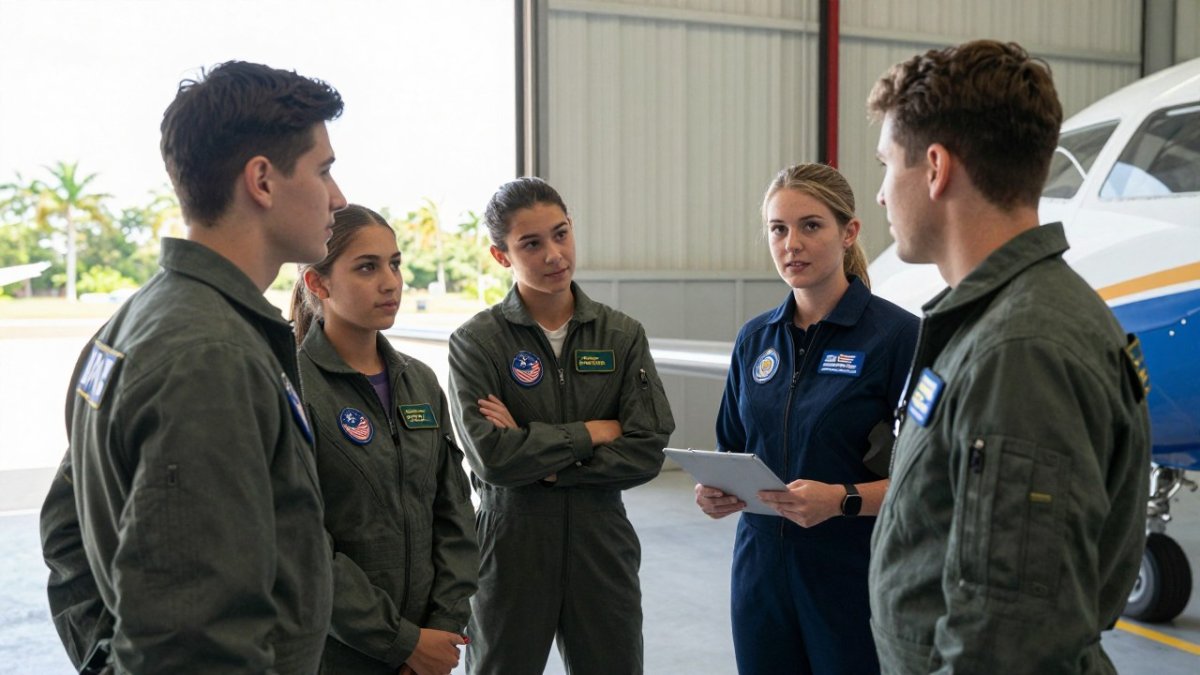
- Arrive early, when the room is less crowded and conversations are easier to start.
- Prepare a short introduction covering your training and what you want to learn.
- Ask about the person's career path instead of asking for a job right away.
- Follow up within a few days with a short thank-you message.
Small-class training can help here too, since students who train in smaller groups often build closer relationships with instructors and classmates. Benefits of Small Class Aviation Training explains how that setting supports professional connections.
!Aviation students in flight jackets talking with an airline professional near a hangar entrance in South Florida
Aviation Industry Networking Tips for Working Professionals
Working professionals usually attend events with a clear goal, such as finding a partner, hiring, or learning about a new route or technology.
A common mistake is collecting business cards without following up. Set a goal of three meaningful conversations per event, and send each contact a note that mentions something specific you discussed.
Keep your approach simple. Listen more than you talk, and offer useful information when you can. Professionals remember people who helped them, even in small ways.
Training Pathways That Connect You to Miami's Aviation Community
Training programs that bring students together with experienced instructors can create networking opportunities among classmates and faculty.
Miami offers a strong base for aviation careers. Career Opportunities for Miami Aviation Graduates describes the jobs graduates can pursue, and Why Choose Miami for Aviation Training: 2026 Guide explains why the city works well for training and community building.
For students exploring FAA-approved dispatcher training, QNH LLC offers a Part 65 Aircraft Dispatcher Certification program with 200 classroom hours of instruction. Check the QNH LLC website for current class dates and enrollment details.
Start Your Aviation Network: Next Steps for Miami Events
Pick one event from this guide and register this month. Attend with a clear goal, follow up with at least two contacts, and then choose your next event.
If you are ready to take a formal step, read the complete certification guide and learn how enrollment works before you decide. Aircraft Dispatcher Certification: Your Complete 2026 Guide covers the certification path, and How to Enroll in an FAA Aircraft Dispatcher Course walks through the steps.
Frequently Asked Questions
What aviation networking events are coming up in Miami?
Dates and schedules for aviation networking events in Miami change from year to year, so verify each one directly with the organizer before you plan travel. Look for industry conferences, regional aviation association socials, flight club meetups, and hangar-based gatherings that bring together pilots, airline and airport professionals, and business aviation operators. Check each event page for the date, venue, registration requirements, and whether attendance is open to students or only to members. A consolidated calendar that lists the event name, date, location, and audience helps you compare options quickly and avoid missing registration deadlines.
Where can aviation students network in Miami?
Aviation students can meet professionals through regional aviation associations, flight clubs, industry conferences that offer student registration, and educational workshops hosted at local airports and training schools. Many events include safety seminars or professional development sessions where students can ask questions directly. Bring a short introduction about your training goals and your certificate pathway, and be prepared to follow up within a few days with a brief message to the people you met.
What should I ask aviation professionals at a networking event?
Ask questions that invite a real answer rather than a yes or no. Good examples include how the person entered their current role, what skills they see most in new hires, and what a typical week looks like for their position. You can also ask which certifications or training programs they recommend for someone starting out. Keep the first conversation to a few minutes, listen closely, and offer to stay in touch on LinkedIn or by email.
How can I prepare for an aviation networking event?
Review the event schedule and attendee list if the organizer publishes one, then pick two or three people or companies you most want to meet. Prepare a 30-second introduction covering who you are, your experience or training, and what you are looking for. Bring business cards or a digital contact option, dress for the venue, and arrive early when the crowd is smaller. Afterward, send a short follow-up note within 48 hours to each person you spoke with.