 how-to
Strategies for Reducing Aircraft Fuel Burn on Long Hauls
Last Updated: November 10, 2026
Quick Summary
Fuel burn on long-haul flights is reduced by a chain of decisions: choosing the route with the best winds rather than the shortest track, setting cruise altitude and speed through the cost index, and sizing the fuel load precisely. Ground habits such as efficient taxiing also trim waste before takeoff.
- Compare two or three candidate routes and compute fuel burn for each before choosing.
- Set the cost index lower to favor fuel savings when the schedule allows spare time.
- Size discretionary contingency fuel to the actual forecast uncertainty instead of a flat generous percentage.
- Recalculate the fuel load whenever payload changes rather than carrying over the previous plan.
- Track fuel burn per flight against the plan to find patterns and measure real improvements.
Table of Contents
- Why Fuel Burn Dominates Long-Haul Operating Costs
- Long-Haul Flight Planning: Choosing the Most Efficient Route
- Cruise Altitude and Speed Fuel Consumption Trade-Offs
- Managing Wind, Weather, and Turbulence in Flight
- Aircraft Weight and Fuel Burn: Payload, Fuel Load, and Reserves
- Ground Fuel Reduction Strategies: Taxi and Pre-Departure
- Measuring Savings and Setting Your Next Fuel-Efficiency Steps
- Frequently Asked Questions
Why Fuel Burn Dominates Long-Haul Operating Costs
Fuel burn is the single biggest variable cost on a long-haul flight. Every kilogram you carry or burn adds up fast over ten or more hours in the air. Small savings per flight compound into serious money across a fleet and a year.
Airlines and dispatchers track fuel burn closely for this reason. A few percent of savings on each flight can translate into large annual totals. That is why fuel efficiency sits at the center of route planning, cruise settings, and load decisions.
Fuel burn is the amount of fuel an aircraft consumes over a given distance or time. Fuel efficiency is the flip side: how much distance you get from each unit of fuel. The strategies below are about pushing that number in the right direction without compromising safety.
Here is the core idea. Fuel saving is not one trick. It is a chain of decisions made before departure, during cruise, and on the ground. Miss one link and the others lose value.
Long-Haul Flight Planning: Choosing the Most Efficient Route
Route choice is where most fuel savings begin. A shorter track is not always the cheapest one. Winds, airspace restrictions, and weather can make a longer path burn less fuel.

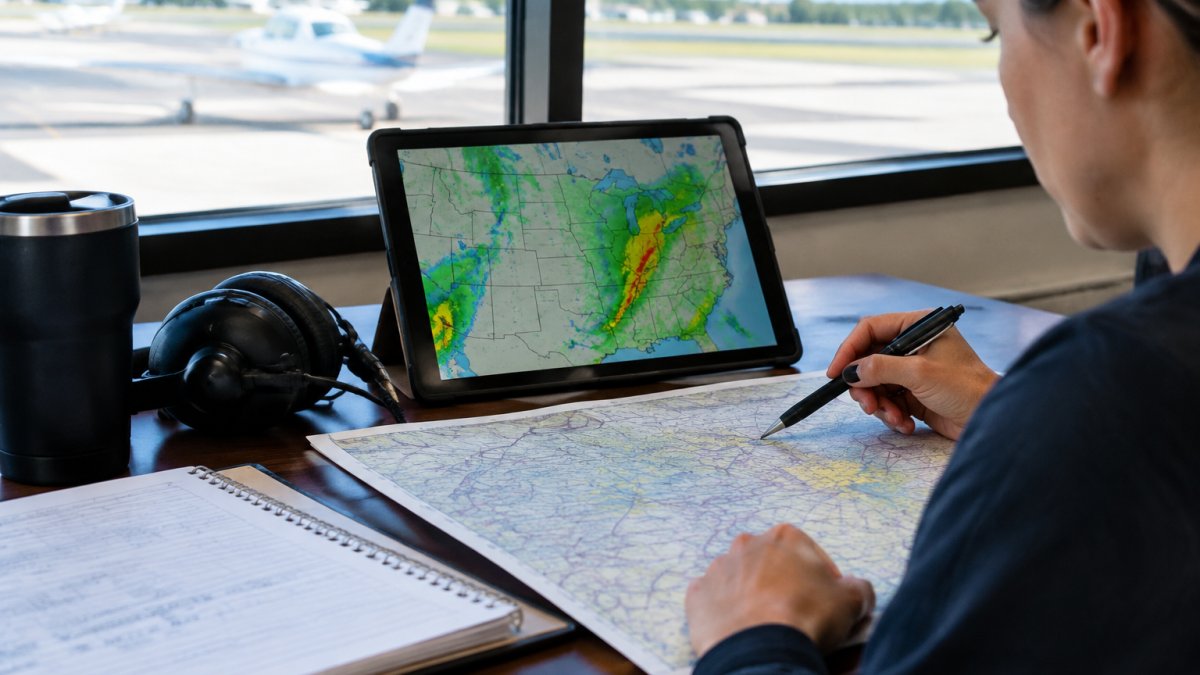
Dispatchers build flight plans using forecast winds aloft. A strong tailwind on one routing can cut fuel burn meaningfully compared with a slightly shorter route into a headwind. The planning tools used for this are standard in the industry, and the FAA guidance on flight planning and dispatch resources covers the regulatory framework behind them.
Good planning follows a simple sequence:
- Pull the latest wind and temperature forecasts for the planned altitudes
- Compare two or three candidate routes, not just the shortest
- Check airspace restrictions and expected congestion
- Compute fuel burn for each option and pick the lowest total
Watch out: a route that saves fuel on paper can cost more if it adds airspace delays or forces a diversion. Always check the full picture before committing.
Cruise Altitude and Speed Fuel Consumption Trade-Offs
Altitude and speed are the two cruise settings that affect fuel burn most directly. Higher altitudes generally reduce drag, but the optimal level depends on aircraft weight, temperature, and winds.
Speed works the same way. Flying faster cuts flight time but raises fuel burn per hour. Airlines set a cost index that balances fuel against time-related costs such as crew pay and aircraft use. A lower cost index favors fuel savings; a higher one favors speed.
These trade-offs are real. Slowing down a little can save fuel, but it also adds time and can push you into more turbulent air at a different altitude. Test the numbers for each flight rather than relying on a single fixed setting.
The two cruise settings that most affect fuel burn, and what each one trades off against.
| Setting | Effect on fuel burn | Trade-off |
|---|---|---|
| Altitude | Higher levels generally reduce drag | Optimal level depends on weight, temperature and winds |
| Speed | Faster flight raises fuel burn per hour | Cuts flight time |
| Cost index | Lower value favors fuel savings | Higher value favors speed |
| Slower speed | Can save fuel | Adds time and may mean more turbulent air |
Managing Wind, Weather, and Turbulence in Flight
A flight plan built on the forecast available at dispatch is a starting hypothesis, not a fixed commitment. Winds aloft often differ from forecast by enough to change which altitude or track is cheapest, so the useful question in flight is not "did we follow the plan?" but "is the plan still the cheapest safe option?"
A practical way to structure this is to set review points rather than reviewing continuously. Common review triggers include:
- Reaching the planned top of climb, where actual winds and temperatures can be compared against the forecast
- Crossing a major waypoint or wind-model boundary where the forecast was least certain
- A reported change in winds at the planned cruise level from other aircraft or dispatch updates
- An avoidance request from air traffic control or a weather-driven reroute
At each review point, the crew and dispatcher compare the remaining fuel against the fuel the revised options would burn. A altitude change that saves fuel in headwinds may add fuel if it moves the aircraft into a less favorable temperature regime or requires a step climb that consumes extra fuel. The comparison should include the fuel cost of the maneuver itself, not just the cruise difference.
Turbulence adds a second constraint. Moving to a smoother altitude can be the right choice for passenger comfort and structural safety even when it costs fuel. Treat the fuel penalty as the price of the maneuver and record it, so that over many flights you can see how often comfort or safety decisions drive the fuel figures.
Watch out: a reroute that avoids weather can lengthen the track and shift the arrival time into a different fuel-reserve planning window. Recheck the destination and alternate fuel requirements before accepting any significant change.
Weather that threatens the flight, such as thunderstorms, icing, or volcanic ash, sets hard limits that are not traded against fuel. Efficiency is pursued only among options that stay inside those limits.
Aircraft Weight and Fuel Burn: Payload, Fuel Load, and Reserves
Weight is one of the few fuel-burn drivers that compounds over the whole flight. Extra fuel carried at takeoff must be lifted, accelerated, and carried across the entire route, so every kilogram of unneeded fuel increases burn on every leg. This is why dispatchers look hard at the fuel load before departure.
The starting point is the trip fuel the planned route requires, built from the flight plan. On top of that sit the regulatory and planning additions: contingency fuel for uncertainty, alternate fuel to reach a suitable alternate airport, a final reserve, and in some operations an additional amount the operator or crew requires. Regulations set minimums for several of these, and those minimums are not discretionary. A step-by-step weight and balance walkthrough shows how each fuel decision shifts the aircraft's weight. The room for efficiency lies in how precisely the discretionary parts are sized, not in trimming the mandatory ones.
A useful way to think about the trade-off:
- Discretionary contingency fuel is where most sizing decisions happen. Setting it based on the actual forecast uncertainty for the route, rather than a flat generous percentage, can remove weight without changing safety margins.
- Mandatory reserves and alternate fuel are fixed by rule. Plan them exactly, and do not treat them as places to cut.
- Payload changes the calculation. A cargo or passenger change can alter the required fuel and the takeoff weight, so the fuel load should be recalculated when loads change rather than carried over from the previous plan.
- Tankering, which means carrying extra fuel from a cheaper departure point to avoid buying it at the destination, is a separate decision. It only saves money when the fuel price difference exceeds the burn cost of carrying the extra weight, so the comparison should be made per flight.
A common pattern in practice is that the largest savings come from reducing excess fuel that was added out of habit rather than from a specific calculation. Reviewing the gap between planned fuel and actual landing fuel across many flights shows where that habit sits.
Watch out: a fuel load that is precise on paper can still be too low if the loading is based on an outdated payload or a changed alternate. Confirm the final load against the current weight and balance figures before the aircraft leaves the gate.
Ground Fuel Reduction Strategies: Taxi and Pre-Departure
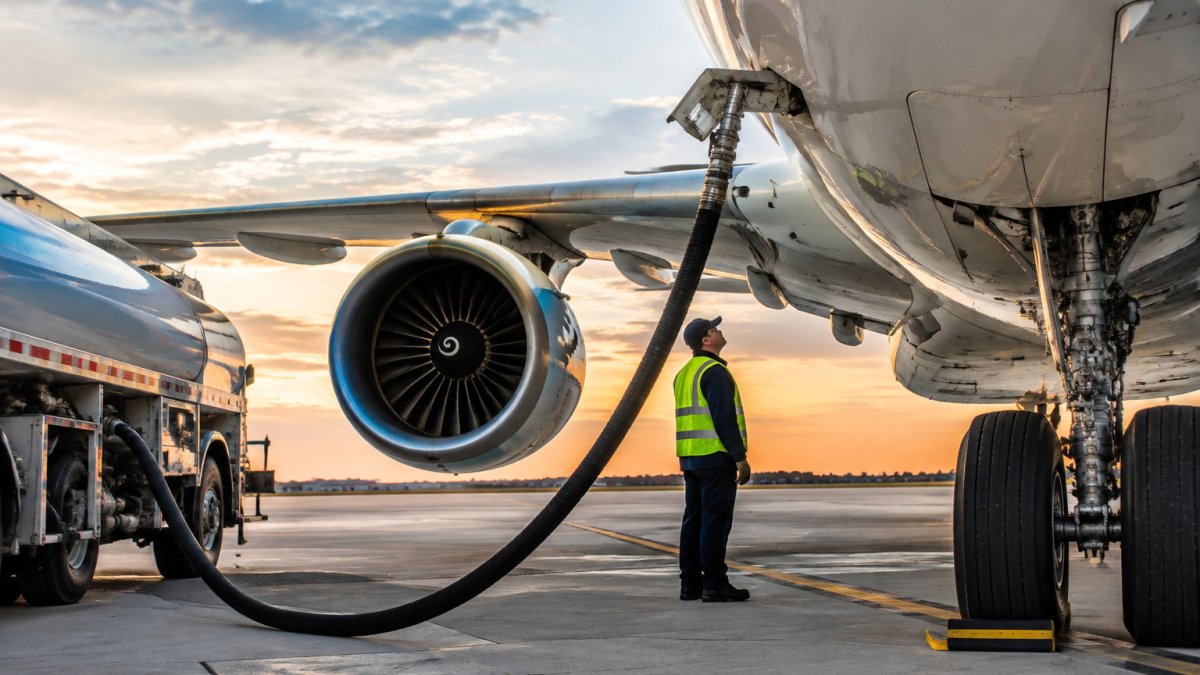
Fuel savings do not start in the air. Taxi time and engine running on the ground burn fuel without moving the aircraft toward the destination. Small habits here add up.
Common ground strategies include:
- Using a single-engine taxi where the aircraft and procedures allow it
- Requesting efficient taxi routes to reduce time on the ground
- Avoiding unnecessary holding and running engines longer than needed
- Coordinating departure timing with ground control to limit queuing
Pre-departure decisions matter as well. Confirm the fuel load is no more than the flight requires, and check that the plan reflects the latest conditions at the gate. Each of these steps is small, but together they trim waste before the wheels leave the ground.
Measuring Savings and Setting Your Next Fuel-Efficiency Steps
You cannot improve what you do not measure. Track fuel burn per flight, compare it against the plan, and look for patterns. Did a route consistently beat its forecast? Did a particular aircraft run heavier than expected?
Set simple targets for the next period. Pick one or two levers, such as a lower cost index on routes with spare time or tighter fuel loading, and check the results after a set number of flights. Measured improvements are far more useful than assumed ones.
For hands-on practice building efficient flight plans, see our hands-on flight planning training guide. The guide to reading aviation weather reports is a good next step for interpreting the winds and conditions that drive these decisions.
Fuel efficiency is an ongoing process, not a one-time fix. Review your results regularly, keep safety margins intact, and adjust as your routes, aircraft, and conditions change.
Frequently Asked Questions
What is the best method for reducing fuel consumption on a long-haul flight?
No single lever wins on every route. Flight planning that selects a route with favorable winds and a cruise profile matched to the aircraft's optimum altitude usually delivers the largest gains for the least operational cost. Speed adjustment, accurate fuel loading that avoids carrying excess fuel, and weight reduction add further savings. Dispatchers typically evaluate these together rather than in isolation, because a faster speed can cancel out a wind advantage, and a higher altitude can reduce drag while increasing fuel flow at the same time. The practical approach is to model several options against actual forecast winds and choose the one with the lowest total trip fuel that still meets reserve and safety requirements.
How does wind affect fuel consumption on long-haul flights?
Wind changes the fuel needed because it alters groundspeed without changing airspeed. A strong headwind increases trip time and fuel burn, while a tailwind reduces both. Dispatchers use forecast winds aloft to compare routes and altitudes, since a slightly longer track with a substantial tailwind can use less fuel than a shorter track into a headwind. Wind forecasts carry uncertainty, so flight plans usually include contingency fuel to cover changes in the actual winds encountered in flight.
How can aircraft weight affect fuel burn?
Every additional pound of weight requires more lift and therefore more drag and more fuel over the flight. Carrying excess fuel is a common and avoidable source of extra weight, because fuel carried beyond planned requirements burns to move itself. Accurate weight and balance computations help crews and dispatchers load only what the trip requires while staying within limits. Payload decisions, cargo planning, and removing unnecessary items from the cabin all reduce the weight the aircraft must carry.
How do airlines reduce fuel use during taxi and ground operations?
Taxi fuel is burned at low thrust but over a long period, especially at busy airports with long queues. Common measures include single-engine taxi where permitted and safe, planning taxi routes to avoid unnecessary holding, and coordinating with air traffic control to reduce delays. Crews also limit auxiliary power unit use while parked when ground power is available. Each measure saves a modest amount per flight, but they add up across a fleet.