 how-to
How to Start a Career as an Aircraft Dispatcher in 2026
Table of Contents
- Step 1: Meet the Basic Eligibility Requirements
- Step 2: Complete FAA Part 65 Dispatcher Certification Requirements
- Step 3: How Long Is Aircraft Dispatcher Training?
- Step 4: Pass the ADX Written Exam and Practical Test
- Step 5: Land Your First Aircraft Dispatcher Job
- Step 6: Aircraft Dispatcher Salary Expectations
- Step 7: What the Job Actually Looks Like
- Conclusion
- Frequently Asked Questions
Last Updated: September 15, 2026
Step 1: Meet the Basic Eligibility Requirements
Becoming an aircraft dispatcher starts with meeting the FAA's baseline eligibility rules, and most candidates clear them without difficulty: be at least 23, hold a high school diploma or equivalent, read and speak English fluently, and pass a medical exam (faa.gov). This guide from QNH LLC walks through each step so you know what to prepare for.
Age is the most commonly misunderstood rule. You can enroll in an aircraft dispatcher training program before you turn 23, but the FAA will not issue your certificate until you reach that age. Many students begin classroom work at 21 or 22 and sit for exams while building the hours they need. Verify current eligibility criteria directly with the [FAA aircraft dispatcher certification(/faa-part-65-dispatcher-training-requirements) page | faa.gov] before you enroll anywhere.
- Age 23 or older at certificate issuance
- High school diploma or equivalent
- Fluent English reading and speaking
- Valid medical certificate
The medical requirement surprises people who assume dispatching is a purely desk-bound job. It is a desk job, but it carries operational responsibility for flight release decisions, so the FAA holds dispatchers to a fitness standard similar to other safety-sensitive roles. Schedule the medical exam early, a delay there can push your certification timeline back by weeks.
Step 2: Complete FAA Part 65 Dispatcher Certification Requirements
FAA Part 65 dispatcher certification requirements are the core of the process. To earn an aircraft dispatcher certificate, you must be at least 23, pass the required knowledge and practical tests, and meet the experience or training pathway the FAA specifies. Most candidates satisfy that pathway through an approved course rather than on-the-job experience.
Part 65 of the Federal Aviation Regulations defines who can hold a dispatcher certificate and what they must demonstrate. You have two routes: complete an FAA-approved dispatcher training program, or document a set amount of practical experience. The training route is far more common because it is structured, testable, and accepted by airlines during hiring.
QNH LLC delivers FAA-approved Part 65 Aircraft Dispatcher Certification training built around a 200-classroom-hour curriculum. The program pairs that regulatory foundation with practical work in weight and balance computations, meteorology, aerodynamics, and aviation law, which is the knowledge base the written and practical exams actually test.
Step 3: How Long Is Aircraft Dispatcher Training?
Aircraft dispatcher training typically runs several weeks to a few months of full-time classroom instruction. The FAA requires a minimum number of instructional hours for approved courses, and most quality programs exceed that floor to cover practical application thoroughly.
How long is aircraft dispatcher training in practice? It depends on three variables:
- Whether you attend full-time or part-time around a job
- How much hands-on flight planning and weight and balance work the program includes
- How quickly you schedule and pass the written and practical exams after coursework ends
Compressed programs suit candidates who can commit full-time; part-time and evening formats suit working airline employees. The trade-off is that compressed programs leave less room for the repetition that makes complex operational concepts stick. If you struggled with math, a longer format with more individual attention usually pays off when you reach the weight and balance material.
Step 4: Pass the ADX Written Exam and Practical Test
The ADX written exam and the practical test are the two checkpoints that turn coursework into a certificate. The written exam, formally the Aircraft Dispatcher Knowledge Test, covers meteorology, navigation, aviation regulations, flight planning, and aircraft performance. The practical test, or oral and practical, is where an FAA examiner watches you build and defend an actual flight release.
The written exam is a multiple-choice knowledge test administered at an approved testing center. You can prepare with self-study, but the material is dense and interconnected. Meteorology alone can sink a candidate who memorizes facts without understanding how weather systems affect routing and fuel decisions.
The practical test is the harder of the two for most people. You sit with an examiner and work through a real-world scenario: weather briefing, fuel planning, alternate selection, and the final flight release decision. You must explain your reasoning out loud, not just produce an answer, which is why programs built on discussion and questioning produce calmer, more hireable candidates than lecture-only programs.
QNH LLC's instructors include college professors, airline pilots, and former FAA Dispatcher Examiners, and the Chief and Lead Instructors are Sheffield Graduates who teach through the Socratic Method. That format forces you to reason through a flight release the way the practical test demands.
Step 5: Land Your First Aircraft Dispatcher Job
Landing your first aircraft dispatcher job depends less on where you trained and more on how well you demonstrate operational judgment under pressure. Airlines hire dispatchers who can think through a flight release, communicate clearly, and stay calm when weather or mechanical issues change the plan mid-shift.
The hiring process usually moves through these stages:
- Application and résumé screening
- A knowledge or aptitude assessment
- A panel interview with dispatchers and a hiring manager
- A scenario-based exercise, sometimes a simulated flight release
- Background check and medical verification
Interview preparation is where most candidates underinvest. The panel is not looking for someone who can recite regulation numbers, they want to hear how you would handle a fuel stop diversion, a crew scheduling conflict, or a rapidly deteriorating weather system. Practice talking through scenarios out loud, ideally with someone who will push back on your reasoning.
Aircraft dispatchers with no prior aviation background are hired regularly, but they usually need a stronger interview performance to offset the missing operational context. If you are transitioning from another aviation role, such as air traffic control support or airline operations, lead with that experience. It signals you already understand the pace and stakes of commercial aviation.
Step 6: Aircraft Dispatcher Salary Expectations
Aircraft dispatcher salary expectations vary widely by airline type, region, and experience level, and the starting number matters far less than the progression curve over your first five years. Regional carriers pay less than major airlines, and compensation climbs steadily as you gain seniority and move to larger operations. Entry-level regional pay looks modest next to major-airline pay, but the gap narrows fast.
The Bureau of Labor Statistics occupational outlook for dispatchers publishes a national median wage for the occupation, and that figure is a useful anchor, but it blends every carrier type, region, and seniority level into one number. Treat it as a floor for your research, not a ceiling for your expectations. The BLS also projects employment growth for the occupation through the next decade, which matters because dispatcher hiring tracks airline capacity growth rather than general economic cycles.
Here is how the pay structure actually breaks down:
- Regional carriers, the most common entry point for new certificate holders. Starting pay is the lowest of the three tiers, but regionals hire more frequently and give you the operational reps that majors want to see on a résumé.
- Major passenger airlines, significantly higher starting pay and a contractual progression schedule that raises your rate on a fixed timeline, not at a manager's discretion.
- Cargo and charter operators, pay varies widely by operator. Some cargo carriers match or exceed major-airline scales; smaller charter operations often do not. Night and holiday flying is common, and shift differentials can add meaningfully to take-home pay.
Three variables move your actual paycheck more than the base rate:
- Shift differential, nights, weekends, and holidays typically pay a premium. Because dispatching runs 24/7, a new hire on a night rotation can out-earn a day-shift colleague at the same seniority.
- Overtime and inverse seniority, operations centers are staffed around the clock, and short-staffed shifts generate overtime. Seniority usually governs which shifts you can bid, so your first year is often the most expensive in lifestyle terms.
- Contract cycles, dispatcher pay at unionized carriers is set by collective bargaining agreements that reopen every few years. A scale that looks flat today can jump at the next contract, which is why you should ask about the current agreement's amendable date during the interview.
Because dispatcher pay scales shift with airline contracts and market conditions, treat any single figure you see online as a starting point for a conversation, not a guarantee.
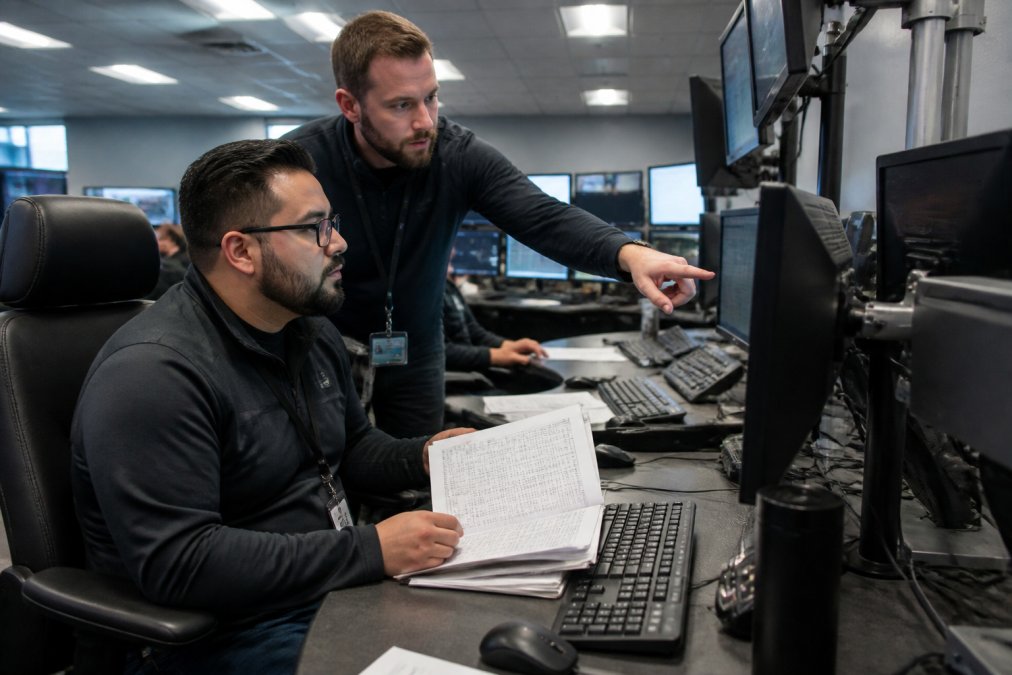
Step 7: What the Job Actually Looks Like
Conclusion
Frequently Asked Questions
Is it hard to get a job as an aircraft dispatcher?
It's competitive but achievable. Airlines look for FAA Part 65 certification, strong decision-making under pressure, and clear communication skills. Graduating from a structured 200-hour program, like the one offered by QNH LLC, gives you the hands-on flight planning and weight-and-balance practice that hiring managers want. Networking at regional airlines and applying to multiple carriers improves your odds significantly.
How much do aircraft dispatchers get paid?
Aircraft dispatcher salary expectations vary by airline, region, and experience. Regional carriers typically pay less than major airlines, while dispatchers at large carriers with years of seniority earn higher base pay plus shift differentials and overtime. Location also matters. Dispatchers based in high-cost metro areas often see higher starting offers to offset living expenses. Check current postings for real numbers.
How long does it take to become an aircraft dispatcher?
Most FAA-approved programs require 200 classroom hours, which full-time students finish in about five to six weeks. Part-time schedules stretch that to three or four months. After training, you'll need to pass the ADX written exam and the practical test. From first day of class to first job offer, most people take three to six months total.
What are the FAA requirements for aircraft dispatcher certification?
You must be at least 23 years old, hold a high school diploma or equivalent, read and speak English fluently, and pass the ADX written exam plus a practical test. You also need to complete an FAA-approved Part 65 training course or gain equivalent experience. A certificate of competency is issued after you pass both exams, making you eligible for hire.