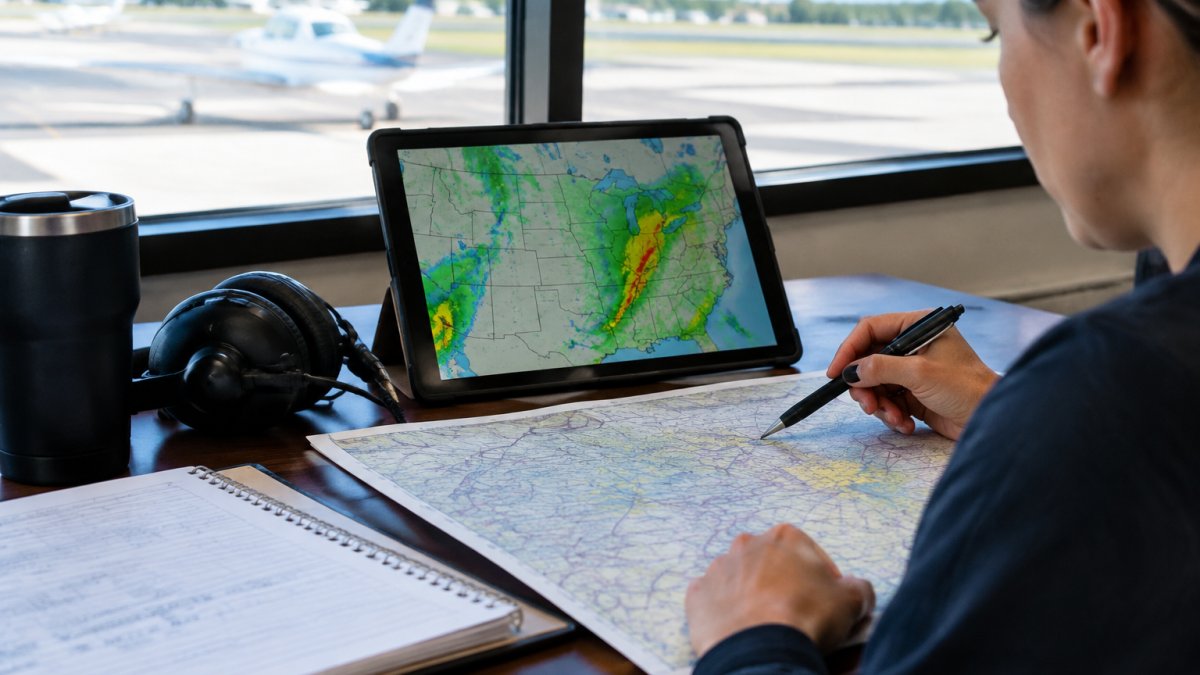
 how-to
How to Prepare for the FAA Dispatcher Practical
Last Updated: October 22, 2026
Quick Summary
Prepare for the FAA dispatcher practical by building and defending complete flight releases out loud, not by memorizing definitions. Follow a six-week schedule covering source documents, weather drills, and scenario work, then rehearse PTS task-list questions until your reasoning comes without a pause.
- The checkride has three connected parts: oral questioning, a flight planning task, and a defense of your choices.
- A realistic schedule runs six weeks, with 8-10 weekly hours in weeks 1-3 and 10-12 in weeks 4-6.
- Run a daily weather drill for ten days straight, answering three written questions per METAR and TAF.
- Rehearse each oral question until you can answer it in under a minute, then in three sentences or less.
- If you make an error mid-checkride, say so and correct it rather than doubling down on a wrong answer.
Table of Contents
- What the FAA Dispatcher Practical Actually Tests
- A Step-by-Step Practical Exam Preparation Schedule
- Aircraft Dispatcher Oral Exam Questions to Rehearse
- FAA Dispatcher Weather Exam Practice: METARs, TAFs, and Briefings
- Aircraft Dispatcher Flight Planning Practice: Build the Release
- Building an ADX Test Study Guide That Carries Into the Practical
- Scoring, Common Failure Points, and What to Bring
- Frequently Asked Questions
What the FAA Dispatcher Practical Actually Tests
The FAA dispatcher practical is a single oral and practical checkride. It tests whether you can build and defend a real flight release, not memorize definitions.
This guide from QNH LLC covers what the checkride demands, how to prepare, and where candidates lose points, with a schedule, oral questions, and a worked release.
Most study guides treat the practical as a bigger written test. The ADX written checks recall; the practical checks judgment under pressure.
The Three Parts of the Checkride
The checkride has three connected parts:
- The oral questioning. The examiner walks through regulations, weather, aircraft performance, and your authority as a dispatcher.
- The flight planning task. You build a release between designated airports using current weather and real charts.
- The defense. You explain every choice: route, fuel, alternate, takeoff data, and what you'd do when conditions change.
Each part feeds the next. A weak oral answer usually shows up again when you defend the release.
Practical Test Standards and Task Areas
The Practical Test Standards are the FAA's published list of knowledge and skill areas the examiner must sample, defining what "passing" means. Task areas cover weather interpretation, flight planning, performance, regulations, and operational decision-making.
You can order the current PTS and the FAA Airman Knowledge Testing information directly from the FAA. Read the task areas like a checklist, not a textbook.
A Step-by-Step Practical Exam Preparation Schedule
A realistic schedule runs six weeks, assuming you've passed the ADX written, enough repetition to make decisions automatic without burning out.
Here is the schedule we'd use:
| Weeks | Focus | Weekly Hours | Deliverable |
|---|---|---|---|
| 1-3 | Source documents and fundamentals | 8-10 | Annotated regulation set and weather drill log |
| 4-6 | Scenario drills and oral rehearsal | 10-12 | Three complete releases defended out loud |
Treat the hours as a floor. If a weather drill keeps going wrong, add time there instead of moving on.
Weeks 1-3: Source Documents and Fundamentals
Start with the documents you'll use on the job: regulations governing dispatch authority, then operating specifications and company procedures for your scenario.
Build a personal index flagging the pages you'll need fast, fuel rules, alternate requirements, release contents, so you can open any in under thirty seconds.
Weather comes next. Spend part of every session reading raw METARs and TAFs until the format stops slowing you down.
Weeks 4-6: Scenario Drills and Oral Rehearsal
Now you build releases. Pick two airports, pull current weather, and work the full problem: route, fuel, alternate, takeoff data, and NOTAMs.
Then say it out loud. Record yourself defending the release and play it back. You'll hear the gaps immediately.
The last week is pure oral rehearsal. Have someone fire PTS task-list questions at you and answer in full sentences, the way you'd speak to an examiner.
Aircraft Dispatcher Oral Exam Questions to Rehearse
The oral exam is a conversation about operational decision-making, not a quiz. Examiners want to hear how you think. Answer with your reasoning, not just the regulation number.
Rehearse these aircraft dispatcher oral exam questions until the answers come without a pause:
- What authority does a dispatcher hold, and where does it come from?
- Walk me through the contents of a dispatch release.
- When is an alternate airport required, and how do you choose one?
Practice answering each in under a minute, then in three sentences or less. Clear and short beats long and vague.
FAA Dispatcher Weather Exam Practice: METARs, TAFs, and Briefings
Weather is where the practical is won or lost: interpret raw data quickly and turn it into a decision.
Set up a daily drill. Pull a current METAR and TAF for two airports, then answer three questions in writing:
- What are the current conditions, in plain language?
- What does the forecast change, and when?
- Does this weather affect the release, and how?
Do this for ten days straight. For FAA dispatcher weather exam practice, also work through the National Weather Service aviation weather resources so you're reading the same products the examiner uses.
Add a weather briefing to every scenario drill. State what you'd tell the captain, in the order you'd say it.
Aircraft Dispatcher Flight Planning Practice: Build the Release
Flight planning practice means building complete releases, start to finish, until the process is routine. You need to see a release come together number by number, then reproduce it with different weather.
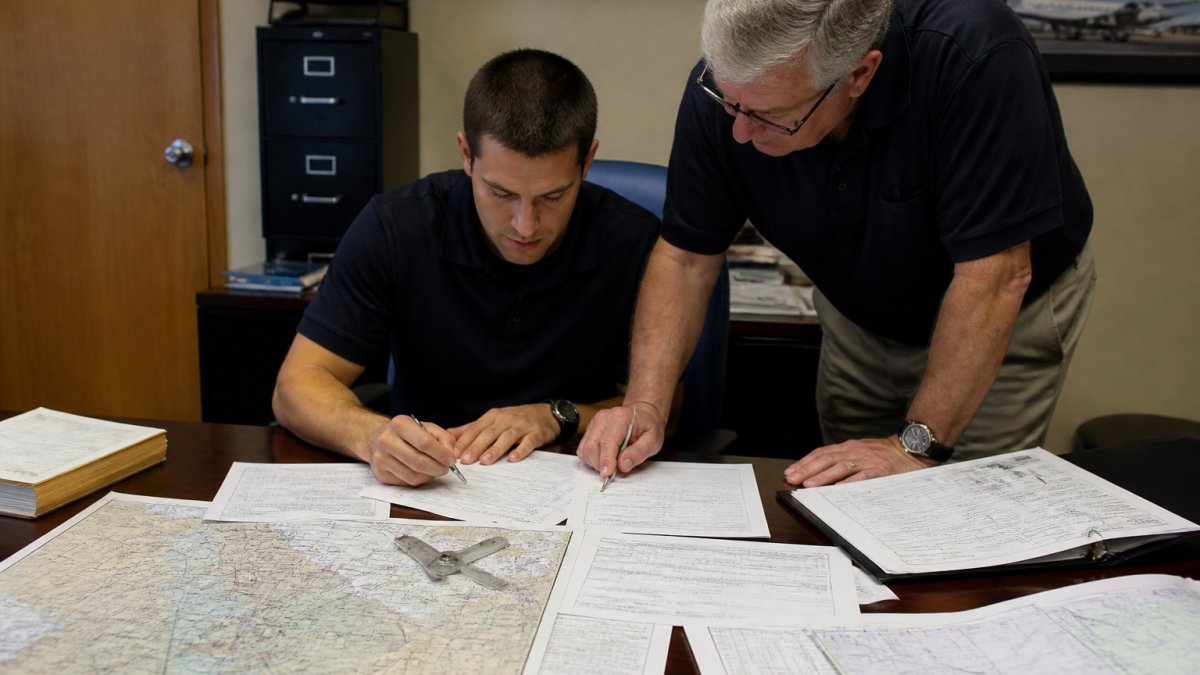
Below is a worked example. The airports, aircraft, and weather are illustrative, but every step mirrors what an examiner will ask you to do out loud.
The Scenario
You're dispatching a twin-engine turboprop from a large hub to a regional airport roughly 420 nautical miles east. Departure weather is VFR with scattered clouds. Destination forecast shows a ceiling near 1,800 feet and visibility 4 miles at your estimated arrival time, with a TEMPO group for 1,200 feet and 2 miles.
That forces real decisions: alternate required or not, how much extra fuel to carry, and what you'd tell the captain about the front.
Step 1: Route Planning
Start with the charts: pick airway routing clear of restricted airspace and active MOAs, note preferred routes for the city pair, and check TFRs and NOTAMs. Write the route as a string you could read to a briefer, departure fix, airway, arrival fix, destination.
Fuel and alternate decisions depend on route distance and terrain, so get the route wrong and every number after it is wrong.
Step 2: Fuel Planning
Work the fuel in the order the regulation and company manual require: taxi, trip, reserve, alternate fuel if required, and any additional fuel you can justify.
For this scenario, the destination forecast sits right at the edge of the alternate requirement.
Say the numbers out loud as you compute them. "Trip fuel is X. Reserve is Y.
Step 3: Alternate Airport Selection
If an alternate is required, choose one meeting the regulation's weather minimums for the approach you'd expect to fly. Confirm its forecast is valid at your estimated time of arrival, not just departure, and that it has the runway, approach, and services your aircraft needs.
A common trap: picking an alternate that's close but has weather just as bad as the destination. The examiner will ask why you chose it. Have a reason.
Step 4: Takeoff and Landing Data
Work the performance numbers for actual conditions, weight, temperature, pressure altitude, runway length, slope, and wind, and confirm available takeoff distance exceeds required distance with your company manual's margin.
If the numbers are close, say so. "Takeoff is within limits but tight; if the temperature rises 5 degrees we'd need to reduce weight." That kind of statement shows operational awareness.
Step 5: NOTAMs and Airworthiness
Confirm nothing on the route or at either airport breaks the plan, runway closures, navaid outages, braking action, or fuel availability, and that the aircraft is airworthy with no MEL items affecting the release.
Step 6: Build and Defend the Release
Now assemble the release: flight number, aircraft, route, altitude, fuel figures, alternate, takeoff and landing data, and remarks. Then defend it.
Run this full sequence once per session in weeks four and five. By week six, you should be able to build a clean release and defend it without notes.
Building an ADX Test Study Guide That Carries Into the Practical
The best ADX test study guide is the one you keep using after the written exam.
Build your guide around PTS task areas instead of chapters.
Add a source-documents section listing every regulation, chart, and form you'll need with the page flagged, your quick-reference sheet for the practical.
Keep a running error log too. Every time you get a practice question wrong, write it down with the correct reasoning.
Scoring, Common Failure Points, and What to Bring
The examiner scores you against the PTS task areas: each sampled task has a standard you either meet or don't. There's no partial credit, but if you stumble on one item the examiner typically moves on and may return later. What sinks candidates is a pattern of gaps, or a single safety-related decision showing you don't understand the consequence.
How the Examiner Actually Evaluates You
Think of the checkride as three layers of assessment running at once:
- Knowledge. Can you state the rule or concept correctly?
- Application. Can you use it on the scenario in front of you, read the actual METAR, compute the actual fuel, pick the actual alternate?
- Judgment. Can you explain why your choice is operationally sound, and what you'd do if conditions changed?
Nail knowledge but fumble application and you get follow-up questions; apply correctly but can't explain the reasoning and you get probed on judgment. The examiner wants all three, and the fastest way to fail is a judgment gap on a safety-related item, fuel reserves, alternate weather, or takeoff performance.
What "Below Standard" Looks Like
A task falls below standard when any of these happen:
- You give a wrong answer and can't correct it when the examiner rephrases the question.
- You apply a rule correctly in the abstract but misapply it to the scenario.
- You make a decision that would be unsafe in actual operations, even if you cite the right regulation.
The last one is more common than candidates expect. Examiners don't need a fast answer; they need to hear your reasoning. Silence reads as a gap.
The Most Common Failure Points
- Weak weather interpretation. Reading a METAR aloud without explaining what it means for the flight. The fix: after every METAR, say one sentence about operational impact.
- No clear reasoning. Giving an answer with no "because." The fix: rehearse every answer as claim + reason + consequence.
- Fuel and alternate errors. Applying the wrong reserve or choosing an alternate that doesn't meet the weather requirement. The fix: work ten fuel and alternate problems until the sequence is automatic.
How to Recover Mid-Checkride
If you realize you've made an error, say so and correct it. "I said the reserve was 45 minutes; it's actually 30 for this operation, let me redo that." Examiners respect self-correction. What they don't want is a candidate who doubles down on a wrong answer.
If you don't know something, say what you do know and how you'd find the answer.
What to Bring
Bring your knowledge test report, government-issued ID, the current charts and documents you're allowed to use, a calculator, and a notebook for scratch work. Confirm the exact list with your examiner beforehand, some allow more reference material than others.
Frequently Asked Questions
What should I study for the FAA aircraft dispatcher practical exam?
Focus on the tasks listed in the Practical Test Standards: weather interpretation using METARs, TAFs, and briefings; flight planning between designated airports; route and fuel planning with alternate airport selection; takeoff and landing data from aircraft performance charts; weight and balance; NOTAM and airworthiness review; and preparing a complete dispatch release. Practice explaining each decision out loud, because the examiner grades how you apply the regulations and company procedures, not just whether you reach the right number.
What happens during the FAA aircraft dispatcher oral and practical exam?
A designated examiner reviews your eligibility and logbook, then runs an oral knowledge portion covering regulations, weather, aircraft performance, and operational decision-making. The practical portion asks you to build and defend a dispatch release for a real or simulated flight, including flight planning, fuel, alternates, and takeoff data. You must demonstrate the required task areas to standard. Expect follow-up questions on any choice you make, so be ready to explain your reasoning clearly.
How long should I study for the aircraft dispatcher practical exam?
Most candidates benefit from a structured six-week run-up after finishing ground school, with daily sessions of 60 to 90 minutes. Early weeks go to FAA source documents and fundamentals; later weeks shift to timed scenario drills and oral rehearsal. If your weather interpretation or flight planning is weak, add a week or two. The goal is fluency under pressure, so practice answering aircraft dispatcher oral exam questions aloud rather than only reading notes.
How do I practice flight planning for the aircraft dispatcher practical?
Pick two designated airports and build a full release from scratch: route, altitude, fuel with reserves, alternate airport, and takeoff data from the performance charts. Then defend every number as if an examiner were watching. Repeat with different weather and NOTAM conditions so you learn to adjust rather than memorize one answer. Working through aircraft dispatcher flight planning practice under time pressure is the closest thing to the real checkride.