 blog
blog
Is Gleim Online Ground School Good for Dispatchers?
Table of Contents
- What Gleim Online Ground School Actually Offers Dispatchers
- ADX Exam Study Guide: Where Gleim Fits and Where It Falls Short
- FAA Part 65 Dispatcher Requirements You Must Meet
- Aircraft Dispatcher Certification Timeline: Self-Study vs. Classroom
- Comparing Gleim to Instructor-Led Dispatcher Training
- When Gleim Online Ground School Makes Sense for Dispatchers
- Frequently Asked Questions
Last Updated: September 22, 2026
What Gleim Online Ground School Actually Offers Dispatchers
Gleim Online Ground School is a self-paced, text-based study platform built around FAA knowledge test preparation, and for dispatchers it functions as an ADX written exam tool rather than a full certification course. The program delivers structured study modules, a large question bank, and practice exams that mirror the FAA knowledge test format. This guide from QNH LLC examines what that actually gets you, and where it stops.
The core appeal is flexibility. You study when you want, repeat modules as often as you need, and track your progress through performance metrics built into the platform. For someone already working full-time, that matters.
What Gleim does not do is simulate the operational reality of dispatching. There is no live flight planning under time pressure, no instructor challenging your fuel decisions, and no classroom of peers working through the same weather scenario. Those gaps are where the real preparation happens.
ADX Exam Study Guide: Where Gleim Fits and Where It Falls Short
The strongest case for Gleim in an ADX exam study guide is volume and repetition. The platform's question bank spans aviation theory, regulations, meteorology, and aircraft performance across thousands of practice items, which builds the pattern recognition the written exam rewards. But "thousands of questions" is not the same as "the right questions," and that distinction is where dispatcher candidates get into trouble.
The ADX written exam is built from the FAA's aircraft dispatcher knowledge test bank, and the subject areas are not evenly weighted. Meteorology, flight planning, and aircraft performance tend to dominate the question pool, with regulations, navigation, and communications filling out the rest. A general pilot ground school covers overlapping material, but it organizes it around pilot decision-making, not around the dispatcher's job of building and releasing a flight plan. That framing difference matters when you are trying to map study hours to test weight.
Here is how the major ADX knowledge areas line up against a text-based, self-paced platform:
- Meteorology and weather analysis: Gleim's text modules and question bank handle the recall side well, frontal systems, icing, turbulence, ceiling and visibility. What they cannot replicate is the dispatcher's actual workflow of pulling a briefing, cross-checking it against a route, and deciding whether the forecast supports the release. That is a judgment task, and it is tested on the oral.
- Aircraft performance and weight and balance: This is the weakest fit for pure text. Dispatchers compute takeoff and landing data, runway analysis, and load planning under real constraints. Gleim gives you the formulas and practice items; it does not give you a dispatch release to build against a live load.
- Flight planning and fuel: The written exam tests fuel requirements, alternate selection, and route planning. Gleim covers the rules. It does not put you in front of a flight plan that has to be defended when the numbers do not work.
- Regulations (Part 65, Part 121, Part 91): This is where a self-paced question bank genuinely shines. Regulation recall is exactly the kind of material repetition drills into memory, and Gleim's immediate answer feedback shortens the correction loop.
- Navigation and communications: Straightforward recall material. Gleim handles it.
A common mistake is treating a high practice-test score as readiness. It is not the same thing. Passing the written exam is one milestone; demonstrating technical proficiency to an examiner is another. The FAA's Airman Certification Standards for Aircraft Dispatchers outlines exactly what the practical test evaluates, scenario-based decision-making, oral questioning, and a flight-planning exercise, and it reads very differently from a multiple-choice exam.
The practical test, not the written, is where most dispatcher candidates stall. If your study plan stops at the question bank, you are preparing for the easier half of the process.
FAA Part 65 Dispatcher Requirements You Must Meet
FAA Part 65 dispatcher requirements set the legal floor for certification, and no study platform can substitute for meeting them. Under Part 65, aircraft dispatcher applicants must be at least 23 years old, pass the required knowledge and practical tests, and complete an approved training course or document equivalent experience.
The FAA regulations governing aircraft dispatcher certification spell out these requirements in detail, including the knowledge areas and the practical test standards.
This is the part most online programs gloss over. A self-study course can prepare you for the written exam, but the practical test and the certification requirements themselves are governed by regulation, not by any vendor's curriculum.
Aircraft Dispatcher Certification Timeline: Self-Study vs. Classroom
An aircraft dispatcher certification timeline depends almost entirely on your study method, but the bigger driver is the regulatory sequence you have to complete no matter which path you choose. Under Part 65, an applicant must be at least 23 years old, pass the knowledge test, pass the practical test, and complete an approved training course (or document equivalent experience). Those steps happen in order, and each one has its own clock.
The knowledge test is the first gate. You cannot sit for it without an endorsement, which means someone has to certify that you are prepared. A self-study platform like Gleim can get you ready, but it does not issue the endorsement on its own, you still need an authorized instructor or an approved course to sign you off. That single requirement is the most common surprise for candidates who assume a question bank is a complete path.
The practical test is the second gate, and it is the one that stretches timelines. It includes an oral exam and a flight-planning exercise evaluated against the Airman Certification Standards. Scheduling depends on examiner availability, which in many regions runs weeks out. Candidates who finish the written quickly often find themselves waiting on the practical, not the other way around.
Here is how the two study paths compare on the dimensions that actually move the timeline:
| Study Path | Typical Pace | Structure | Endorsement | Practical Test Prep |
|---|---|---|---|---|
| Self-directed (Gleim) | Flexible, often 3-6 months | Self-managed modules | Requires separate instructor sign-off | Limited |
| Instructor-led classroom | Fixed schedule | Daily curriculum, 200 hours | Built into the course | Built in |
The 200-hour figure is not arbitrary. FAA-approved dispatcher training programs are structured around that scale of instruction because the knowledge areas, meteorology, aerodynamics, aircraft performance, navigation, regulations, and flight planning, cannot be compressed much further without cutting application practice. A self-study platform can cover the same reading material in far fewer hours, but the hours it saves are the hours spent working problems under supervision.
The trade-off is clear. Self-study costs less and fits around a job, but it puts the entire burden of discipline on you, and it leaves the endorsement and practical-test preparation to be solved separately. Classroom training costs more and demands your schedule, but it builds the habits and the operational judgment the practical test measures. Developing this level of professional rigor is essential for any role that requires managing DOT compliance within a high-stakes operational environment.
Many candidates find that self-study works well for the written exam but leaves them underprepared for the oral and practical portions, and that gap is what turns a three-month plan into a six-month one.
Comparing Gleim to Instructor-Led Dispatcher Training
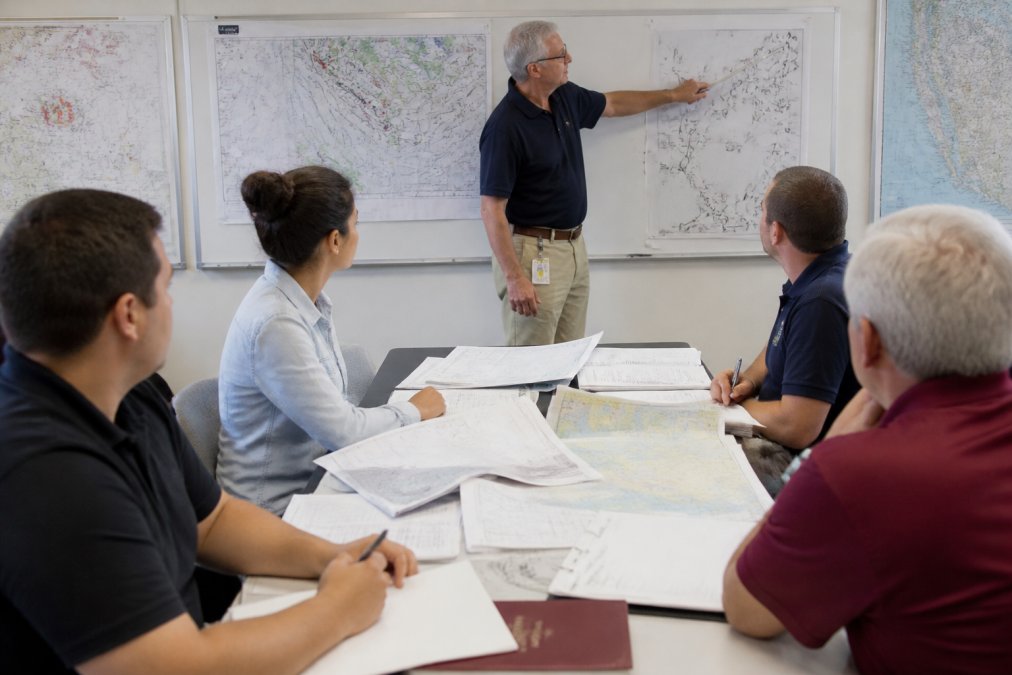
Instructor-led dispatcher training and self-study platforms solve different problems. Gleim gives you content on demand. A classroom gives you a person who has dispatched real flights watching you work through a real problem.
When Gleim Online Ground School Makes Sense for Dispatchers
Gleim Online Ground School makes sense for dispatchers as a supplement, not a standalone solution. If you are disciplined, already understand aviation fundamentals, and need efficient written exam prep, the platform delivers. If you are starting from zero or need to build operational judgment, it will not carry you to certification.
Frequently Asked Questions
Does Gleim offer a dedicated Aircraft Dispatcher (ADX) course?
Gleim's core product line is built around pilot ground school for private, instrument, commercial, and ATP certificates. While their question bank and study materials cover many overlapping knowledge areas, they do not offer a standalone ADX course designed around the dispatcher knowledge test. Dispatchers typically pair Gleim's question bank with a dispatcher-specific curriculum, an ADX exam study guide, and instructor-led training to cover the full FAA Part 65 knowledge requirements.
Can I pass the ADX exam using only pilot-focused study materials?
Pilot ground school covers weather, navigation, and regulations, but the ADX written exam also tests dispatch-specific topics like flight planning, fuel requirements, weight and balance, and operational control under Part 121. Using pilot materials alone leaves gaps. A structured ADX exam study guide plus classroom instruction from experienced dispatchers or examiners is the more reliable path to passing the FAA knowledge test and the practical oral.
How does structured classroom training compare to self-study for dispatchers?
Self-study works well for reviewing regulations and memorizing question banks. Classroom training adds what self-study cannot: live instruction on weight and balance computations, mock oral exams, and the Socratic discussion that builds the judgment examiners look for. The aircraft dispatcher certification timeline is also shorter in a structured program because you move through the material on a fixed schedule with instructors who can correct misunderstandings immediately.
What are the FAA requirements for Part 65 Aircraft Dispatcher certification?
Under FAA Part 65, dispatcher applicants must be at least 23 years old, pass a written knowledge test, and pass a practical test with an FAA dispatcher examiner. You must also meet the aeronautical experience or training requirements, which typically means completing an approved dispatcher course. The written exam covers aviation regulations, meteorology, navigation, aircraft systems, and flight planning. Your training program should map directly to these requirements.