 ultimate-guide
Dispatcher Training for Airline Employees: Complete 2026 Guide
Table of Contents
- Why Airline Employees Pursue Dispatcher Training
- Aircraft Dispatcher Certification Requirements Under FAA Part 65
- Flight Dispatcher Training Duration and Curriculum
- How to Become an Aircraft Dispatcher: Step-by-Step Path
- A Day in the Life: What Aircraft Dispatchers Actually Do
- In-Person vs. Online Dispatcher Training: What Works for Airline Staff
- Career Outlook and Next Steps After Certification
- Conclusion
Last Updated: August 22, 2026
Why Airline Employees Pursue Dispatcher Training
Airline employees pursue dispatcher training to advance into a role offering greater responsibility, job security, and professional growth. Flight attendants, ground crew, and operations coordinators recognize dispatchers as the nerve center of flight operations, commanding respect, working in stable ground-based roles, and earning competitive compensation while shaping how airlines operate safely and efficiently.
The transition reflects natural career progression. Someone with five years of ground operations experience understands aircraft, weather challenges, and regulatory constraints in ways outsiders never will. That institutional knowledge accelerates learning when pursuing formal FAA Part 65 certification.
Aircraft Dispatcher Certification Requirements Under FAA Part 65
The Federal Aviation Administration governs aircraft dispatcher certification through FAA Part 65 regulations, establishing legal requirements for who can serve as a dispatcher and what knowledge they must demonstrate.
FAA Part 65 requires passage of both a written knowledge test and a practical exam covering meteorology, aircraft performance, navigation systems, federal aviation regulations, and aeronautical decision-making (faa.gov). The practical exam, the Aircraft Dispatcher Knowledge Test (ADX), evaluates your ability to apply that knowledge in realistic operational scenarios.
Critical requirements include: you must be at least 23 years old, a U.S. citizen or permanent resident, and demonstrate English language proficiency sufficient to understand and communicate aviation information. The certification doesn't expire, but maintaining current knowledge is a professional obligation.
Flight Dispatcher Training Duration and Curriculum
Formal dispatcher training typically spans 200 classroom hours, the FAA-approved standard for comprehensive Part 65 preparation (faa.gov).
What You'll Learn: Core Knowledge Areas
A complete dispatcher training curriculum covers eight major knowledge domains. Meteorology forms the foundation, you'll study atmospheric structure, weather systems, and aviation weather products like TAFs, METARs, and SIGMETs applied to flight planning and operational decisions.
Aircraft performance and systems training teaches how weight, balance, temperature, and runway conditions affect takeoff and landing distances. Navigation systems and procedures cover how aircraft navigate airways and fixes while balancing fuel efficiency with regulatory compliance. Federal aviation regulations govern everything a dispatcher does. Aeronautical decision-making teaches you to apply knowledge under pressure. Air traffic control procedures help you understand how dispatchers work with controllers. Emergency procedures training covers medical emergencies, mechanical issues, and weather diversions. Finally, crew resource management training emphasizes how dispatchers function as part of the operational team.
Practical Exam Preparation and Standards
The practical exam evaluates whether you can defend flight planning decisions in front of an FAA examiner. You'll receive a scenario and develop a flight plan, identify hazards, and explain your decision-making process. Preparation requires practicing flight planning under realistic conditions and developing confidence articulating your reasoning.
How to Become an Aircraft Dispatcher: Step-by-Step Path
Step 1: Meet Eligibility Requirements
Confirm you meet basic eligibility criteria: at least 23 years old, a U.S. citizen or permanent resident, and fluent in English. If you work for an airline, check with your human resources or training department, many airlines have specific policies about when employees can pursue dispatcher training and whether the company will sponsor it.
Step 2: Complete Classroom Instruction
Enroll in an FAA-approved dispatcher training program covering all eight knowledge domains with at least 200 classroom hours. For airline employees, in-person training often provides advantages. Small class sizes mean individual attention. Instructors who are former airline pilots or FAA examiners bring real-world context that makes abstract concepts concrete. QNH LLC's program includes instruction from college professors, airline pilots, and former FAA Dispatcher Examiners trained in the Socratic Method, encouraging critical thinking rather than rote memorization.
Step 3: Pass the Written Knowledge Test
The FAA written knowledge test covers all eight knowledge domains with a set time limit (typically 2.5 hours). Preparation should span several weeks. Don't cram the night before. Instead, review systematically and identify weak areas for focused study. The passing score is typically 70 percent, but aim higher.
Step 4: Prepare for and Pass the Practical Exam
After passing the written test, you're eligible to schedule the practical exam with an FAA Dispatcher Examiner. The practical exam typically lasts 2-3 hours and evaluates your ability to plan flights, interpret weather, calculate aircraft performance, and defend your decisions.
A Day in the Life: What Aircraft Dispatchers Actually Do
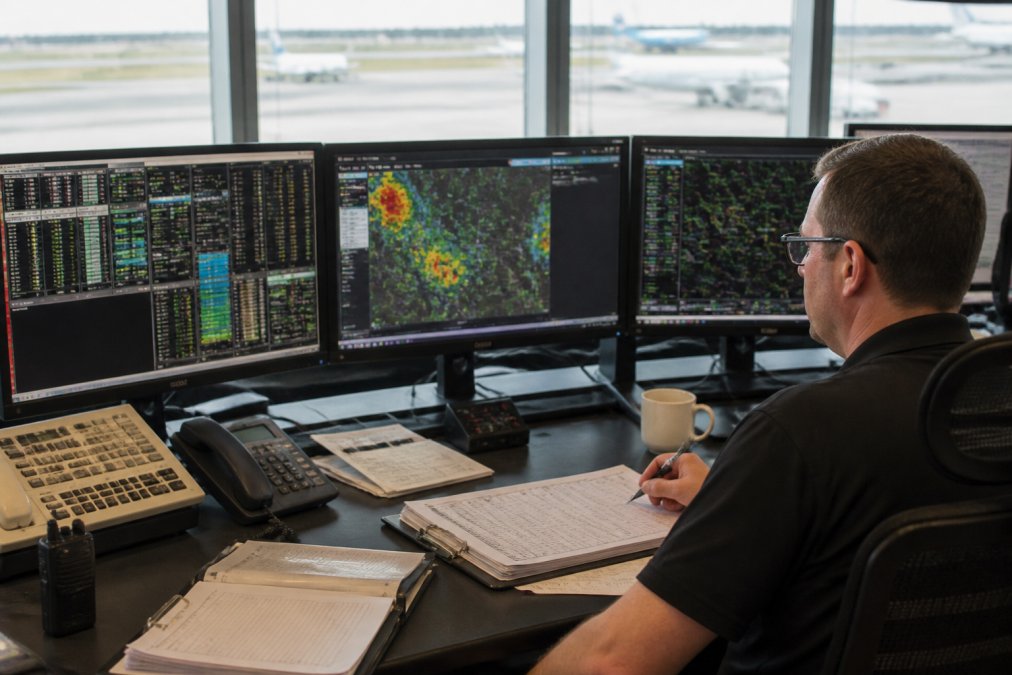
A typical shift begins before the first flights depart. Dispatchers review overnight weather developments, check aircraft maintenance status, and assess crew availability. As flights depart, the dispatcher's role shifts to active monitoring. You track each flight's progress, monitor weather along the route, and maintain communication with pilots about conditions ahead.
When weather deteriorates or unexpected situations develop, maintenance issues, crew scheduling conflicts, or passenger medical emergencies, the dispatcher becomes the decision-maker. You evaluate options, communicate with the flight crew and other departments, and issue a course of action. Every decision balances safety, regulatory compliance, and operational efficiency.
Most dispatchers work in operations control centers monitoring multiple flights simultaneously. The environment is high-pressure but structured. Within months, the routine becomes manageable, and you develop intuition about when a situation requires escalation.
In-Person vs. Online Dispatcher Training: What Works for Airline Staff
The choice between in-person and online training depends on your learning style, schedule, and access to quality instruction.
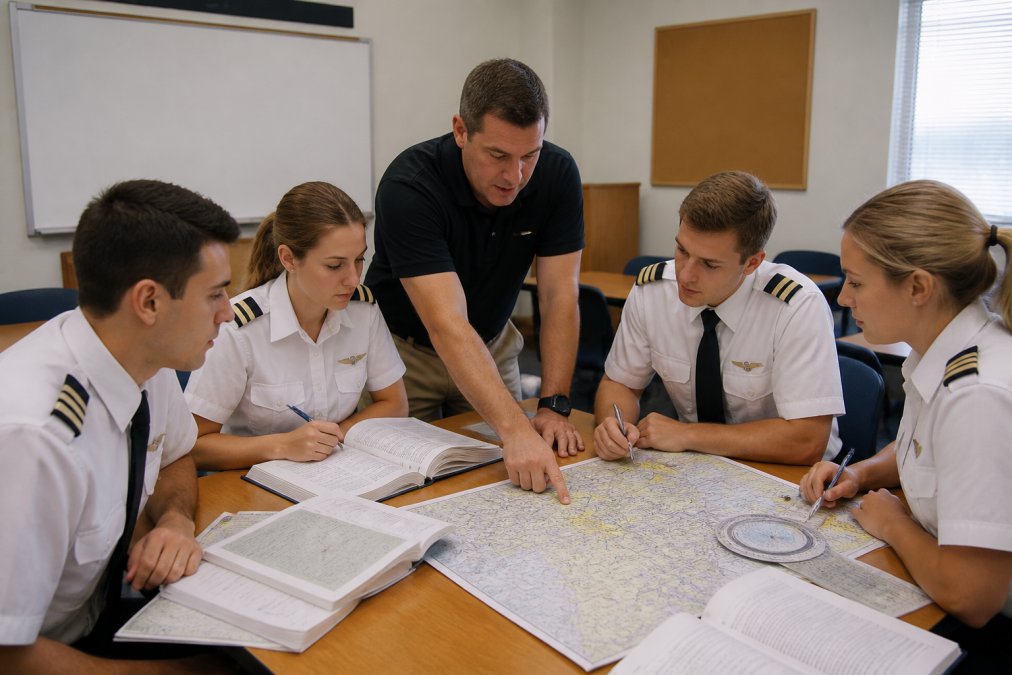
In-person training offers immediate access to instructors. When struggling with weight and balance calculations or confused about interpreting a SIGMET, you can ask questions and get clarification within minutes. Small class sizes mean instructors notice when you're lost and adjust their explanation.
Online training offers flexibility. You can study when your schedule permits and progress at your own pace. However, without immediate instructor access, you must wait for email responses or scheduled office hours.
For airline employees, the choice often hinges on scheduling flexibility. If your airline can accommodate a rigid training schedule, in-person instruction typically produces better outcomes. QNH LLC's in-person program in Miami offers intensive weeks and small class sizes ensuring individual attention.
Career Outlook and Next Steps After Certification
After earning your aircraft dispatcher certificate, the career path expands significantly. Most dispatchers work for airlines, but opportunities also exist with cargo operators, charter services, and military aviation organizations.
The dispatcher role offers stability that appeals to many aviation professionals. Unlike pilots and flight attendants, dispatchers work in stable ground-based positions not subject to duty time limitations or physical demands.
Advancement typically follows two paths. Some dispatchers move into supervisory or management roles overseeing other dispatchers and managing the operations control center. Others develop expertise in specific areas, weather analysis, aircraft performance, or regulatory compliance, becoming subject matter experts.
The transition from dispatcher training to actual dispatch operations involves an initial new hire training period. Most airlines require 4-8 weeks of on-the-job training where you work alongside experienced dispatchers, gradually assuming more responsibility under supervision.
Conclusion
Pursuing dispatcher training for airline employees is a deliberate career investment. The 200-classroom-hour curriculum, combined with rigorous practical exam preparation, demands sustained effort. But for people already working in aviation who want to advance into a role with greater responsibility and stability, the investment pays clear returns.
The path is straightforward: meet eligibility requirements, complete FAA-approved classroom instruction, pass the written knowledge test, and successfully complete the practical exam. Within a year, you transition from training to independent dispatch operations.
QNH LLC's FAA-approved Part 65 program is designed specifically for this journey. Small class sizes ensure individual attention. Instructors include college professors, airline pilots, and former FAA Dispatcher Examiners who understand both regulatory requirements and operational realities. The curriculum emphasizes practical skills, weight and balance computations, flight planning under realistic conditions, and aeronautical decision-making, not just test preparation. Fall class registration includes a free Gleim Online Ground School course.
Reserve now and take the next step toward a dispatcher career that leverages your aviation background and positions you for long-term professional growth.
| Training Component | Duration | Purpose |
|---|---|---|
| Classroom Instruction | 200 hours | Core knowledge in meteorology, regulations, aircraft systems, decision-making |
| Written Knowledge Test Preparation | 40-60 hours | Mastery of FAA exam content across all eight knowledge domains |
| Practical Exam Preparation | 40-50 hours | Flight planning scenarios, weather interpretation, decision-making practice |
| New Hire Training (Post-Certification) | 4-8 weeks | Airline-specific procedures, supervised flight planning, operational integration |
Frequently Asked Questions
What are the FAA Part 65 requirements for aircraft dispatcher certification?
FAA Part 65 establishes the regulatory framework for aircraft dispatcher certification. You must be at least 23 years old, fluent in English, pass a written knowledge test covering aeronautical decision making, flight planning, meteorology, and federal aviation regulations, and pass a practical exam where you defend a flight plan before an FAA examiner. You must also complete required classroom instruction, typically 200 hours, covering aircraft systems, navigation, weather analysis, and operational control procedures.
How long does flight dispatcher training duration typically take?
Most FAA-approved dispatcher training programs require 200 classroom hours of instruction. Full-time programs can complete this in 4-6 weeks, while part-time options spread training over 3-4 months. Beyond classroom hours, budget 2-4 weeks for written exam preparation and practical exam study. Total time from enrollment to certification typically ranges from 2-4 months, depending on your study pace and exam scheduling.
Can airline employees transition into aircraft dispatching without starting over?
Yes. Airline employees often have operational knowledge that accelerates learning in dispatcher training. Your familiarity with crew resource management, air traffic control procedures, and flight operations gives you an advantage in classroom instruction and practical exam preparation. However, you must still complete the full 200-hour curriculum and pass both the written knowledge test and practical exam. Many airlines offer tuition support or flexible scheduling for employees pursuing dispatcher certification.
What's the difference between in-person and online dispatcher training for working employees?
In-person training provides direct instructor feedback on complex topics like weight and balance computations and aeronautical decision making, plus peer interaction that reinforces learning. Online programs offer flexibility for full-time employees but require strong self-discipline. Small in-person classes allow instructors to identify gaps in understanding faster. For airline staff with limited availability, hybrid programs or evening/weekend classes balance structure with schedule flexibility.
This article was written using GrandRanker