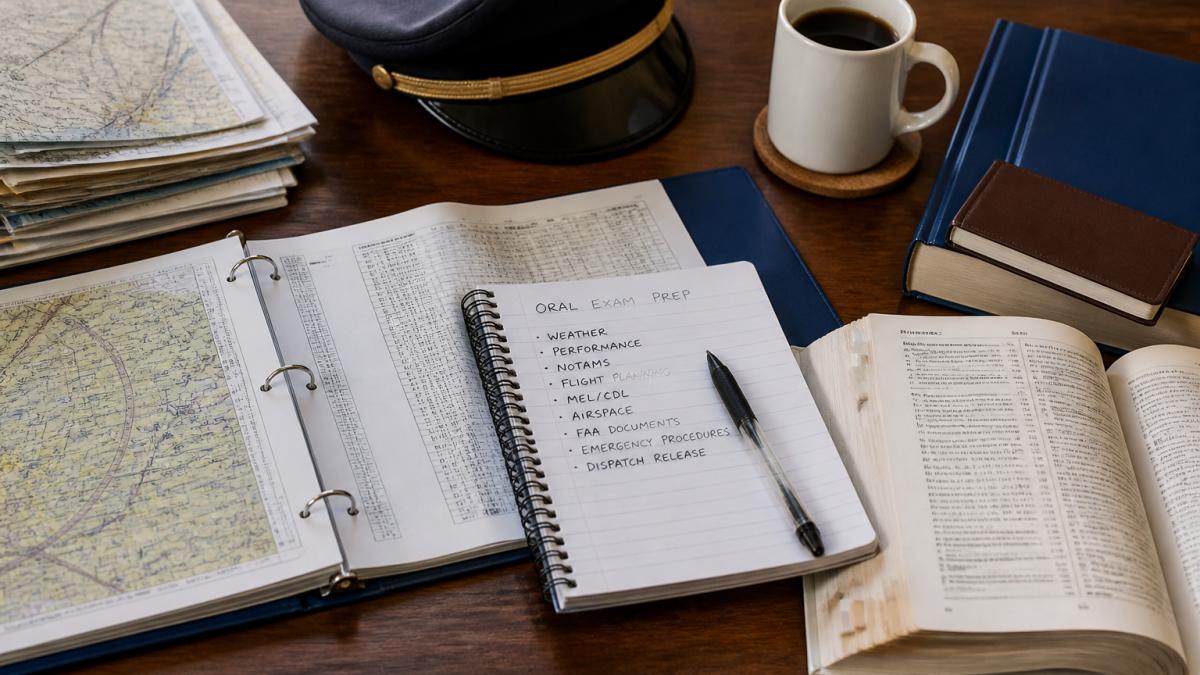
 blog
blog
Is a Mock Checkride Worth the Cost? A 2026 Guide
Table of Contents
- What a Mock Checkride Actually Tests
- The ROI of a Mock Checkride: When the Math Works
- FAA Checkride Pass Rates and What They Reveal
- Mock Checkride Oral Exam Questions: What to Expect
- FAA Part 65 Certification Requirements for Dispatchers
- Red Flags in Mock Checkrides (and How to Self-Assess)
- The DPE Perspective: What a Mock Can and Cannot Fix
- Frequently Asked Questions
Last Updated: October 3, 2026
What a Mock Checkride Actually Tests
A mock checkride is a full rehearsal of your FAA practical test, run by a flight instructor who plays the role of a designated pilot examiner. It tests the same two things the real exam does: your oral examination knowledge and your in-flight maneuvers.
So here's the honest answer to whether a mock checkride is worth the cost: it depends on your training stage. A private pilot with 45 flight hours gets more value than a commercial candidate who already flies to commercial standards.
The mock checkride exists to surface problems while they're still fixable. That's the whole point.
- Oral portion: scenario-based questions on regulations, weather, and flight planning
- Flight portion: maneuvers judged against the Airman Certification Standards (ACS)
- Debrief: a written list of every weak area, ranked by severity
FAA Airman Certification Standards defines exactly what examiners grade, so a good mock uses the same document.
The ROI of a Mock Checkride: When the Math Works
The return on a mock checkride comes down to one comparison: the all-in cost of a failed practical test versus the cost of one rehearsal. Most candidates never actually run that comparison. They decide on feel.
Here is a framework, built from the line items that show up on a retake.
What a failed checkride actually costs you:
- Examiner fee for the retake. Designated pilot examiners set their own fees, and a retake is billed as a separate test. In most markets the examiner fee for a private pilot practical runs several hundred dollars, and a retake is not discounted.
- Aircraft rental for the re-test. You pay for the same block of Hobbs time again, plus any repositioning.
- Instructor time to remediate. Most examiners issue a notice of disapproval that requires you to train the deficient areas with an instructor and get a logbook endorsement before you can re-test. That is billable dual time.
- Calendar delay. You cannot re-test until the deficiency is retrained and endorsed, and DPE schedules often run weeks out. Every extra week is more rental and instructor time to stay current.
- The discretionary cost. A disapproval stays in your records. It does not end your training, but it changes how the next examiner reads your file.
A mock checkride is one block of instructor time plus one block of aircraft time, and it produces a written list of what to fix. That is the entire financial argument: you are buying the same information a disapproval would give you, at a fraction of the price, before it counts against you.
| Your Situation | Mock Worth It? | Why |
|---|---|---|
| First checkride, 0 prior attempts | Yes | Cheapest way to find blind spots before they become a disapproval |
| Already failed once | Yes | Targets the exact deficiency the examiner already identified |
| 20+ hours in type, strong debriefs | Maybe | Only if oral knowledge or scenario reasoning feels shaky |
| Checkride in under 7 days | No | Too late to remediate what you find |
The break-even rule. A mock pays for itself if the probability it prevents a retake is higher than the ratio of mock cost to retake cost. If a mock costs roughly a third of a retake, you only need it to catch a disqualifying gap about one time in three to come out ahead. Most candidates who book a mock at the right stage clear that bar easily.
Run the numbers with your own school's rates. If a mock costs a fraction of a retake and you have time to act on the results, it pays for itself.
FAA Checkride Pass Rates and What They Reveal
Pass rates tell you where candidates struggle, not whether you personally will. The FAA publishes practical test statistics that show first-attempt failures cluster around a few predictable areas.
Those areas are almost always oral knowledge and risk management, not raw flying.
A mock checkride is worth the cost precisely because it attacks the weak spots the data points to. If most failures happen in the oral examination, then a mock oral is the highest-value rehearsal you can buy.
Common failure themes across certificate levels:
- Incomplete preflight planning and weather decision-making
- Weak knowledge of airspace and regulation details
- Poor risk management during scenario-based questions
- Sloppy maneuvers that don't meet ACS tolerances
FAA practical test statistics break these down by certificate, so you can see where your rating tends to trip people up.
Mock Checkride Oral Exam Questions: What to Expect
A mock checkride oral exam questions set should mirror the real one. Expect scenario-based prompts, not trivia.
The examiner hands you a scenario and asks you to make decisions. Weather is marginal. A system fails. A passenger gets sick. You talk through your choices.
Typical questions cover:
- "Walk me through your weather go/no-go decision."
- "What are your personal minimums, and why?"
- "Show me your weight and balance for this load."
- "What airspace are we in, and what are the rules?"
- "What would you do if this failed in flight?"
At QNH LLC, our Chief and Lead Instructors are Sheffield Graduates who use the Socratic Method. We ask questions that force you to reason out loud, because that's what the examiner does.
FAA Part 65 Certification Requirements for Dispatchers
FAA Part 65 certification requirements apply to aircraft dispatchers, a separate track from pilot checkrides. Dispatchers must meet specific age, knowledge, and experience rules before they can be certified.
The path runs through ground school, a written exam, and a practical test. A mock checkride plays the same role here as it does for pilots: it rehearses the oral and practical portions before the real thing.
For dispatchers, the practical test centers on defending a flight plan. You explain weather, fuel, alternates, and weight and balance to an examiner.
A mock session lets you defend that plan in a low-stakes room first.
Key dispatcher requirements include:
- Meet the minimum age set by regulation
- Complete an approved training course
- Pass the written knowledge test
- Pass the practical test with an examiner
FAA Part 65 regulations spells out the exact requirements, and QNH LLC builds its 200-classroom-hour program around them.
Red Flags in Mock Checkrides (and How to Self-Assess)
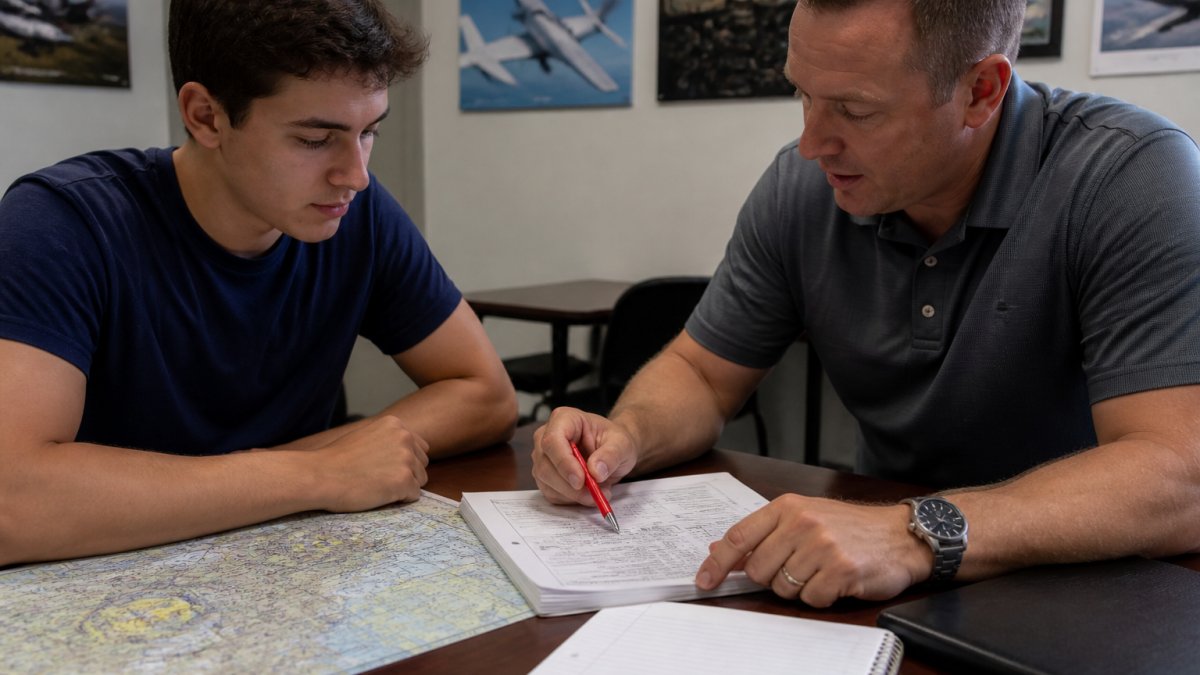
Red flags in a mock checkride tell you whether the session is actually useful. A good mock ends with a written, ranked list of weak areas. A bad one ends with vague praise.
Watch for these warning signs:
- The instructor won't put findings in writing
- No scenario-based questions, only rote quiz
- The debrief lasts five minutes
- The instructor isn't familiar with current ACS standards
- You leave feeling good but can't name three things to fix
Use this self-assessment checklist before you book:
- Is the instructor qualified to evaluate your certificate level?
- Will the mock follow the ACS line by line?
- Do you get a written debrief with ranked weaknesses?
- Is there time to fix what's found before the real exam?
- Does the oral portion use real scenarios?
If you can't check most of these boxes, the mock checkride isn't worth the cost.
The DPE Perspective: What a Mock Can and Cannot Fix
The designated pilot examiner perspective matters here. A DPE sees candidates on their worst day, under real pressure, and grades against a fixed standard.
A mock can fix knowledge gaps, weak planning habits, and shaky oral delivery. It cannot fix a lack of flight hours or a maneuver you simply haven't practiced enough.
That's the line. Rehearsal sharpens what you already have. It doesn't create skill that was never built.
From the examiner's chair, the candidates who pass aren't the ones who memorized the most. They're the ones who make sound decisions out loud and stay calm when the scenario gets hard.
So the real question isn't whether a mock checkride is worth the cost. It's whether you've built enough skill for a rehearsal to help. If you have, book it early and act on the results.
Frequently Asked Questions
Which checkride has the lowest pass rate?
Initial checkrides for private pilot and instrument rating tend to show the lowest first-attempt pass rates because they combine a long oral exam with demanding flight maneuvers. The FAA does not publish a single national pass rate per certificate, but flight schools and designated pilot examiners report that first-time applicants struggle most with oral examination knowledge gaps and partial-panel or unusual-attitude recovery. A mock checkride targets those exact weak spots before the real practical test.
Is a mock checkride mandatory for FAA certification?
No. The FAA does not require a mock checkride for any certificate or rating. It is a voluntary training tool. For FAA Part 65 certification requirements, the rules cover age, English proficiency, knowledge test, and practical test, but they do not mandate a simulated checkride. That said, many flight instructors and Part 65 course providers use mock checkrides because they reduce retake risk and build pilot confidence before the designated pilot examiner signs off.
How does a mock checkride improve pass rates?
A mock checkride forces you to perform under observation, which exposes gaps in your oral examination knowledge and flight proficiency that solo study misses. When the mock is scenario-based and follows the Airman Certification Standards, you practice the same tasks the DPE will assign. That rehearsal reduces checkride anxiety, sharpens checklist discipline, and gives your flight instructor specific data to target in the final training hours. The result is fewer surprises on test day and a higher chance of a first-attempt pass.
What are the common reasons for failing a checkride?
The most frequent failures come from incomplete oral examination answers, poor risk management during maneuvers, and weak flight proficiency in areas like steep turns or emergency procedures. Applicants also fail when they cannot explain weight and balance, weather decisions, or airspace rules clearly. A mock checkride surfaces these gaps early. If you are training for a dispatcher role, the same logic applies: you must defend a flight plan and apply FAA Part 65 certification requirements under pressure, not just pass a written test.
A failed checkride costs far more than a rehearsal, and the fix is preparation you can measure. At QNH LLC, we prepare candidates with our FAA-approved Part 65 Aircraft Dispatcher Certification course, 200 classroom hours of instruction, and small classes led by airline pilots and former FAA Dispatcher Examiners. Our instructors use the Socratic Method to build the critical thinking an examiner actually grades. Reserve now and walk into your exam ready to defend every decision.